
RE:TRACT

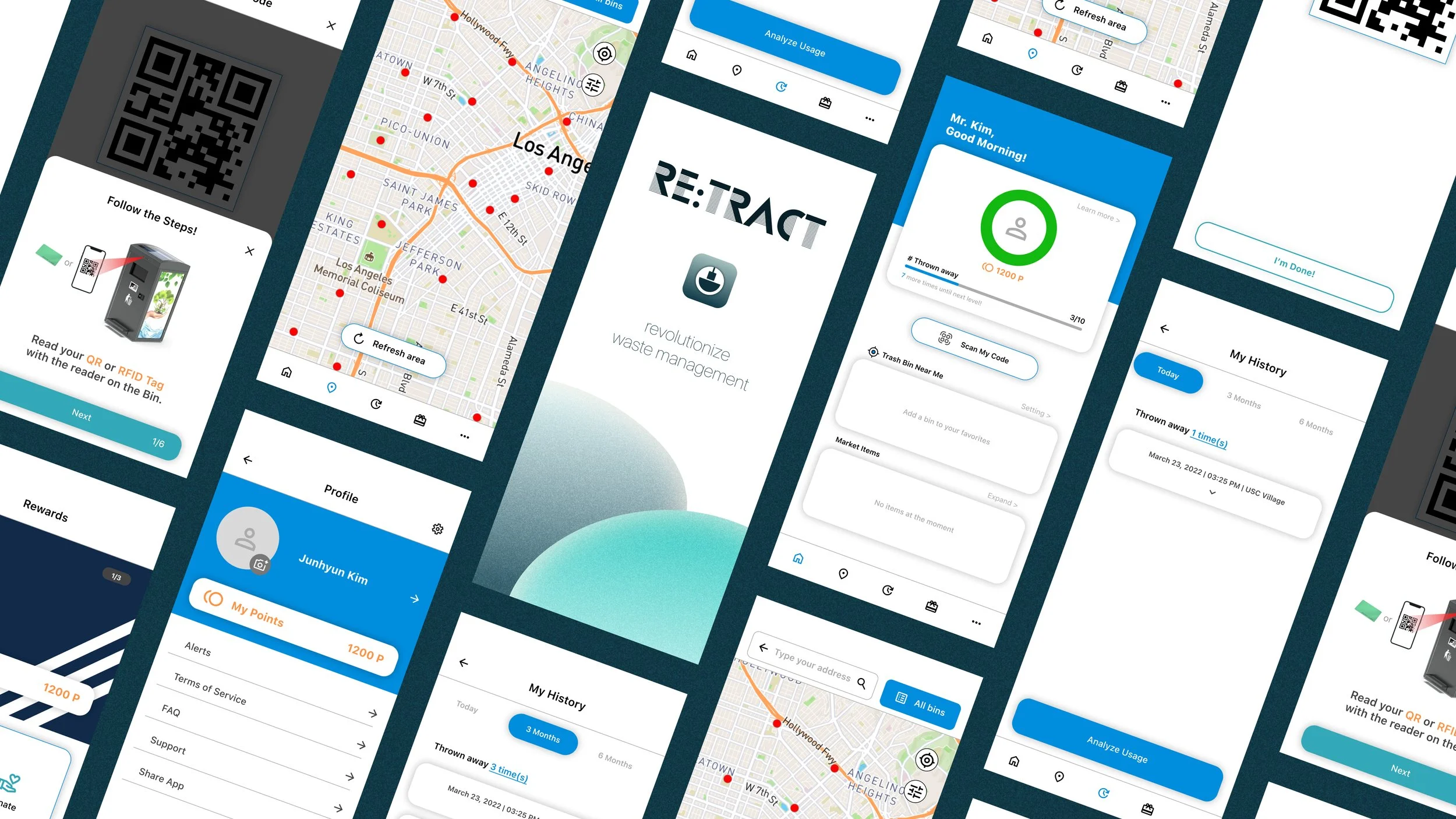
RE:Tract Speculative design, 2023 Concept
ProblemSix million tons of food a year wasted in California, and a recycling law almost nobody has signed up for BuiltA tag, a bin that weighs, and an app that turns throwing away into points
Since January 2022 California has required every resident and business to recycle organic waste, and the program still runs on a registration most people have never heard of. RE:Tract is a speculative system for making it work: an RFID tag for every household, bins that read the tag and weigh the disposal, a central database that turns the weight into a bill, and an app that pays the resident back in points. A one-person project: the research, the system, the brand and the app.
Why
A good law with a bad onboarding.
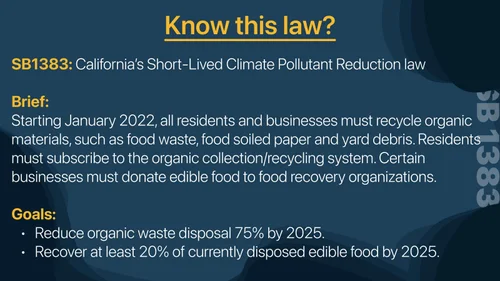
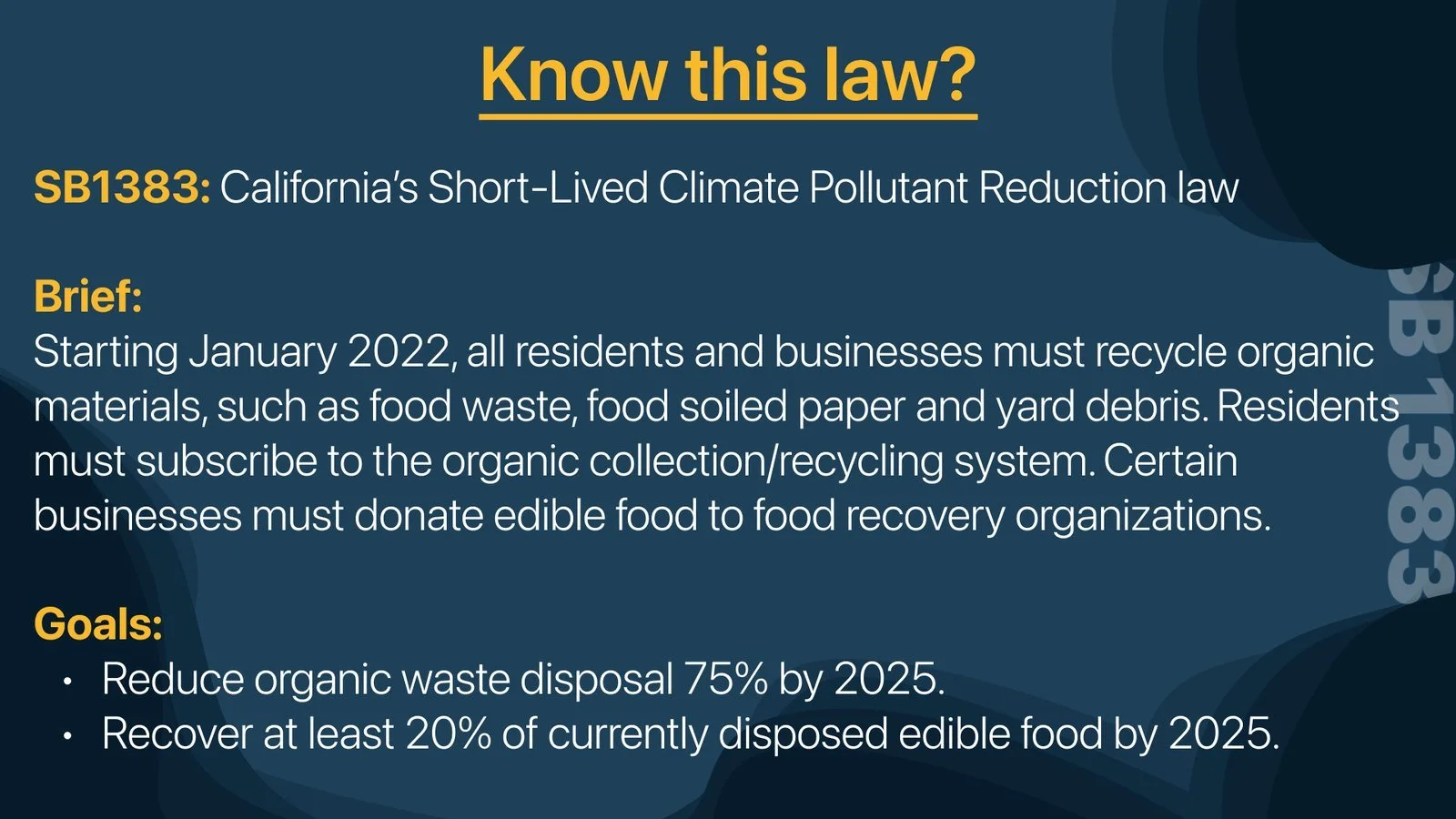
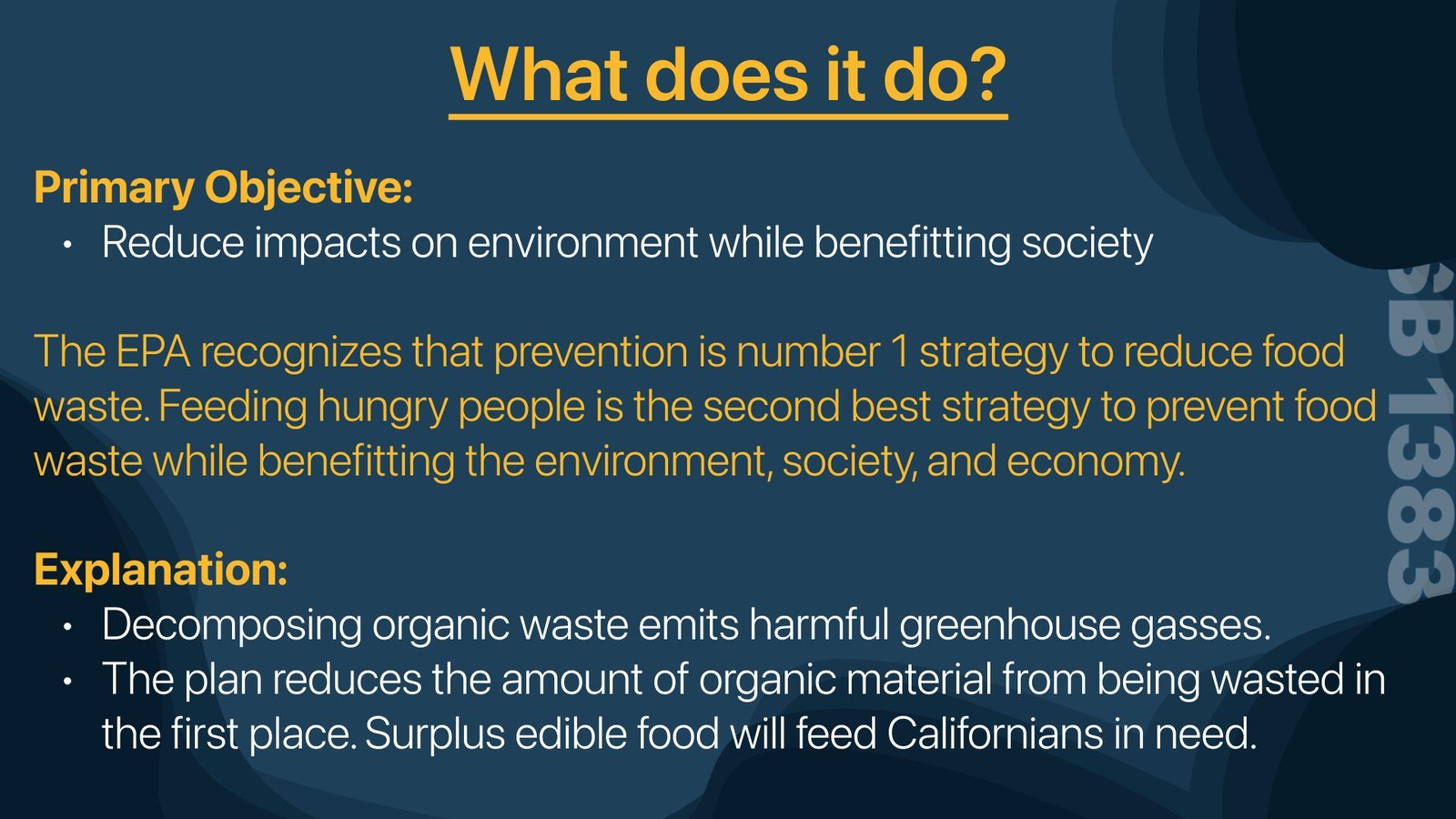
SB 1383 is California’s short-lived climate pollutant law. Its goals are the right ones. Its design assumes a resident who reads the notice, finds the form and signs up, and then pays a fee for the privilege. Hardly anyone does.
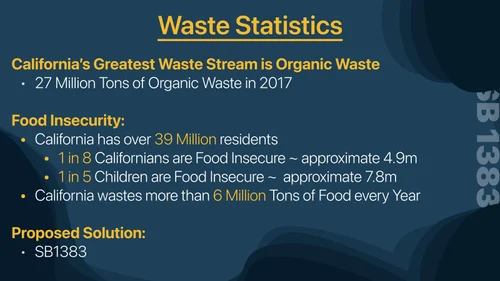
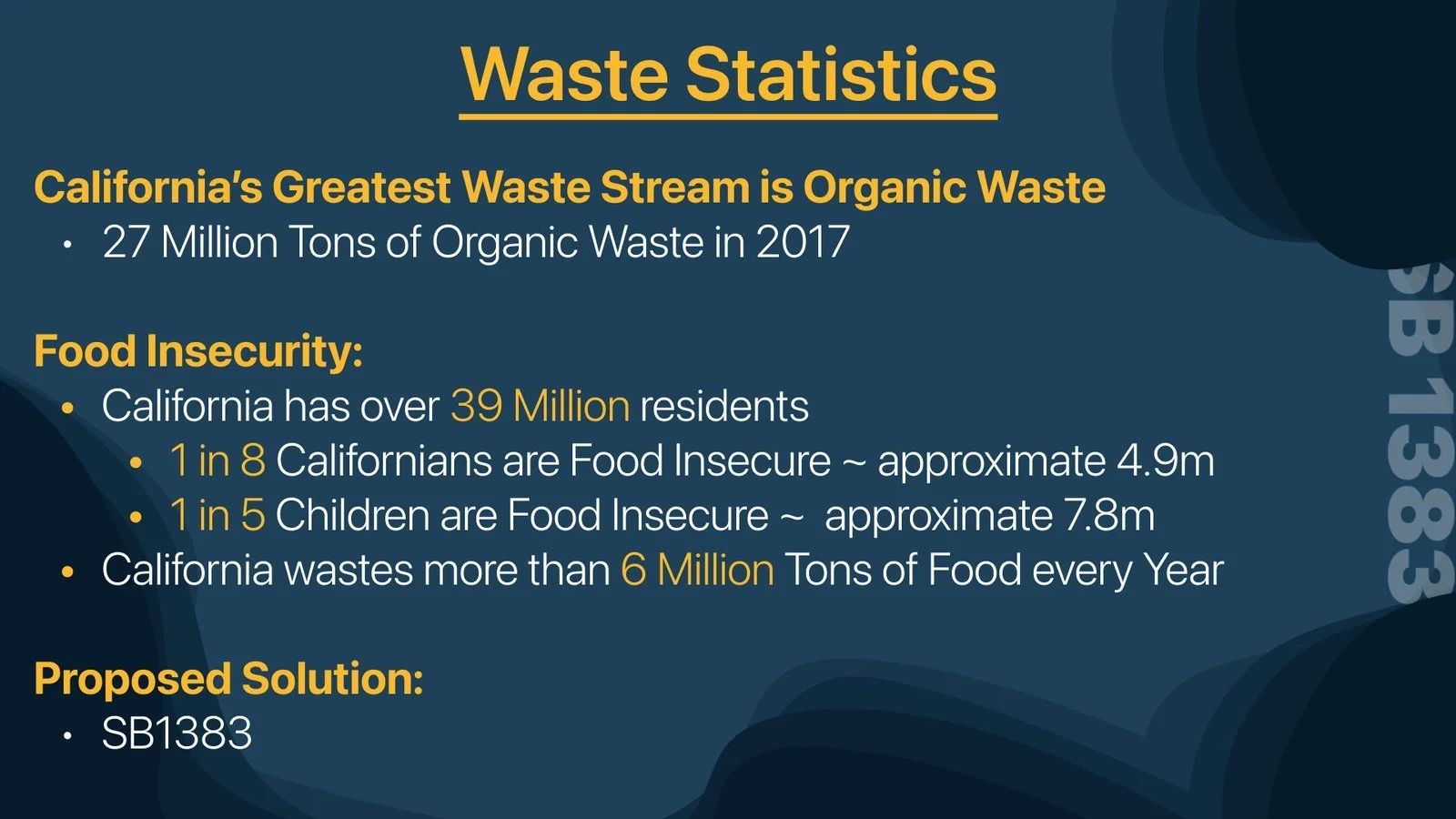
- 27Mtons of organic wasteCalifornia’s single largest waste stream, in 2017. Decomposing, it is a major source of methane.
- 1 in 8Californians are food insecureAbout 4.9 million people, in the state that wastes the most food.
- 1 in 5childrenAbout 7.8 million, while edible food goes into the same bins as the rest.
- 6M+tons of food wasted a yearThe law asks for 75% less organic waste in landfill by 2025 and 20% of edible food recovered.
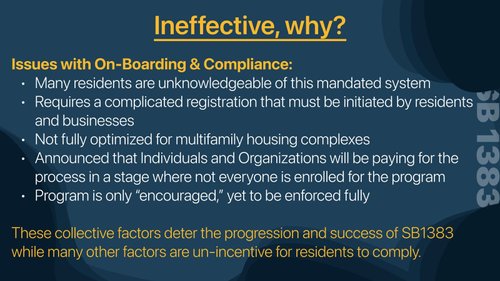
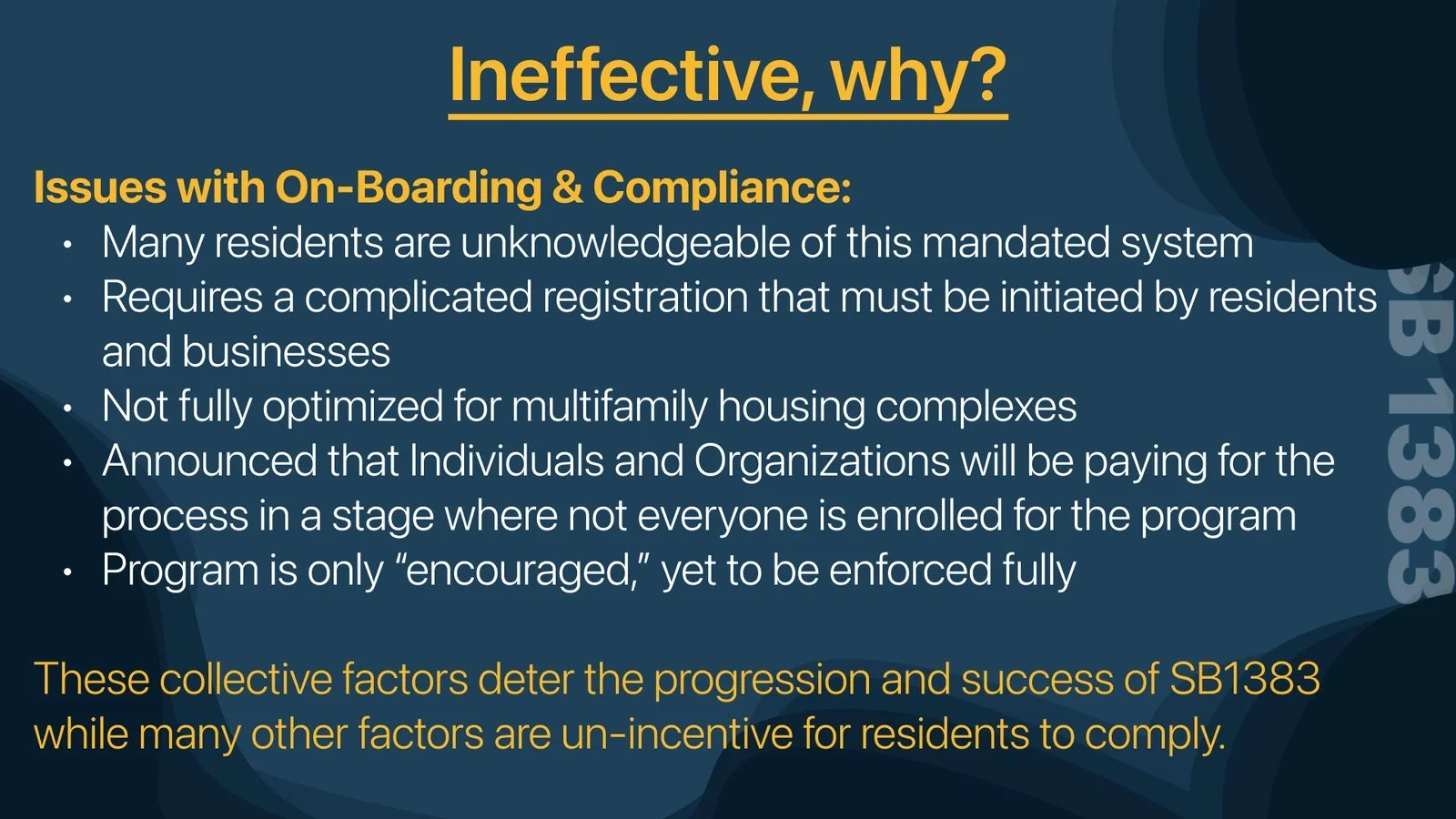
- 1Nobody knows it exists. Most residents have never heard of the mandate, let alone the collection program they are meant to join.
- 2Registration is on the resident. A complicated sign-up that the household or business has to start, on its own, with no prompt.
- 3Apartments are an afterthought. The scheme is drawn for a house with its own bins, not a building with one row of them.
- 4The fee came before the value. Residents were told they would pay for the process before most had enrolled, and the law is “encouraged”, not enforced.
The proposal, in one breath
Register everyone once, measure at the bin, and pay people back.
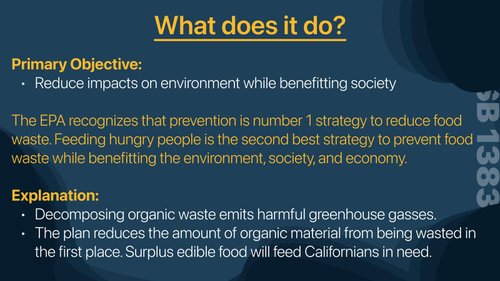
Four decisions, from the policy down to the screen. The system is designed so that the resident’s only job is to scan a tag; the registration, the measurement and the billing happen around them.
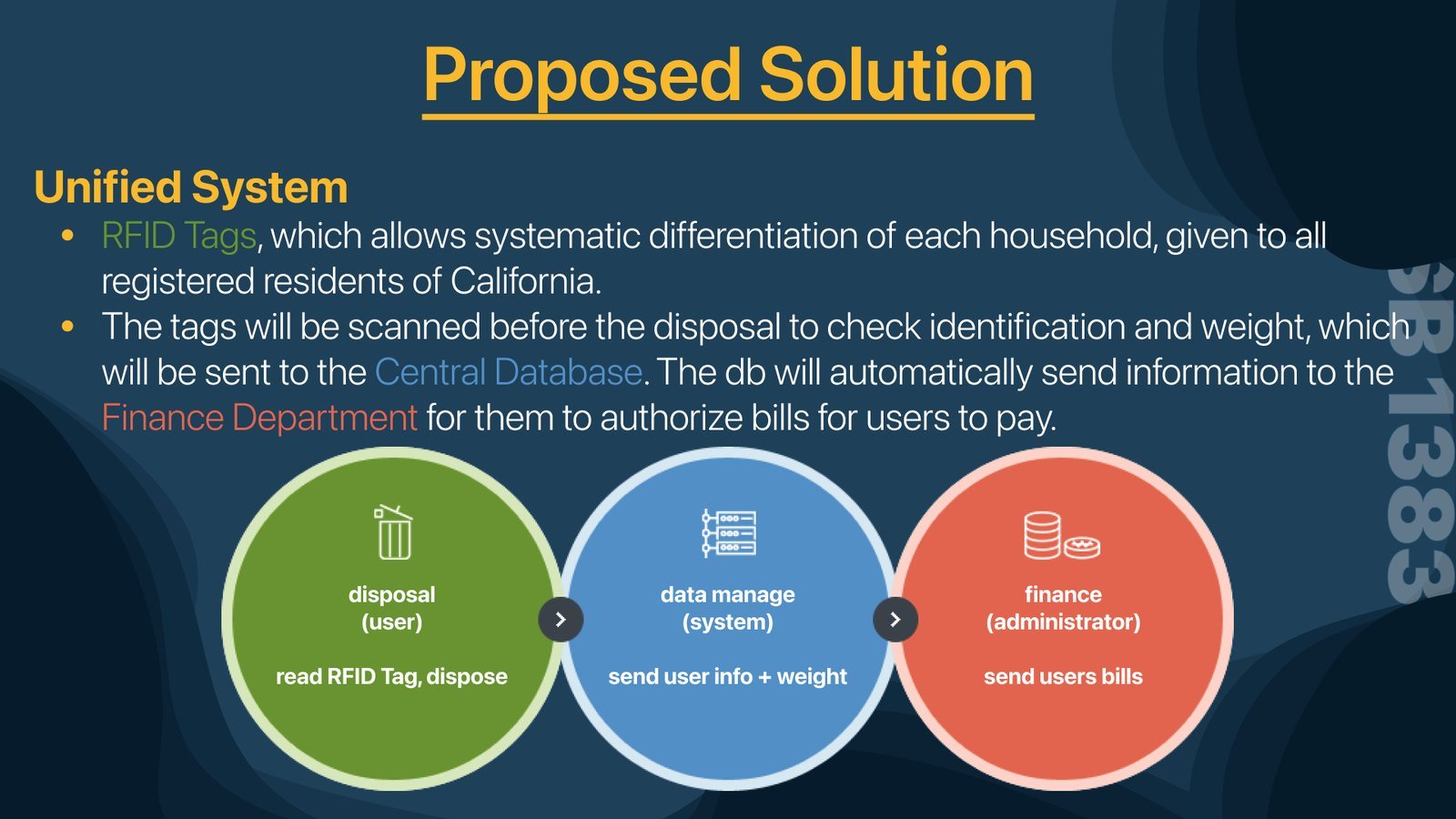
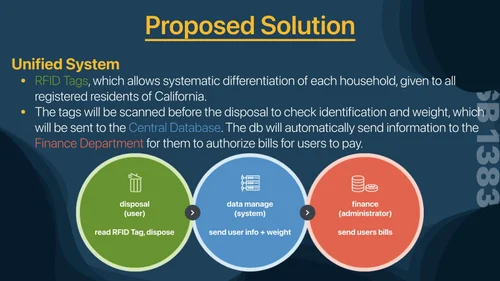
- One tag per householdA unified RFID tag issued to every registered resident of the state. No form to find, no account to make.
- Weigh at the binThe bin reads the tag and weighs the disposal, so the fee follows what a household actually throws away.
- The database writes the billTag, weight and time go to a central database; the finance side bills from the data, with no one keying it in.
- Points for the residentEvery scan earns points, spent in a market or donated. Less waste means a smaller bill and more points.
How it runs
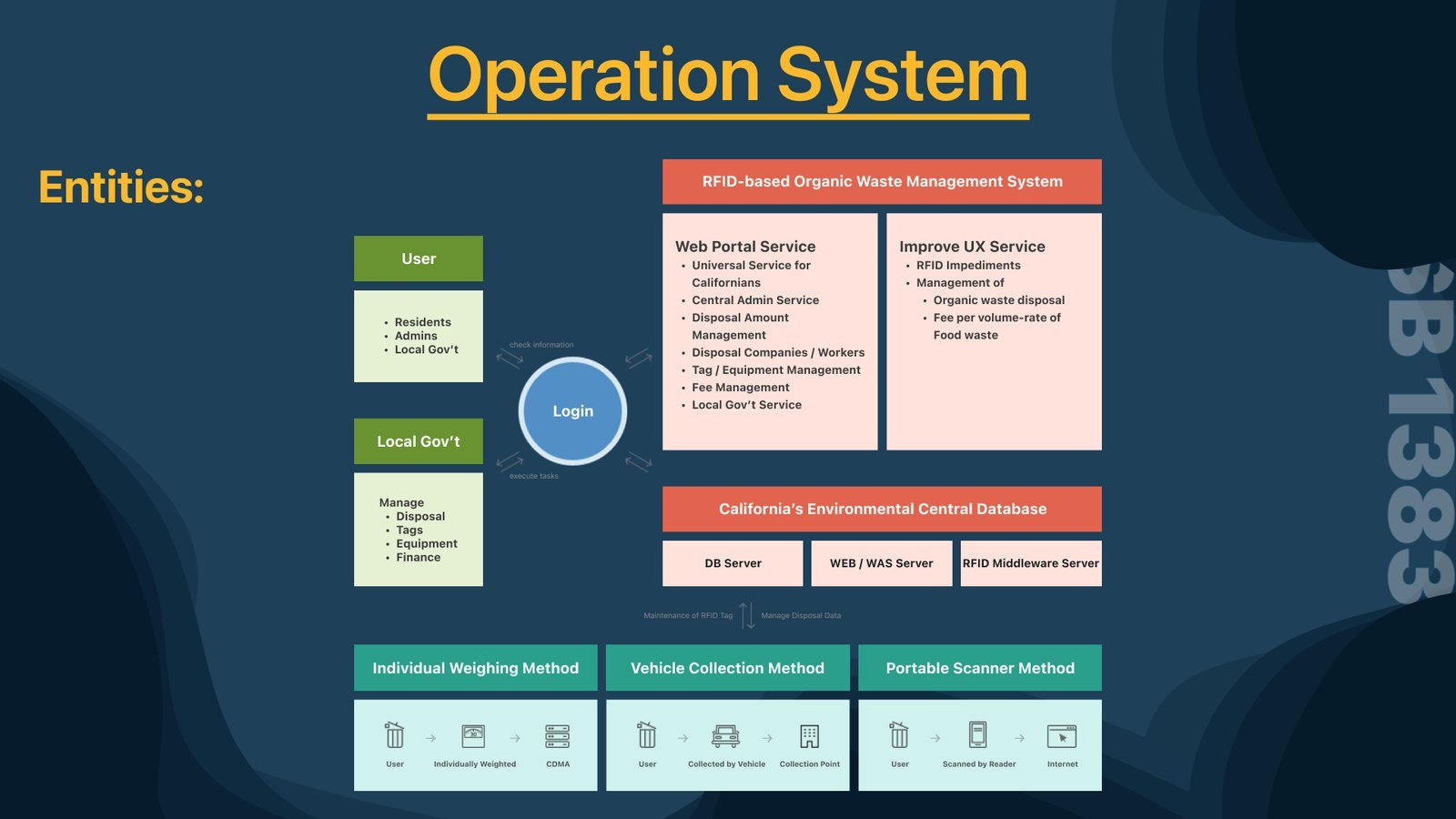
Three parties, one scan.
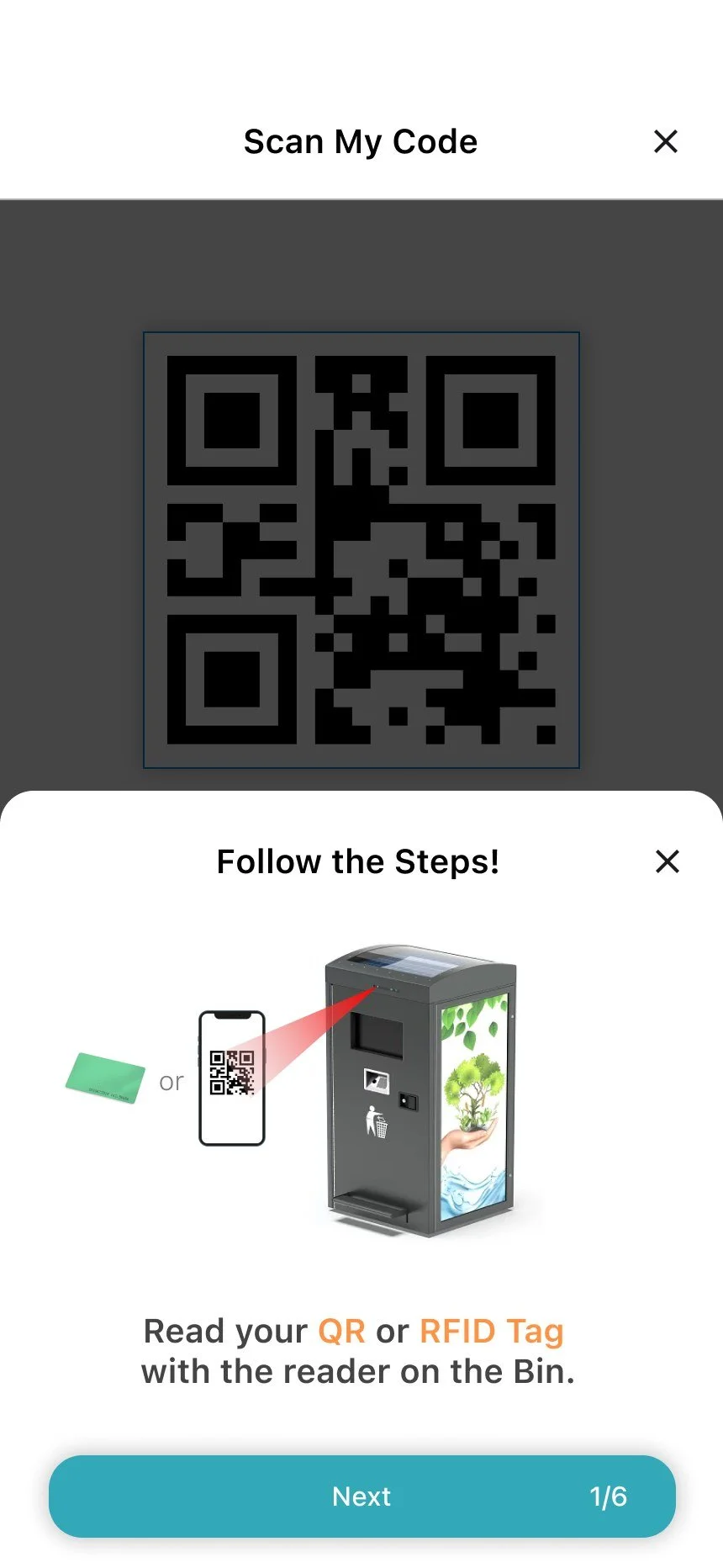
- IDisposal, the residentScan the tag or the QR code on the bin’s reader, throw the organic waste away. That is the whole task.
- IIData, the systemThe bin sends the household, the weight and the time to California’s environmental database.
- IIIFinance, the administratorThe database bills each household from its own data and credits the points, with no registration step in between.
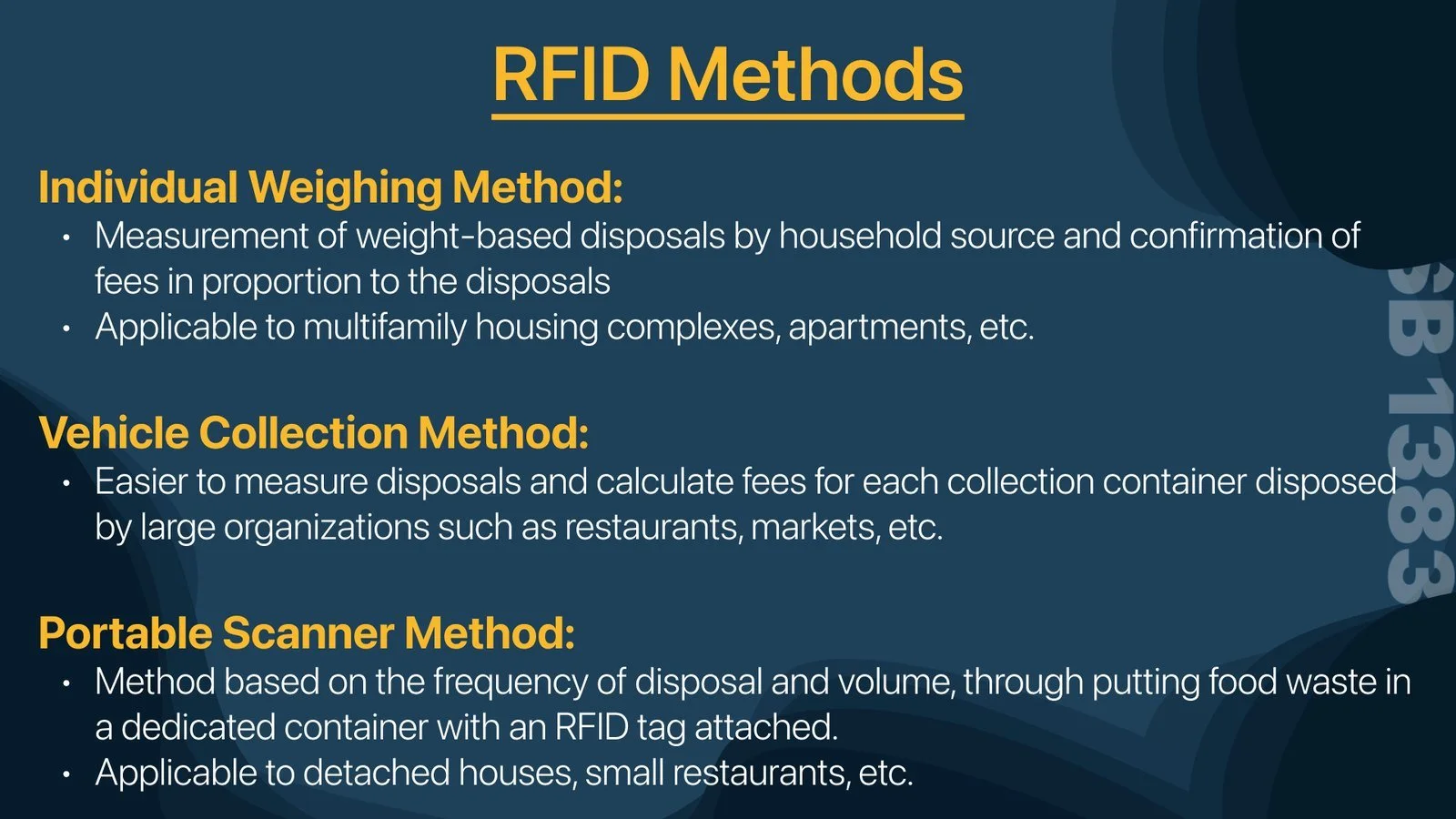
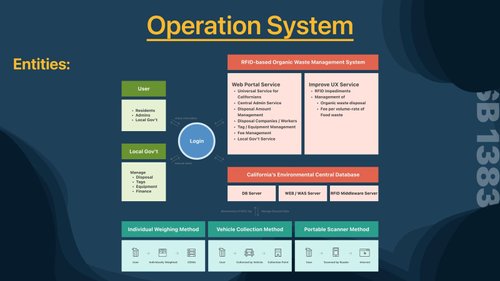
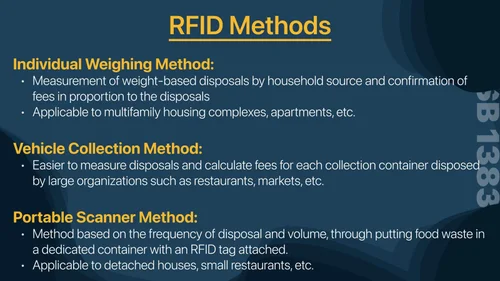
Three ways to read a tag, because a detached house, an apartment block and a restaurant do not throw things away the same way.
- Individual weighing
- Where
- Multifamily housing, apartments
- How
- Each household’s disposal is weighed at the shared bin and the fee follows the weight.
- Vehicle collection
- Where
- Restaurants, markets, large organisations
- How
- The collection truck weighs each tagged container; one reading per container, per pickup.
- Portable scanner
- Where
- Detached houses, small restaurants
- How
- A dedicated container with its own tag, read by a handheld scanner by frequency and volume.
The app
The resident’s side: a code, a map, and the points.
1
2
3
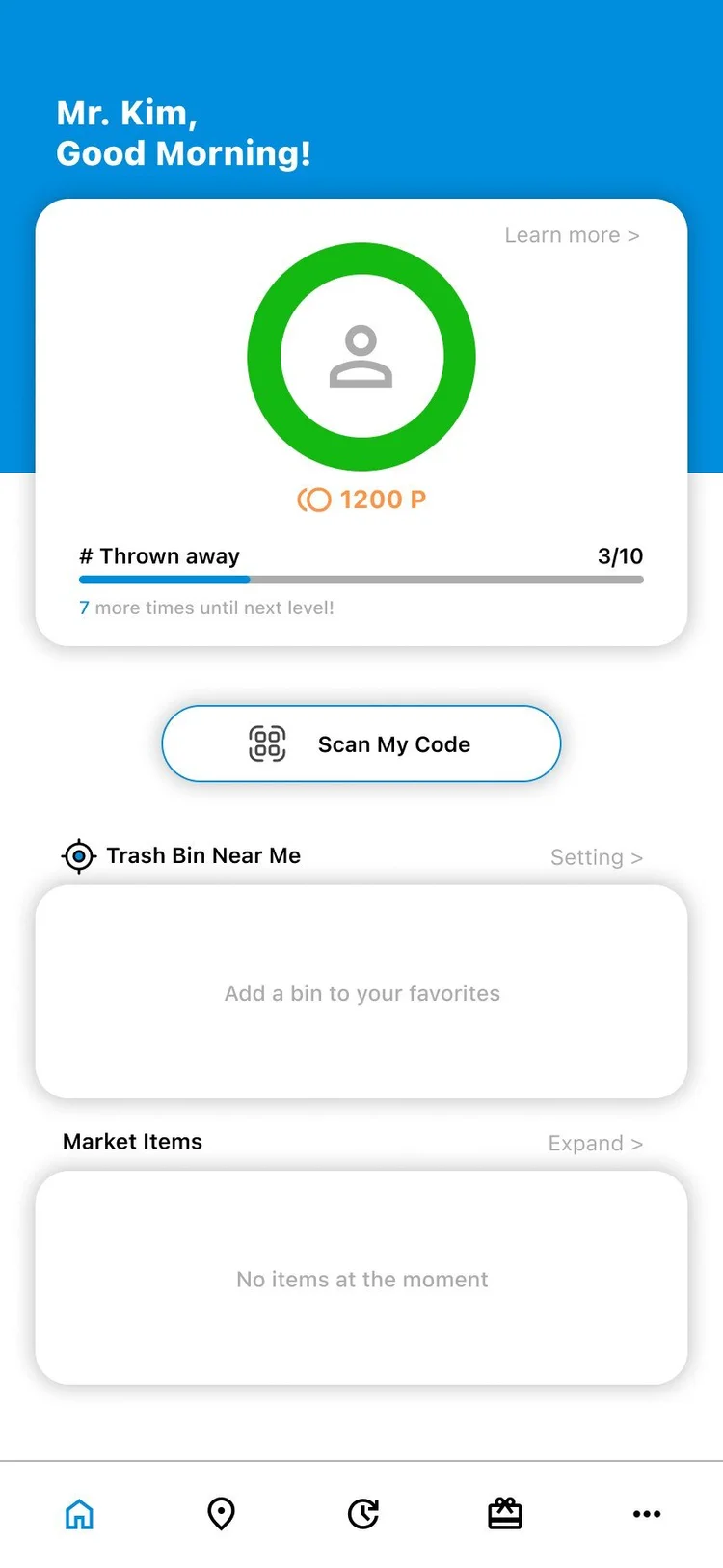
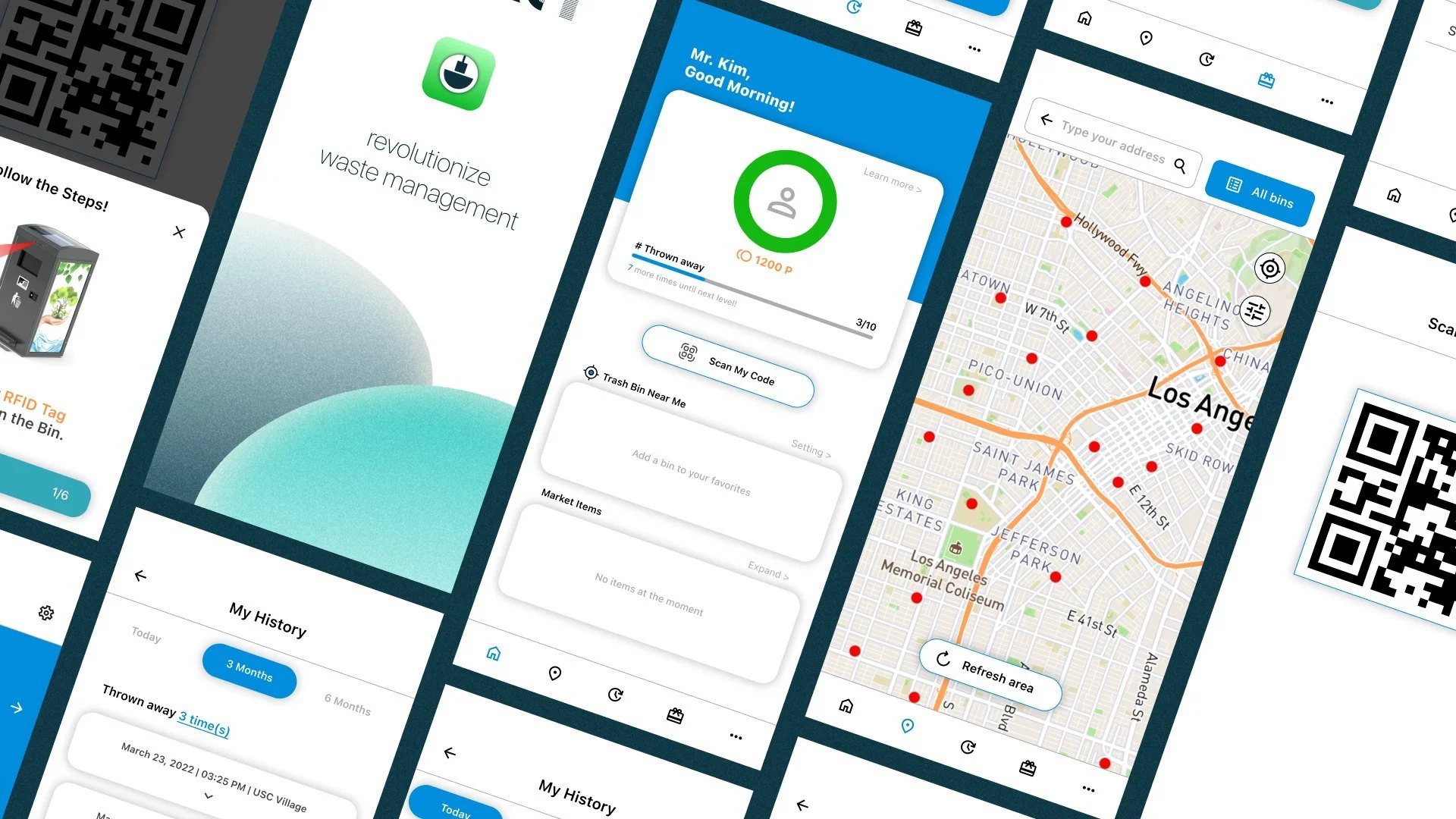
01One button, and a reason to press it.
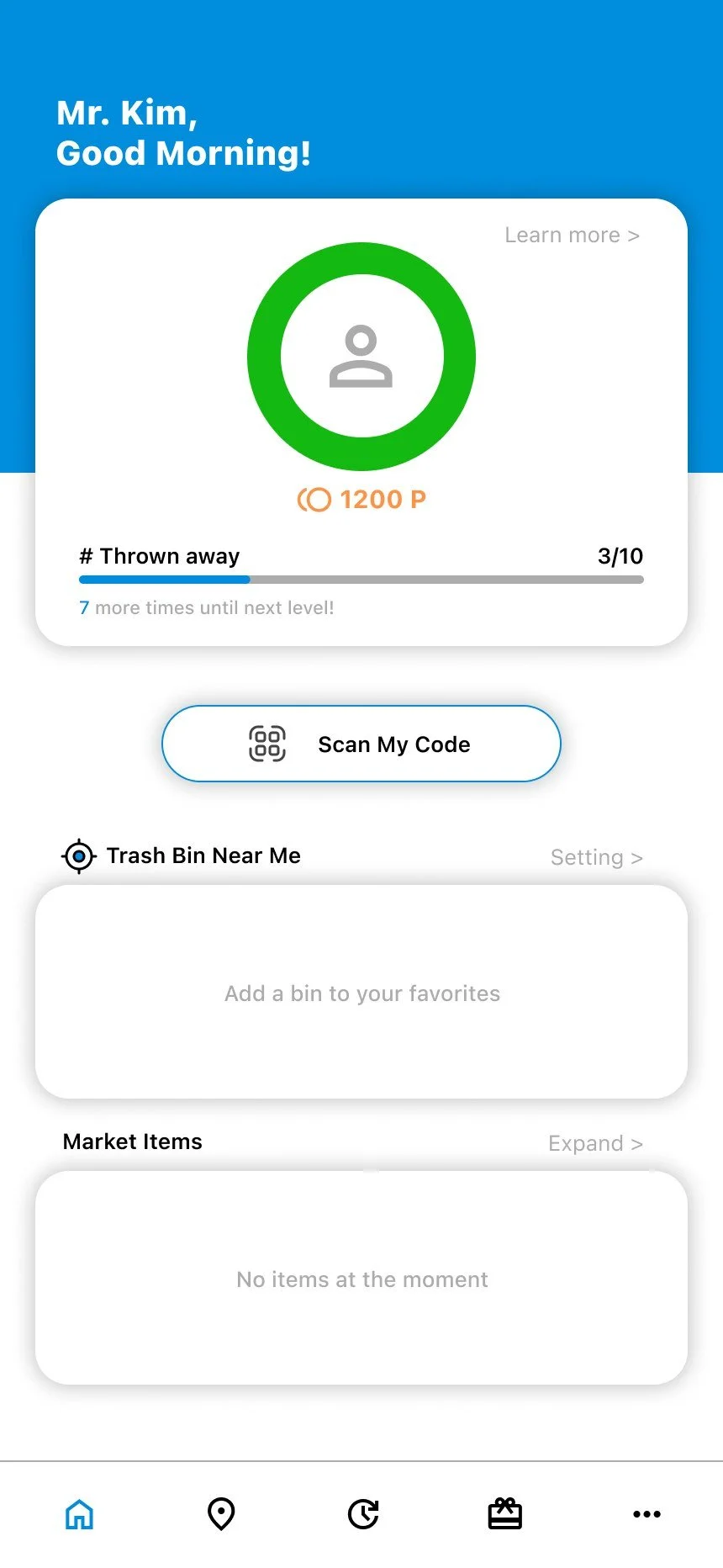
- 1The points come first: 1,200 P in a ring, and how many disposals until the next level. The behaviour the law wants is the thing the app counts.
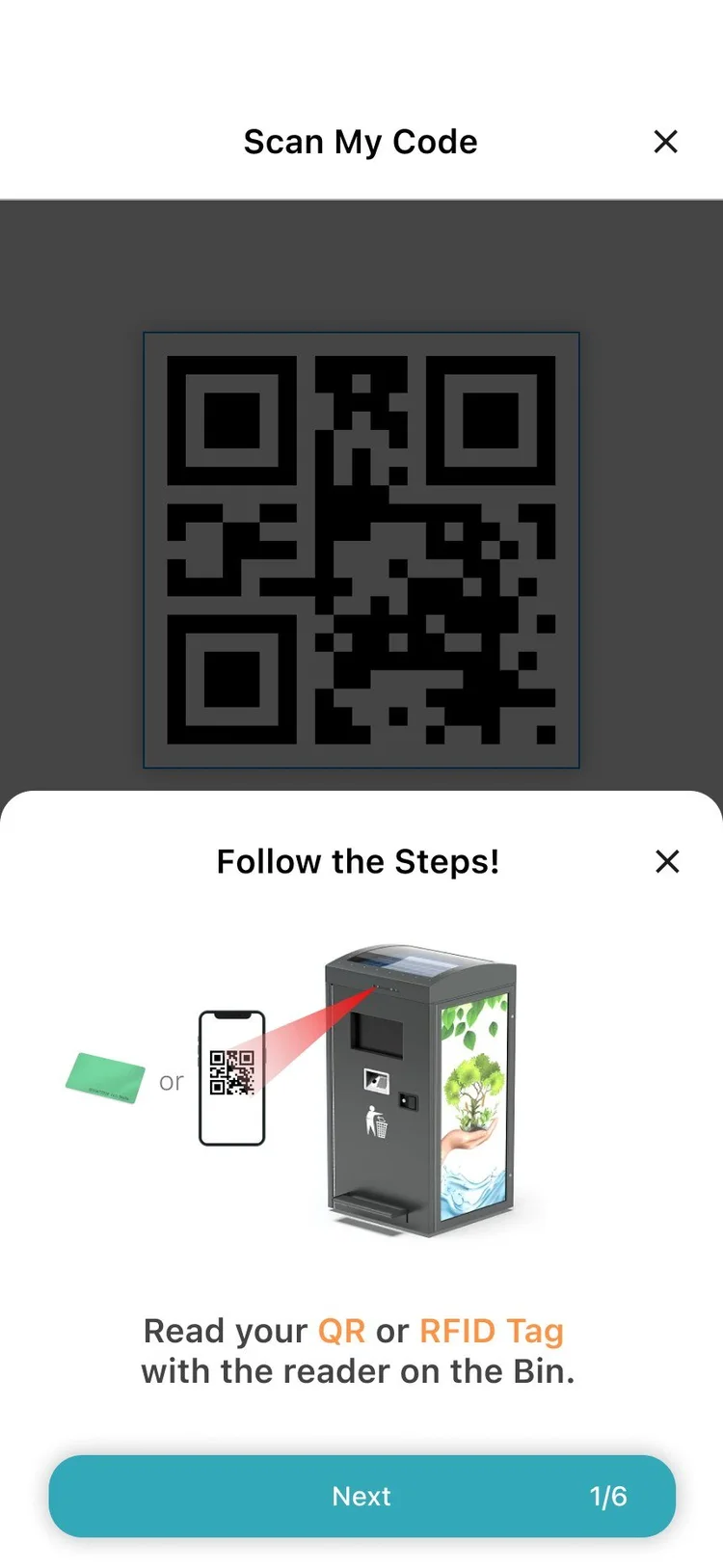
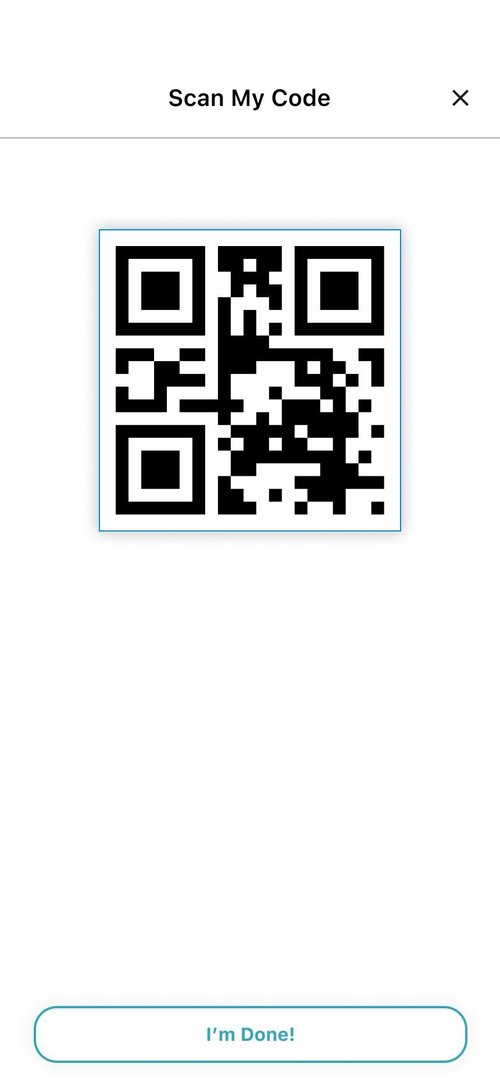
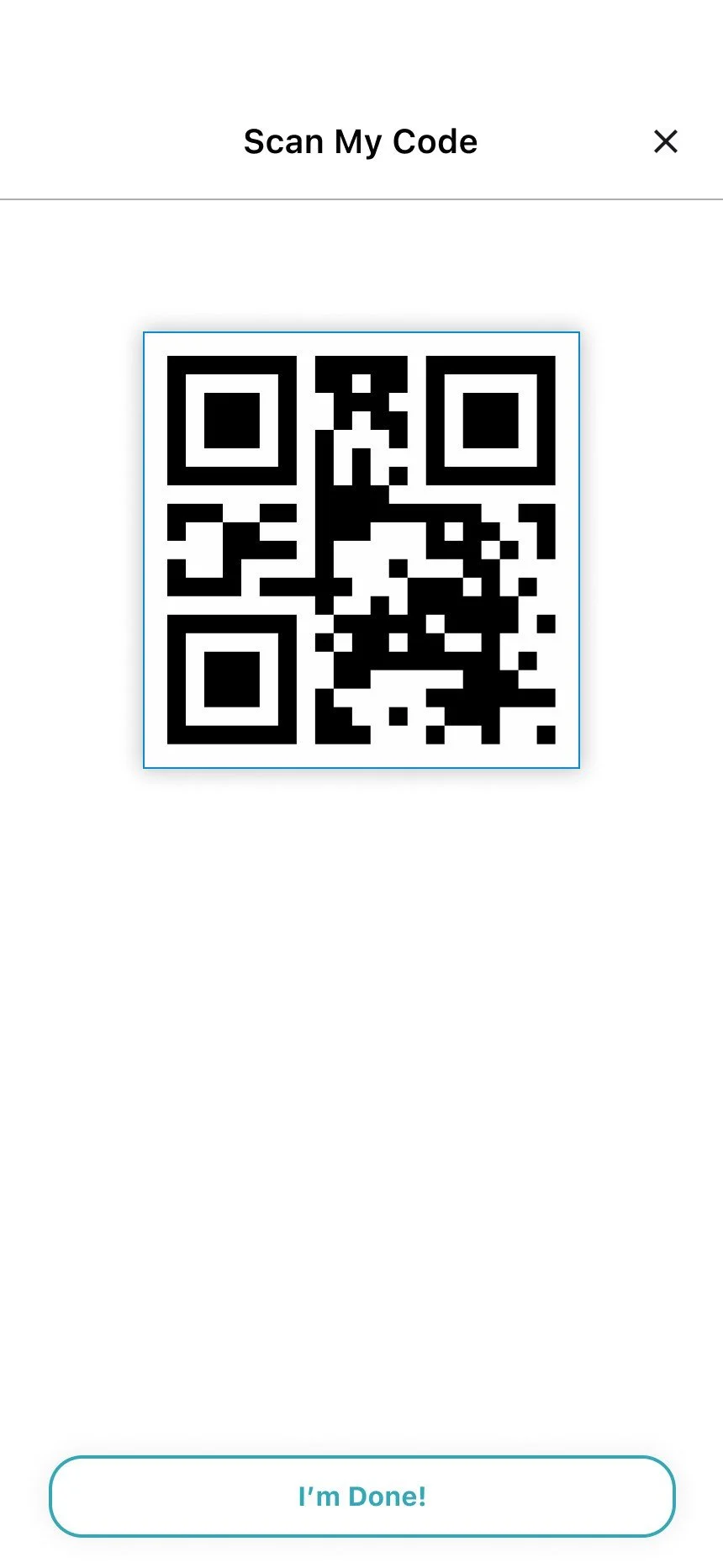
- 2Scan My Code is the centre of the screen. For a household without a phone, the same code is printed on an ID card; the bin reads either.
- 3The first time at a bin, six drawn steps: hold the QR or the RFID tag to the reader, then throw the waste away.
1
2
3
4
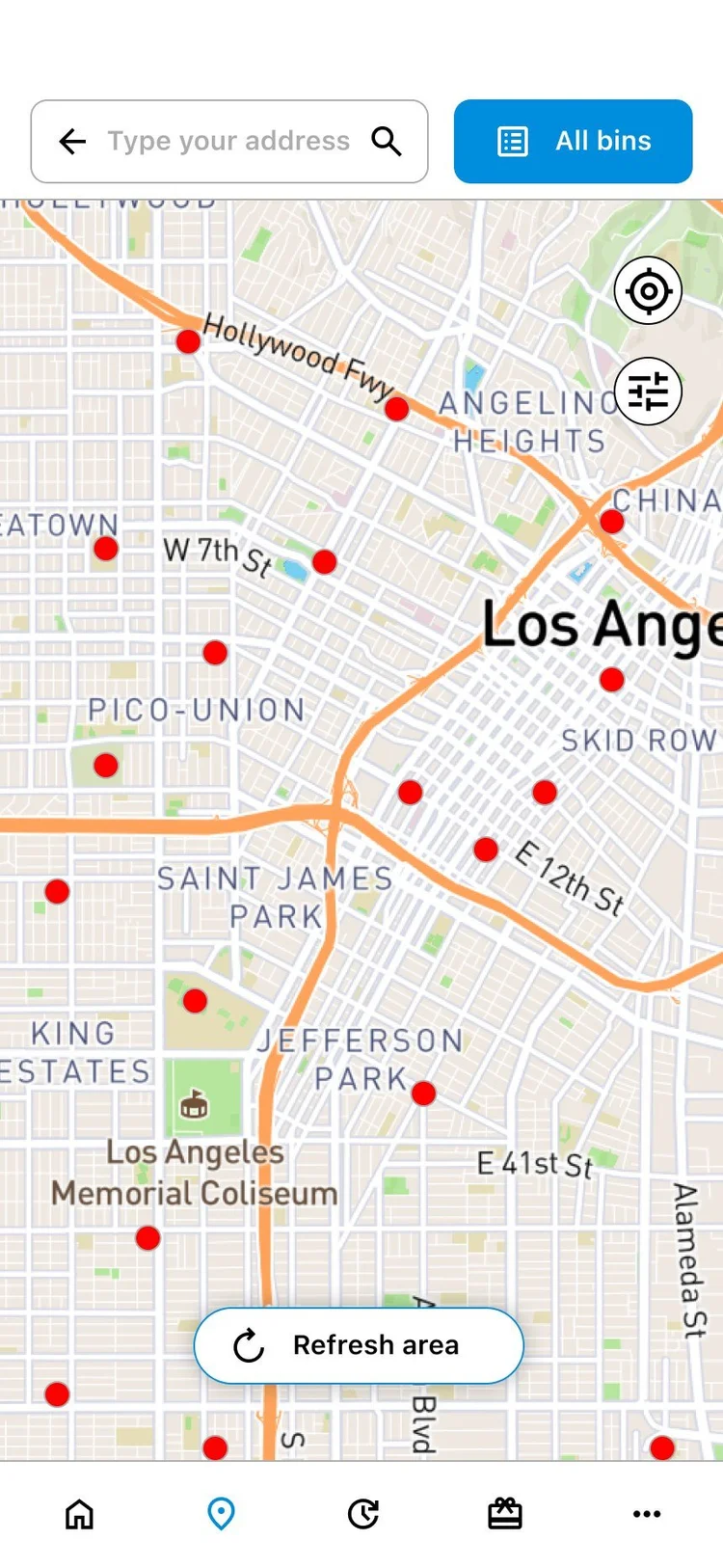
02Where to throw it, and what you threw.
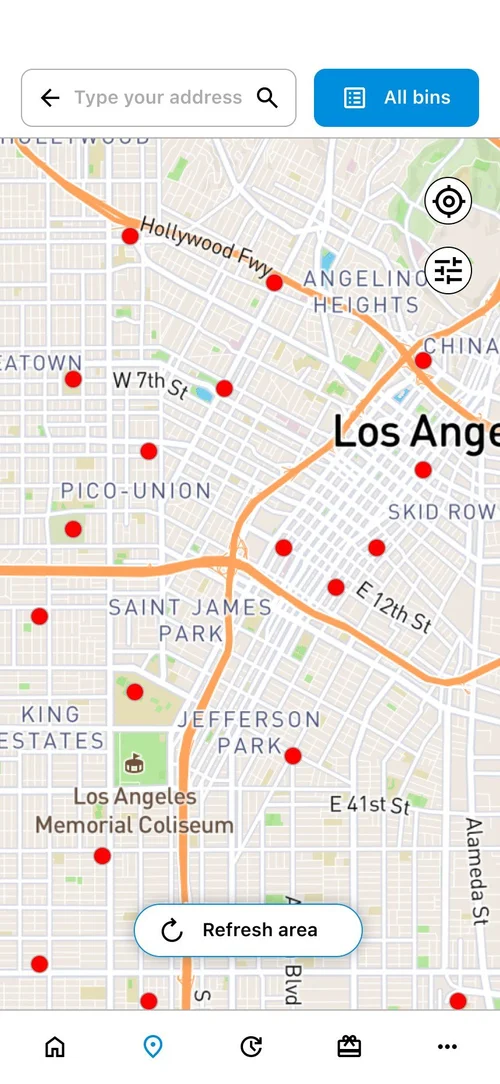
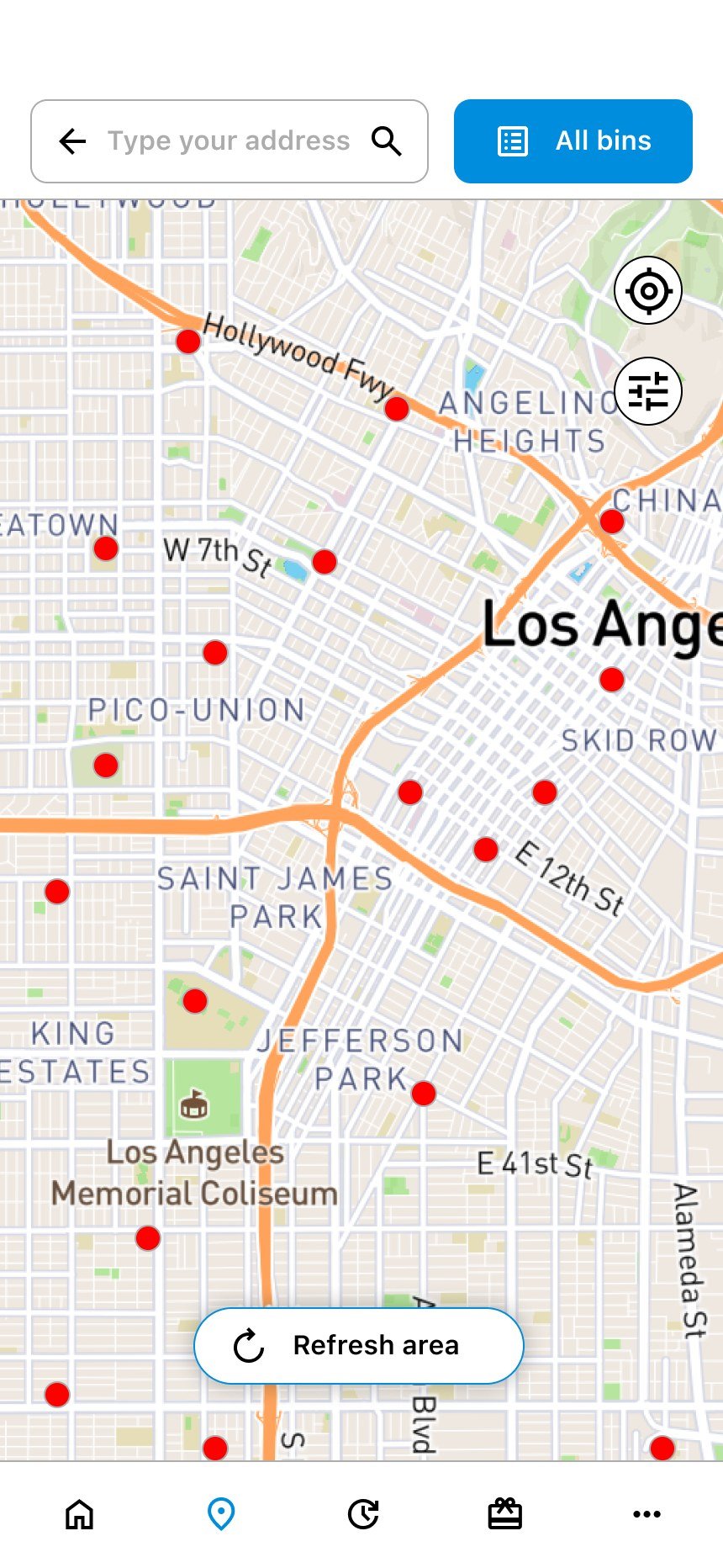
- 1Search an address, or let the GPS find you; the list of all bins is one tap away.
- 2Every bin nearby as a dot, with a refresh, because in an apartment block the nearest bin is not always your own.
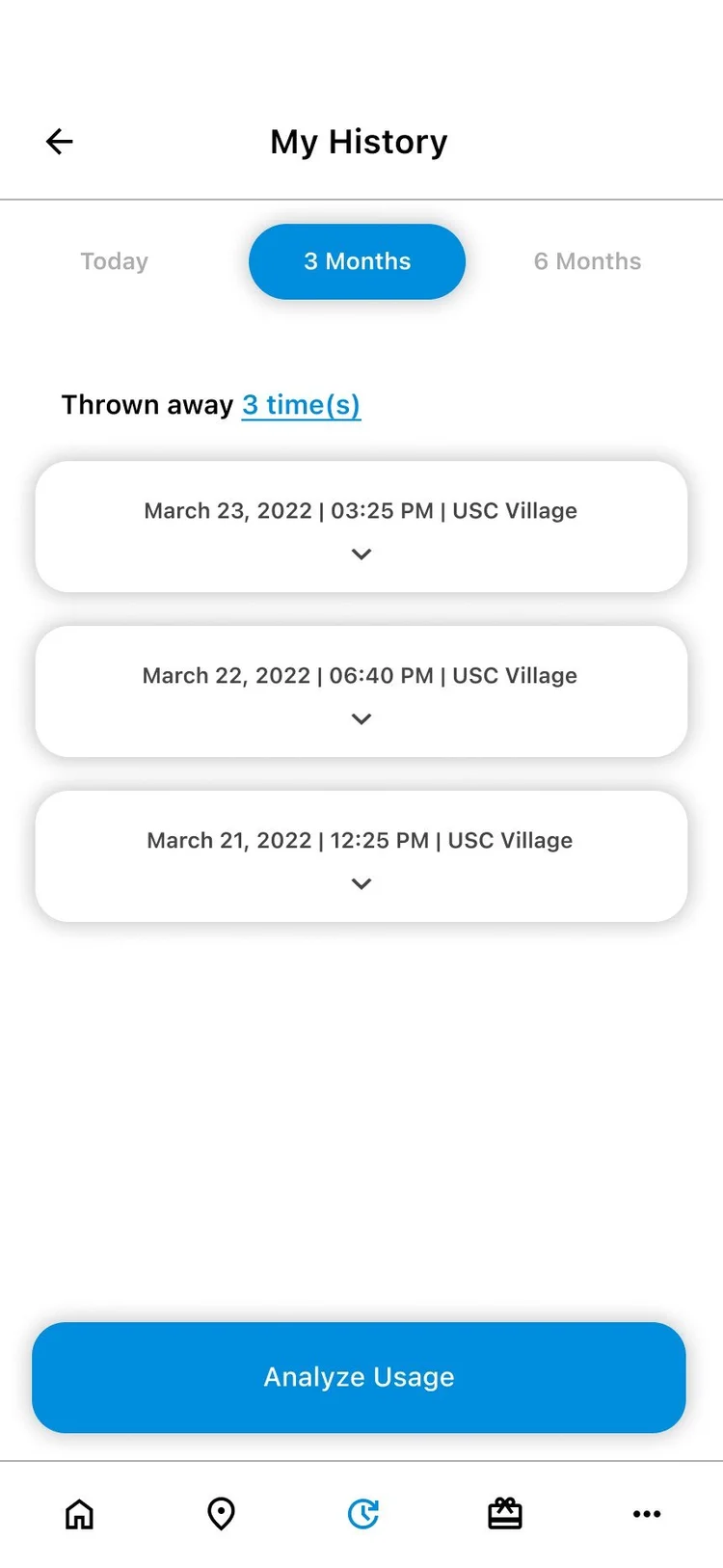
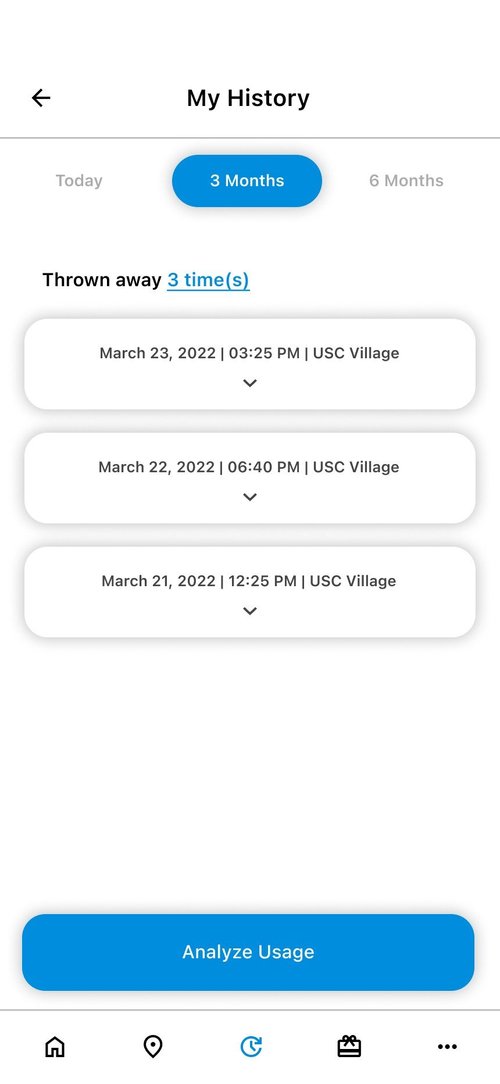
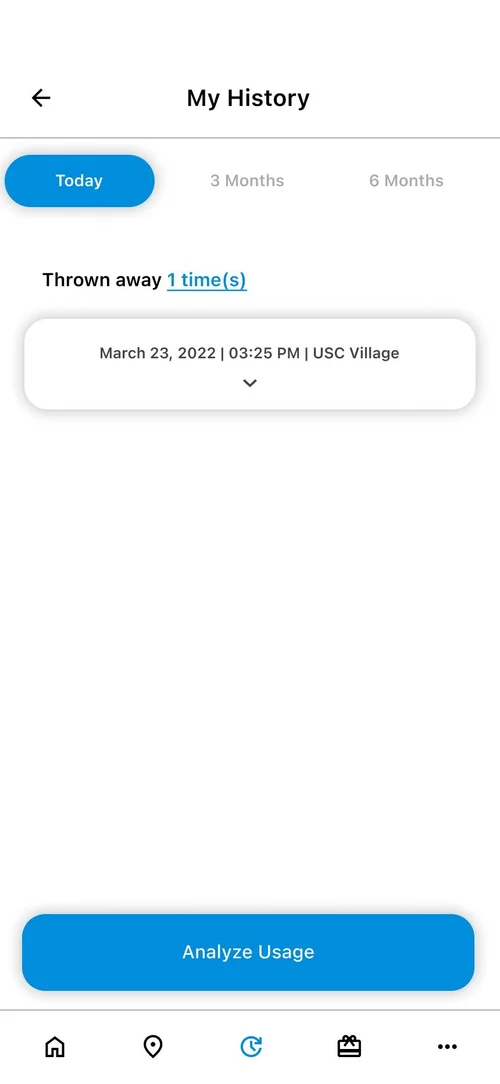
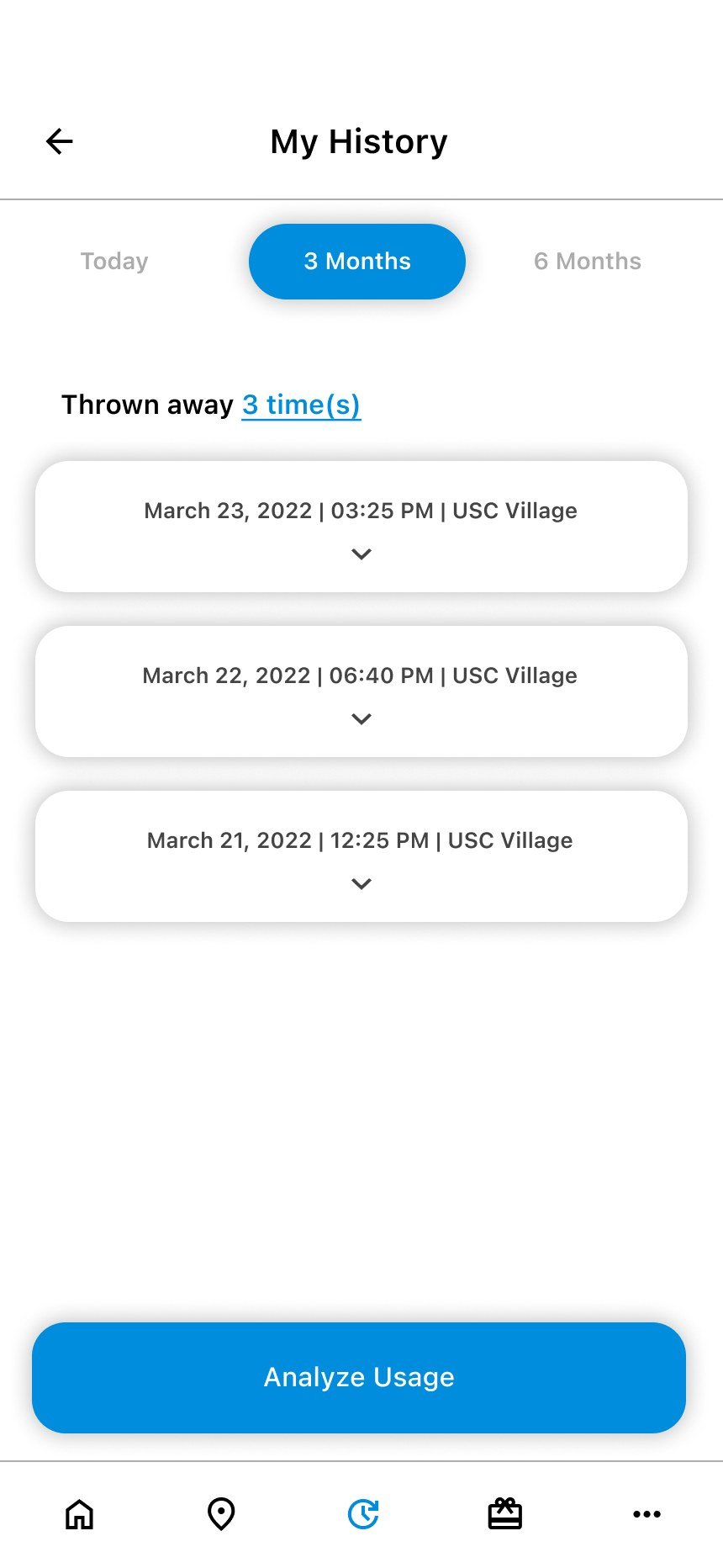
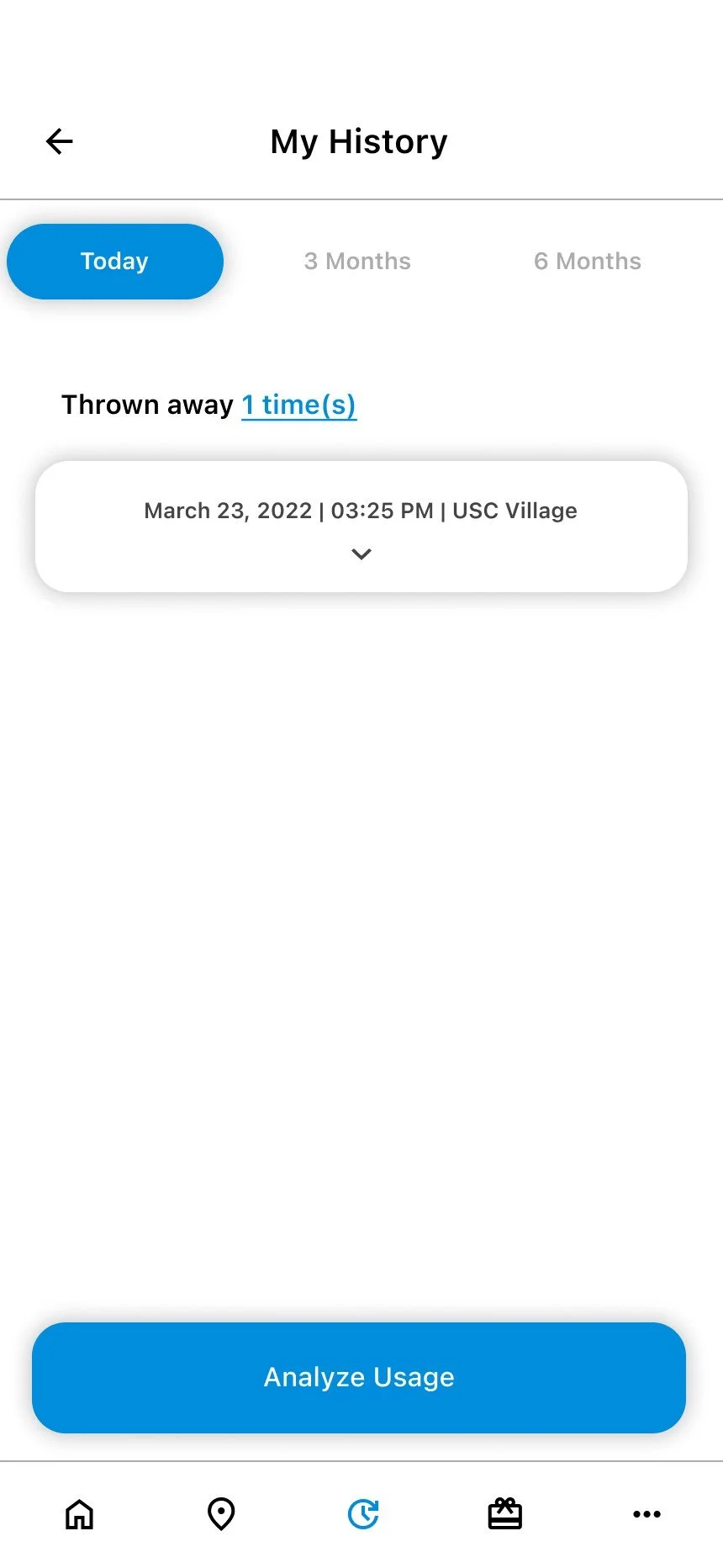
- 3History by today, three months or six: each disposal with its date, time and place. The bill is explainable because the data is visible.
- 4Analyze Usage turns the list into a trend, the part of the concept that shows people their own waste.
 1
2
3
03Points that come back as something.
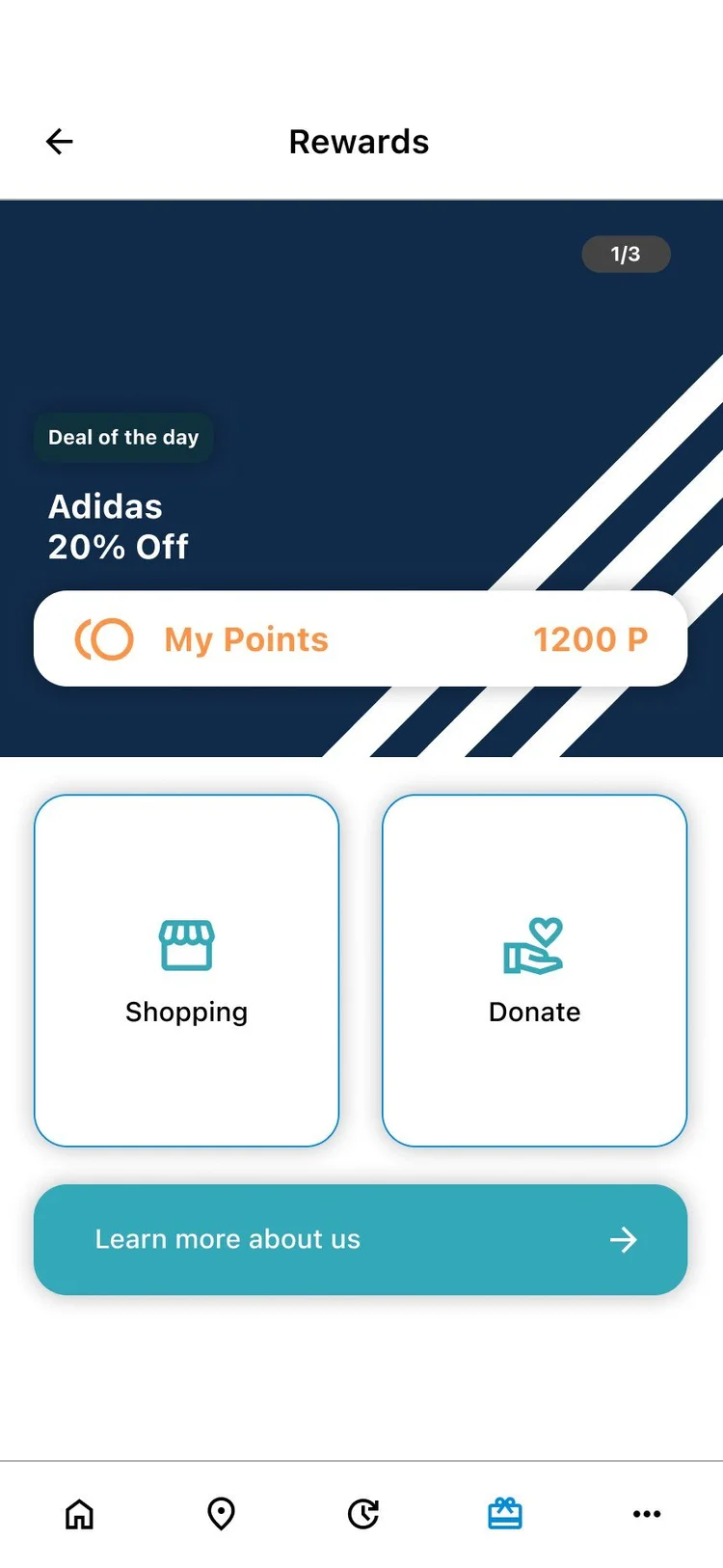
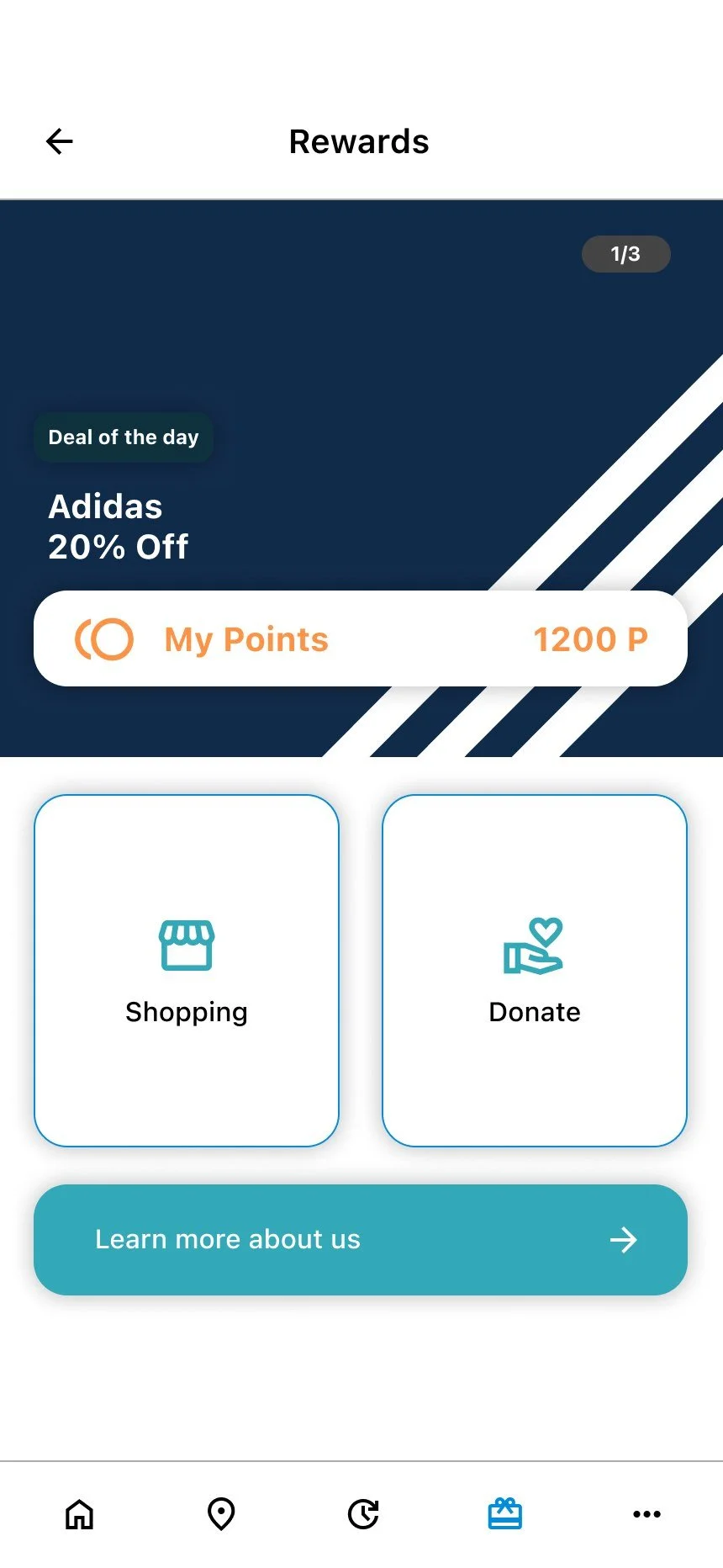
- 1A deal of the day from a partner brand, next to the balance, so the reward is concrete before it is spent.
- 2Two ways to spend: shop the market, or donate the points. A smaller bill and a reward point the same way.
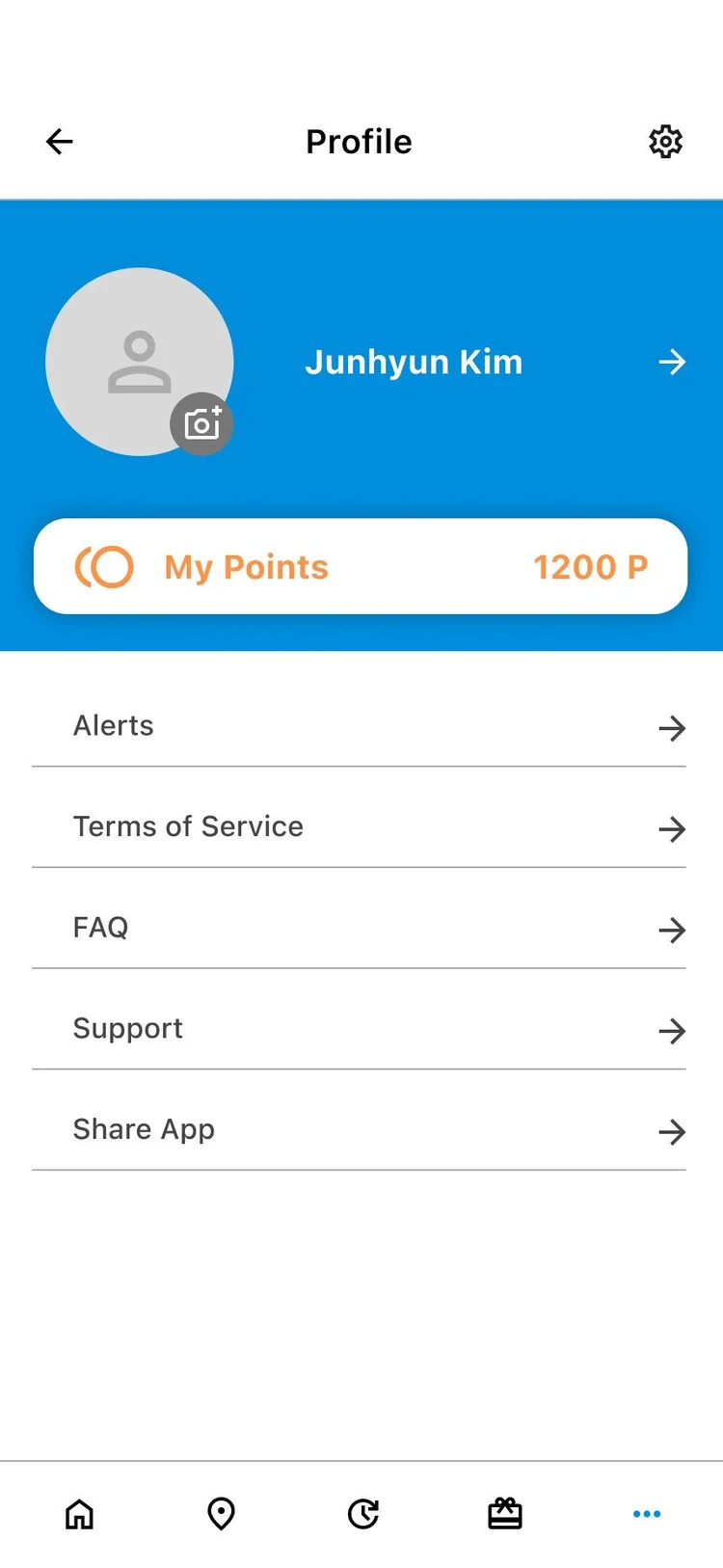
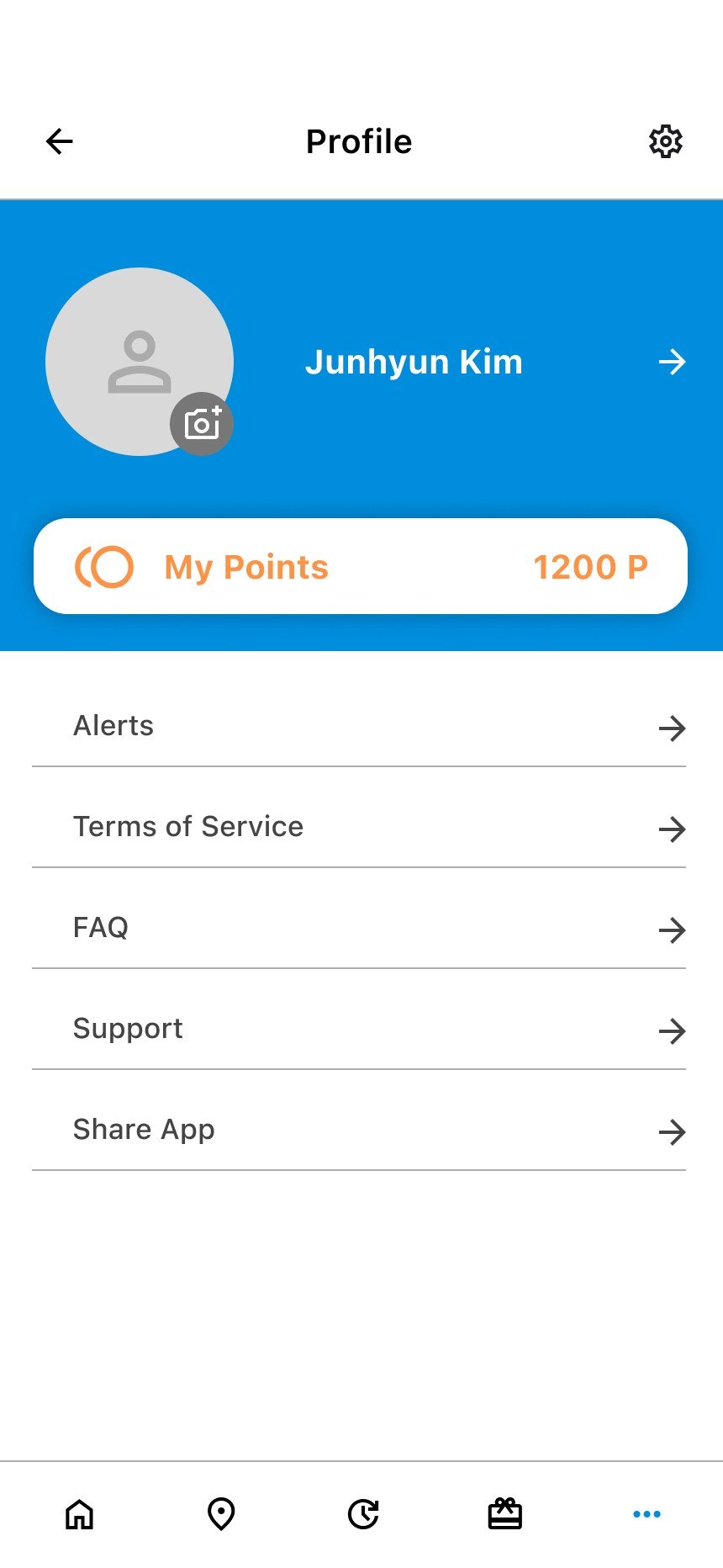
- 3The profile keeps the points in view and the rest in a plain list: alerts, terms, help.
The brand
A bin lid for a mark, and a name that says take back.
RE:Tract, as in retract: take the waste back out of the landfill. The mark is a pedal bin reduced to a lid and a handle, in a deep teal on soft gradient blobs, so a civic system reads as calm rather than municipal.
- Deep teal#1E3A4A · The mark, the dark backgrounds
- Mint#ADE8E7 · The blobs, the soft surfaces
- Blue#008DDD · The app’s actions and headers

Try it
The prototype, and the deck it came from.
Start at the logo screen and tap through.
Home, the scan steps and the code, the map of bins, history, rewards and the profile, as one clickable prototype. Where a screen has no hotspot, the arrow keys step through.
- The prototype View in Figma
- The research deck View in Figma
- The brand and the slides View in Figma
- The law SB 1383 at CalRecycle
Outcome
A system on paper, and the questions it leaves.
- 1What it settles. Registration disappears as a step; the fee follows the weight; the resident is paid for the behaviour the law wants. The three methods cover a house, a block and a restaurant.
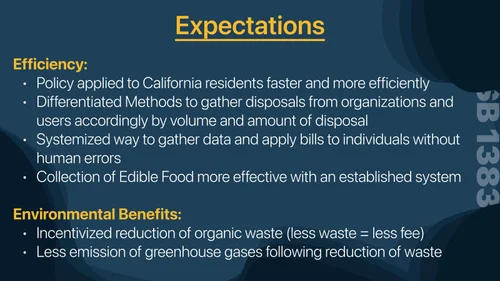
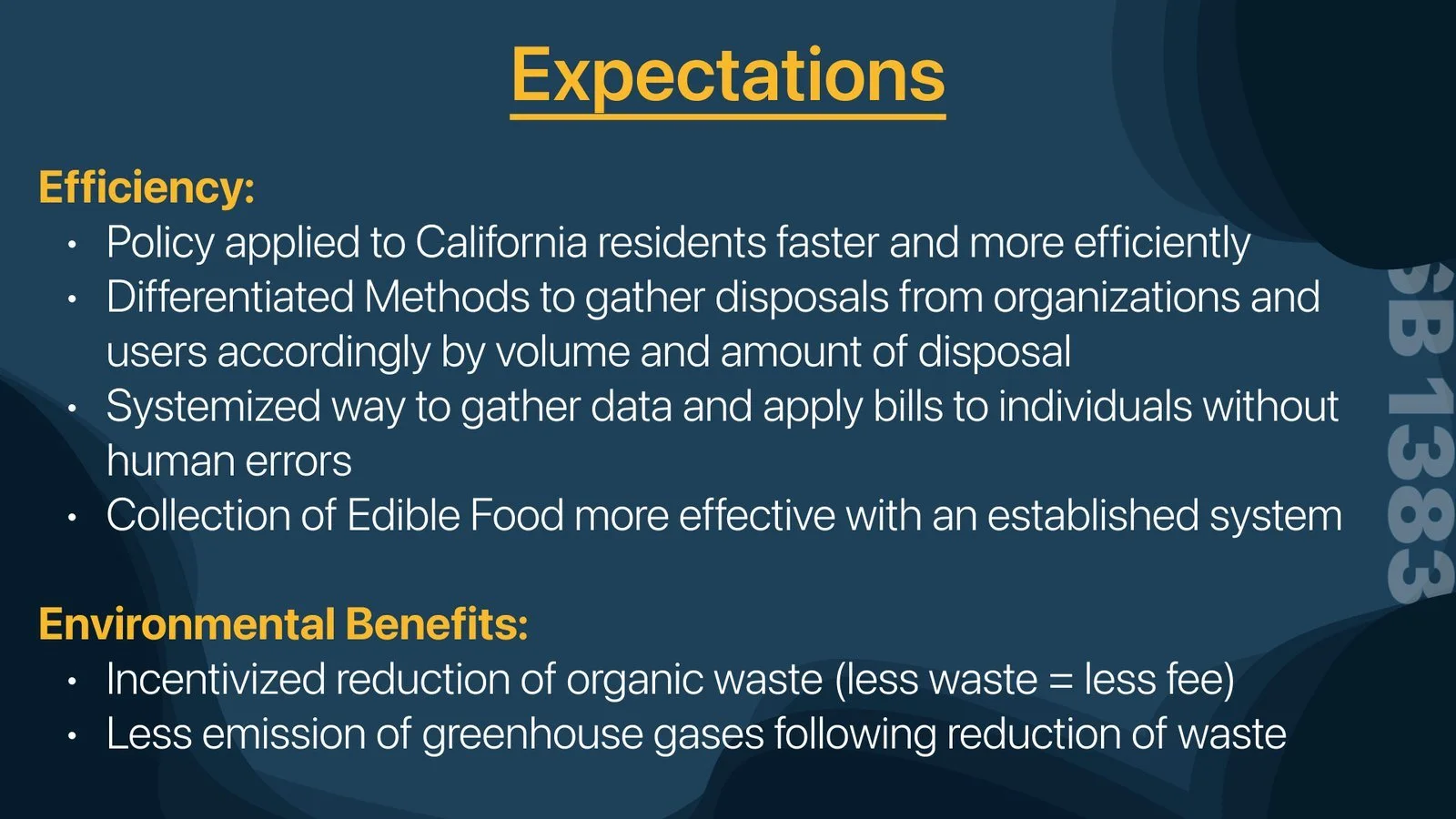
- 2What it expects. Faster adoption than a self-started sign-up, bills without human error, more edible food recovered, and less methane as the waste falls.
- 3What it leaves open. Who pays for the tags and the readers, how a household’s weighing data is kept private, and what happens when a tag is shared or lost.
- 4Why speculative. It is a design argument about a policy, not a product with a customer. The value is in showing that the law’s failure is an onboarding problem, and that onboarding can be designed away.
The whole collection
Every slide and screen, at full size.
Scroll sideways. The app screens first, then the brand, then the research deck in order. Each opens at full size in a new tab.
 App The splash screen
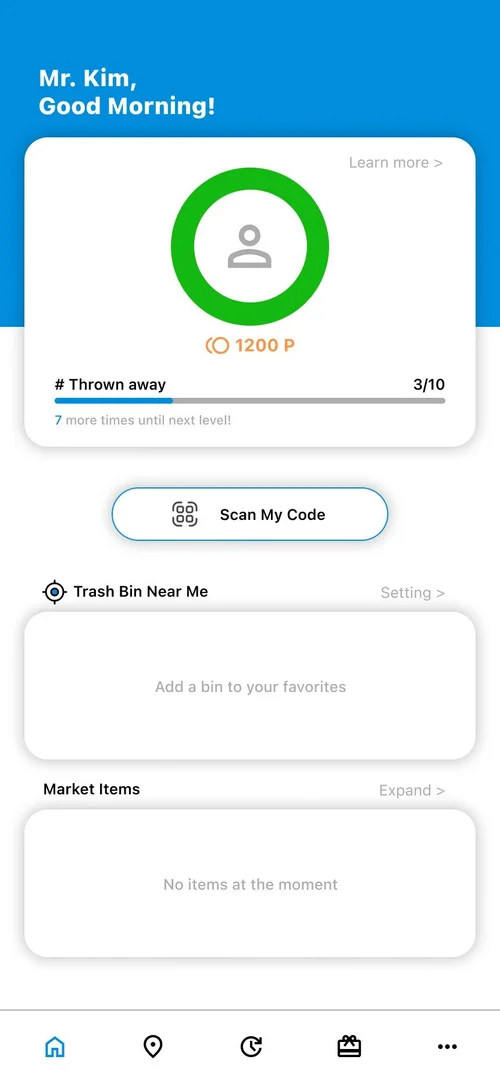 App Home
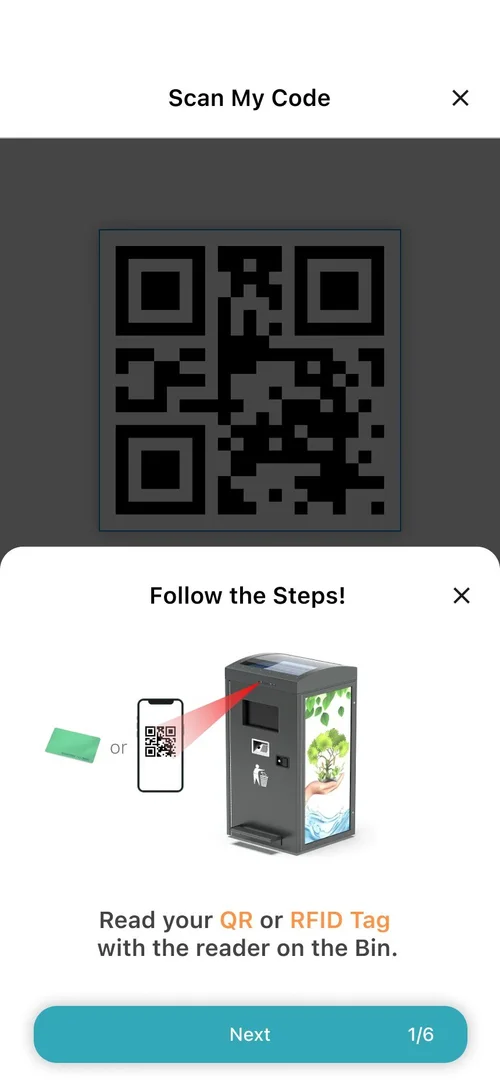 App Scan at the bin: the steps
 App Scan at the bin: the code
 App Bins near you
 App History, three months
 App History, today
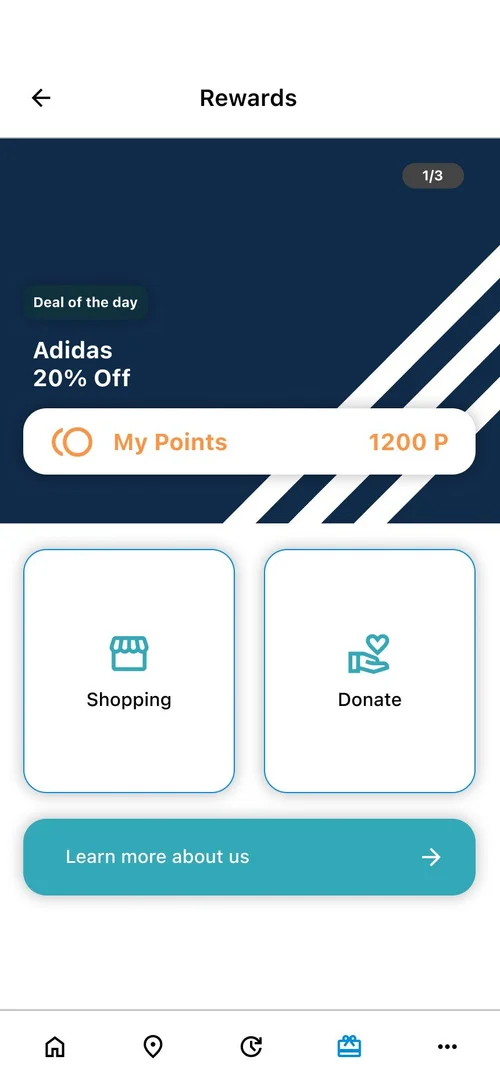 App Rewards
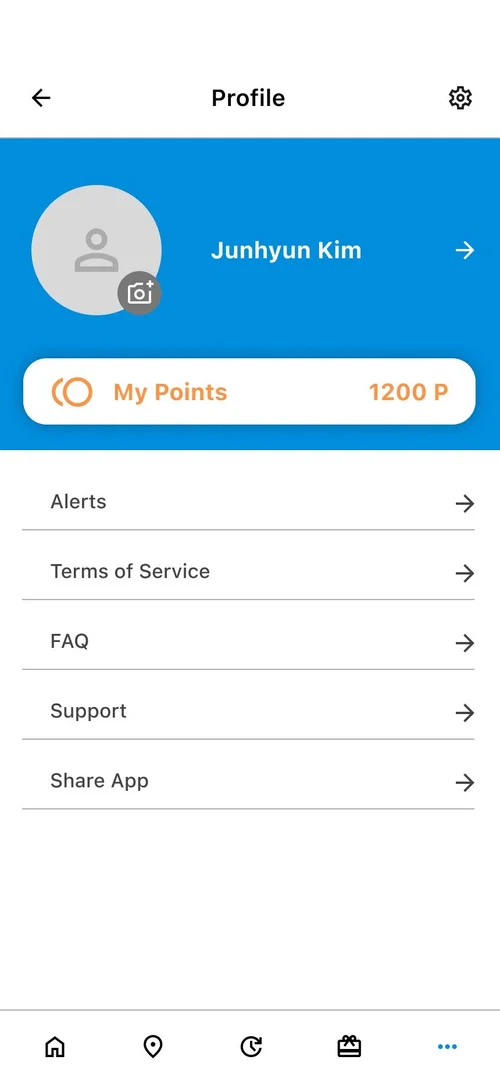 App Profile
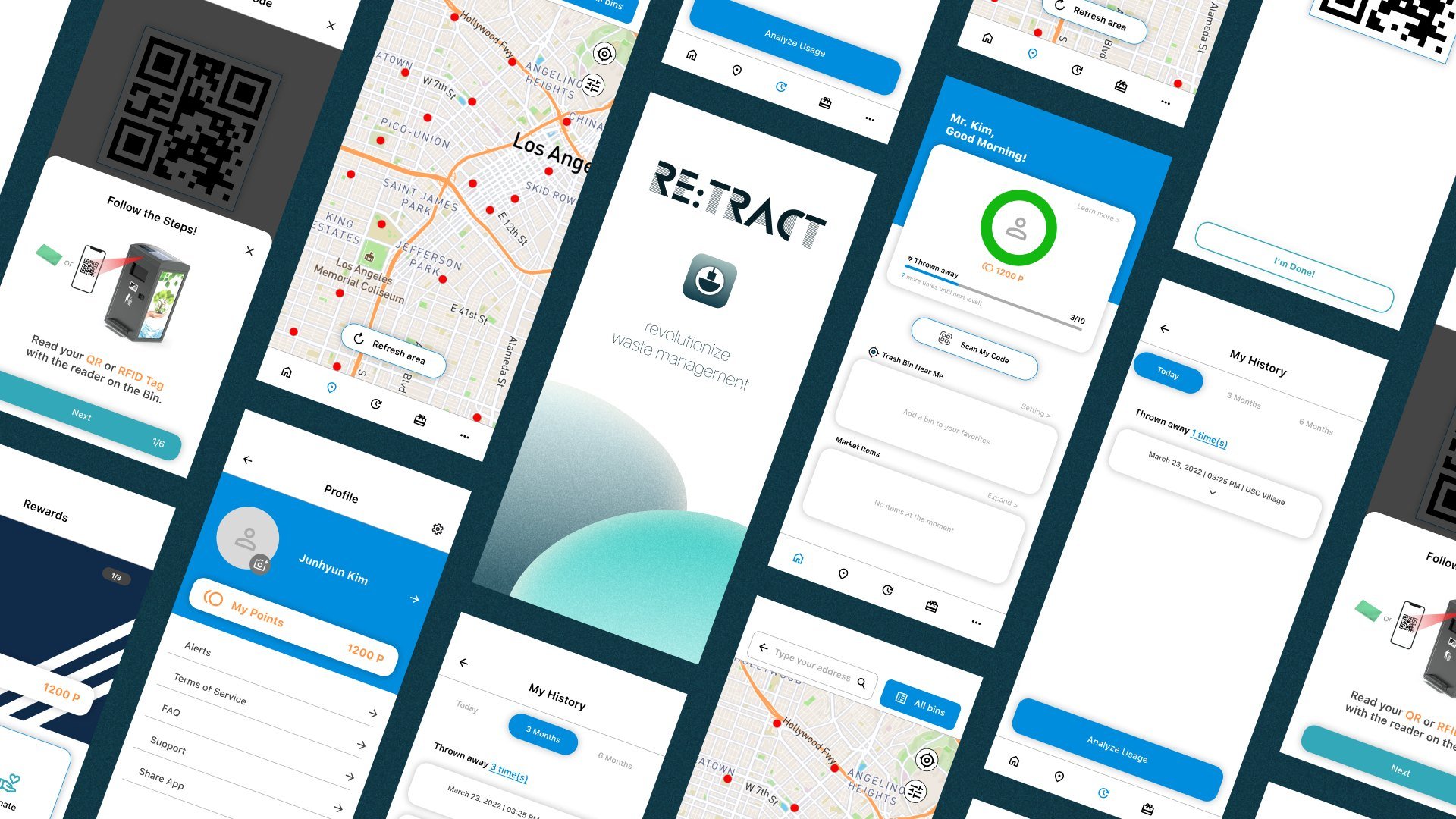
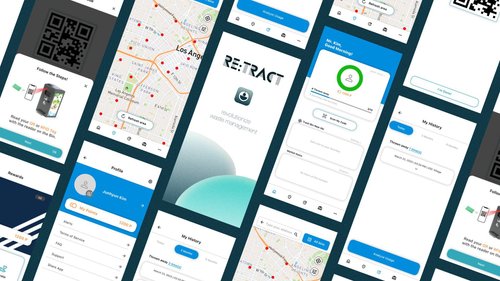 Brand The screens, as presented
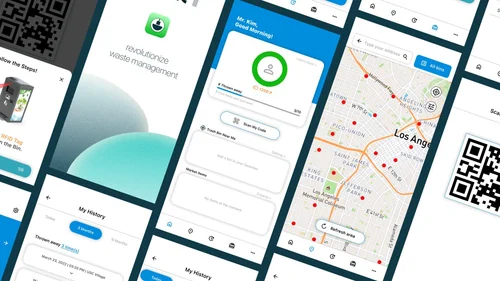 Brand The screens, the other slide
 Brand The logo on the gradient blobs
 Brand The logo, 4:3
 Brand The brand card
 Brand The app icon
 Research Title
 Research Waste statistics
 Research Know this law? SB 1383
 Research What does it do?
 Research Ineffective, why?
 Research Proposed solution
 Research Operation system
 Research RFID methods
 Research Expectations
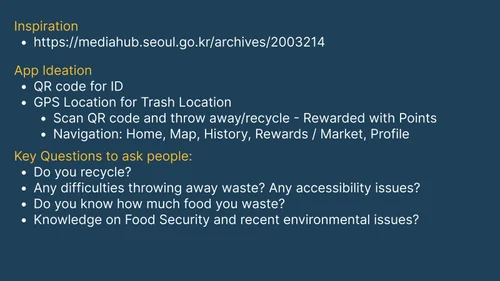 Research App ideation
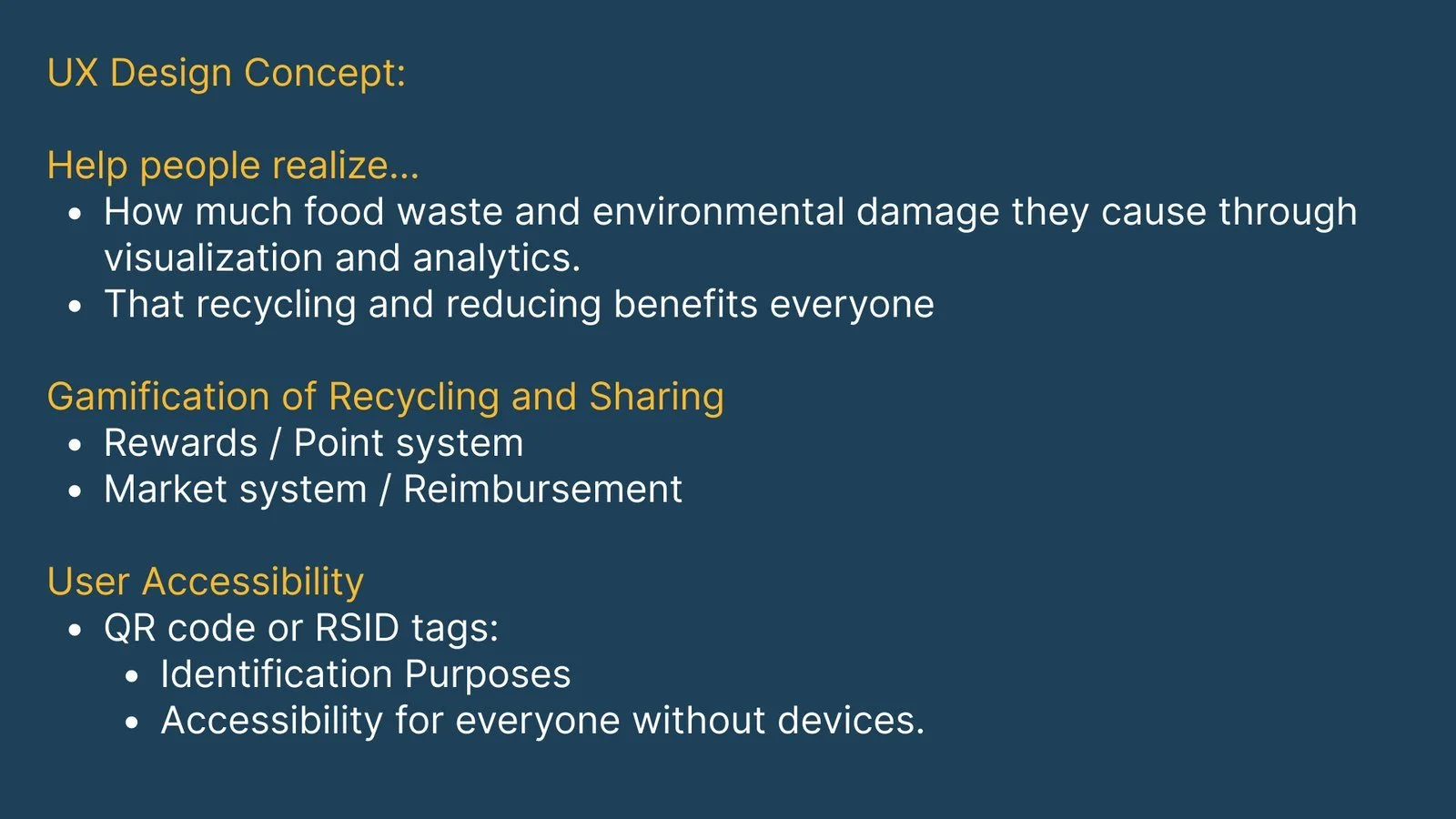
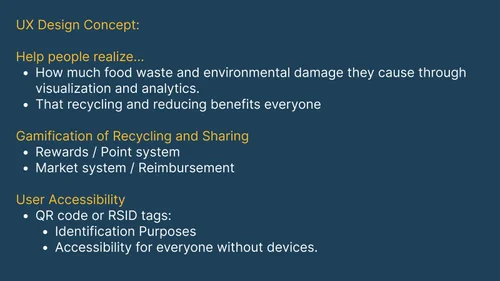 Research UX design concept
What I learned
Design the step people skip, out of existence.
- Policy fails at the form. SB 1383 did not fail on its goals; it failed at a registration nobody started. That is a design problem.
- Measure instead of asking. A bin that weighs removes the honesty problem and the data-entry problem at once.
- Pay for the behaviour you want. Points and a smaller bill do more than a mandate that is only “encouraged”.
- One system, three doors. A house, a block and a restaurant needed three ways in, not one way enforced on all.
- Keep a card. Not everyone has a phone. The QR card is the most important screen the app does not have.
- Speculation needs numbers. The deck carried the argument because it started with 27 million tons, not with an idea.
RE:Tract argues that a recycling law can work if the resident’s only job is to scan a tag, and everything else is designed around them.
Revolutionize Waste Management
In this one-person project, I developed an innovative mobile application called “RE:TRACT” with the goal of revolutionizing waste management.
The app aims to tackle the pressing challenges associated with waste disposal and recycling, particularly focusing on organic waste in California. By leveraging technology and user-centric design principles, RE:TRACT offers a comprehensive solution that empowers individuals and businesses to make a positive impact on the environment.
The service extends its reach to encompass users without mobile devices by implementing physical ID cards as an alternative to mobile phones, thus eliminating the dependency on mobile technology.
Responsibilities
Conducted research on waste management challenges and California's waste statistics.
Defined project goals and objectives based on the findings.
Created wireframes to establish the overall structure and layout of the RE:TRACT mobile application.
Developed interactive prototypes using Figma, visually representing the app's user interface and user flows.
Designed visually appealing and intuitive user interfaces using Illustrator and Photoshop.
Ensured consistency in design elements, colors, typography, and iconography throughout the app.
Conducted usability testing and incorporated user feedback into the design iterations.
Considered accessibility principles and guidelines while designing the user interface
Conducted regular design reviews and quality checks to maintain design standards and consistency.
Research & Outline
This presentation provides a brief overview of the problem of waste in California and introduces the proposed solution that became the basis of my UX design.
Before exploring the prototype, here is a brief summary of the key slides:
Waste Statistics: Highlighting the significant amount of organic waste generated in California and the alarming statistics related to food insecurity.
SB1383: Introducing California's Short-Lived Climate Pollutant Reduction law, which mandates recycling of organic materials and sets goals for waste reduction and food recovery.
Proposed Solution: Presenting a unified system utilizing RFID tags to streamline waste management processes and improve efficiency.
RFID Methods: Exploring different methods of utilizing RFID technology for waste measurement and disposal.
Expectations: Outlining the expected benefits of implementing the proposed solution, including increased efficiency and reduced greenhouse gas emissions.
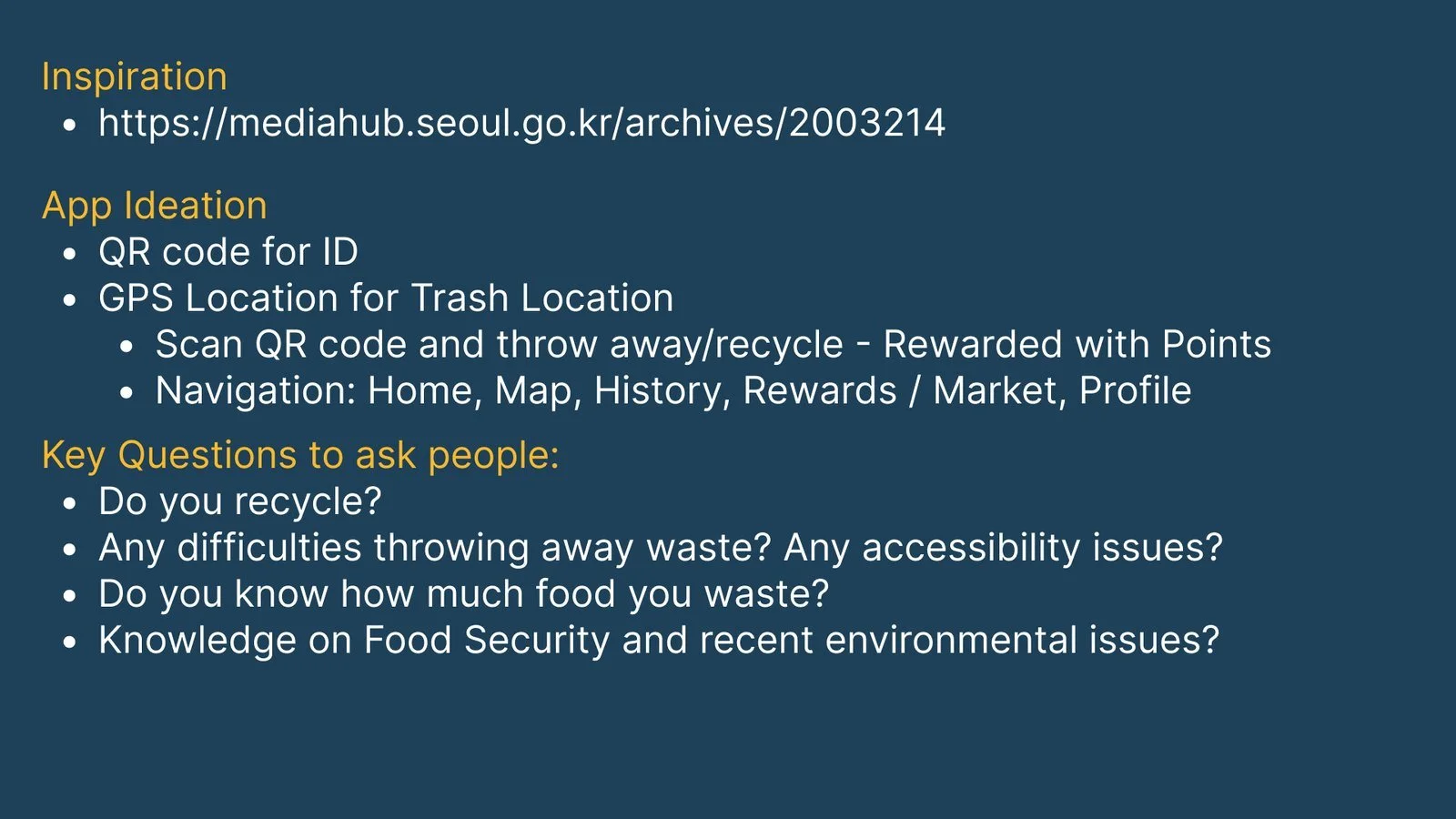
UX Outlines: Addressing user experience aspects, such as raising awareness, gamification elements, and user accessibility through QR codes or RFID tags.
This brief overview sets the stage for exploring the prototype and gaining a deeper understanding of how the solution revolutionizes waste management by promoting responsible practices, environmental sustainability, and improved efficiency.