

🍲
🥐
🧉
🍜
🌯
🍱
🍔
🍵
🧆
🍝
🥟
☕
🥗
🍲 🥐 🧉 🍜 🌯 🍱 🍔 🍵 🧆 🍝 🥟 ☕ 🥗
💬
💭
💬 💭
Kitchen Next Door USC, Spring 2022 Academic project
ProblemPeople who want company and good food, and no easy way to find both at once BuiltAn app where a home cook hosts a dinner and a stranger books a seat
After two years of eating alone, people wanted a table again, and the restaurant was not it. Kitchen Next Door lets anyone with a kitchen host a small dinner and anyone nearby reserve a seat, with the menu, the allergens and the host’s rating in front of them before they book. I led a team of three designers and a product manager through the semester, from a 55-person survey to a clickable prototype: the logo, the design system, the research, the storyboards, the wireframes and the prototype.
Why
Two years of eating alone, and a restaurant that doesn’t fix it.
The pandemic made eating a solitary habit. The want for company came back before the habit broke.
We surveyed 55 people in Los Angeles about how they eat and who with. The pattern was individualism by default: delivery, desk lunches, dinners alone, and underneath it a wish for the table. A restaurant sells food, not company. What was missing was the dinner party, for people who don’t know anyone to invite. So the brief became: make the home kitchen a place a stranger can book.
Two people, one table
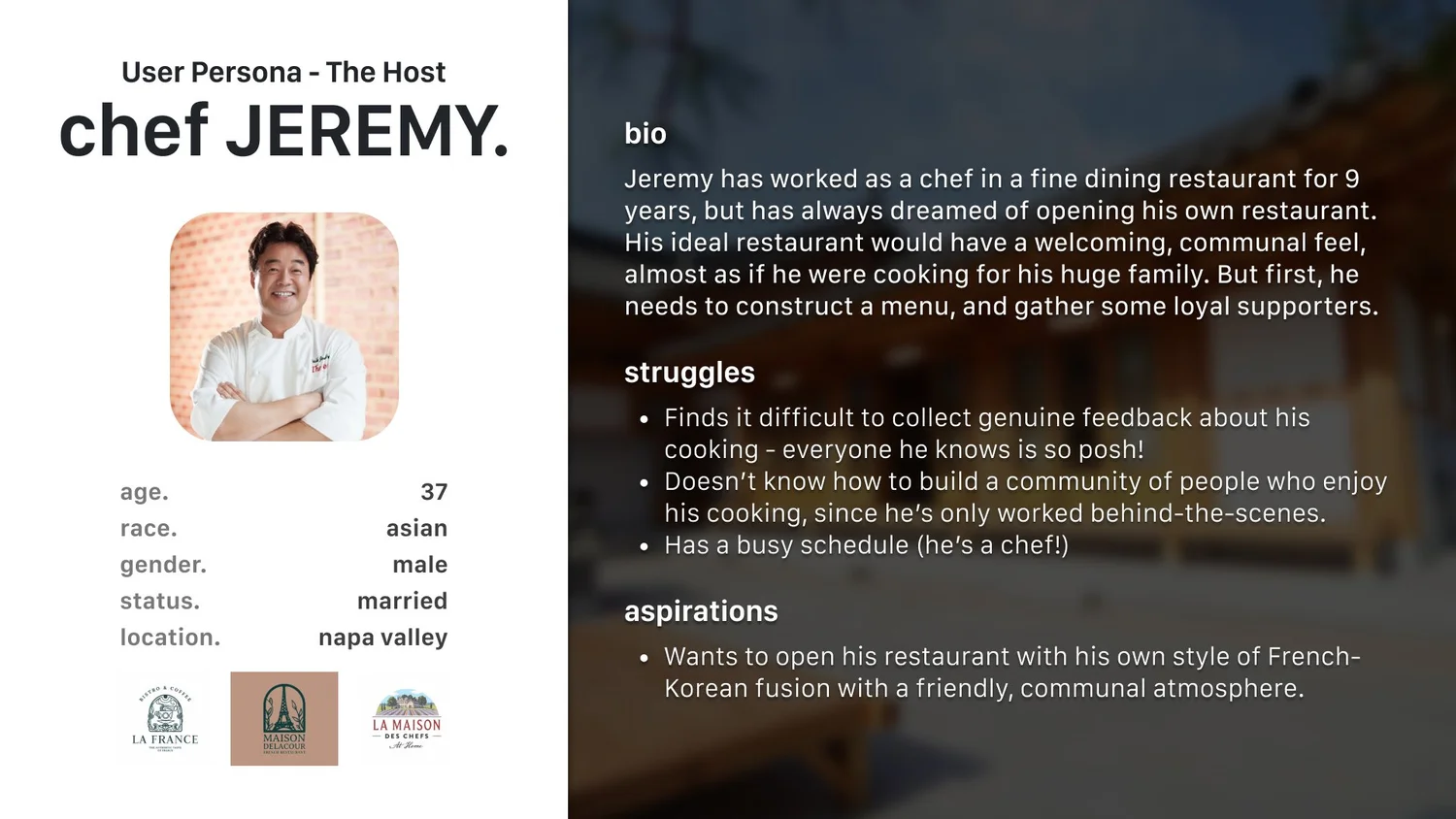
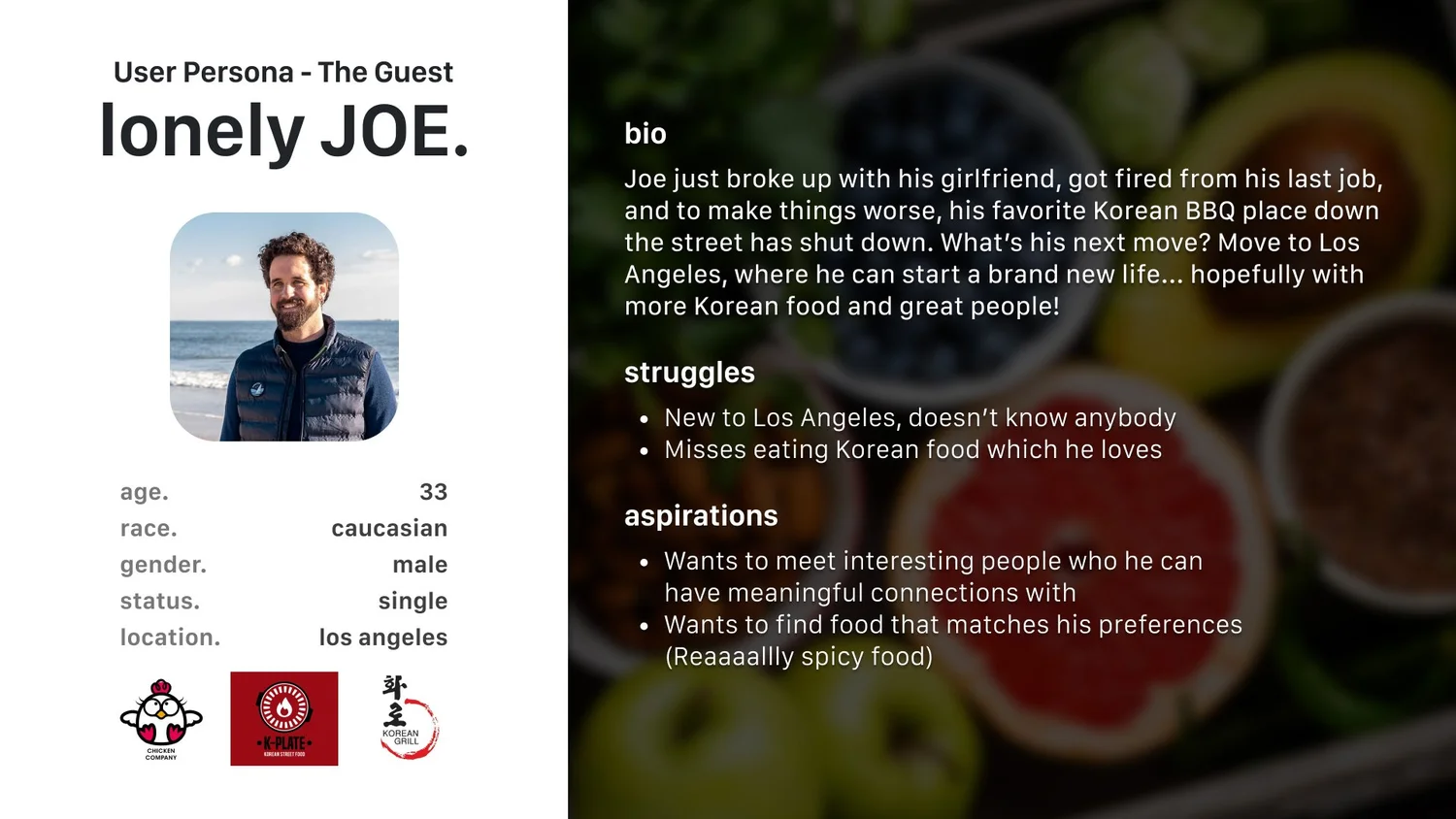
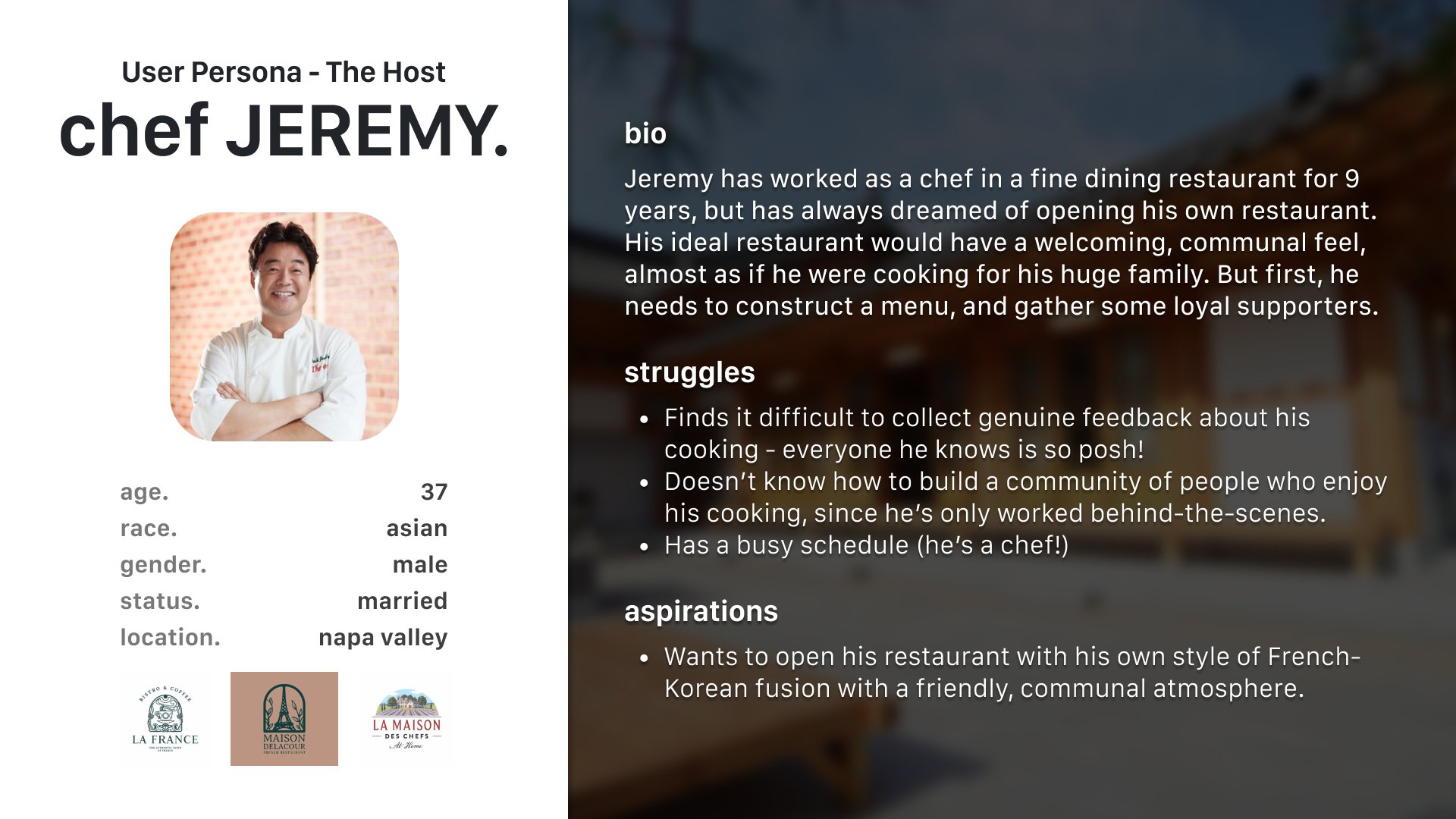
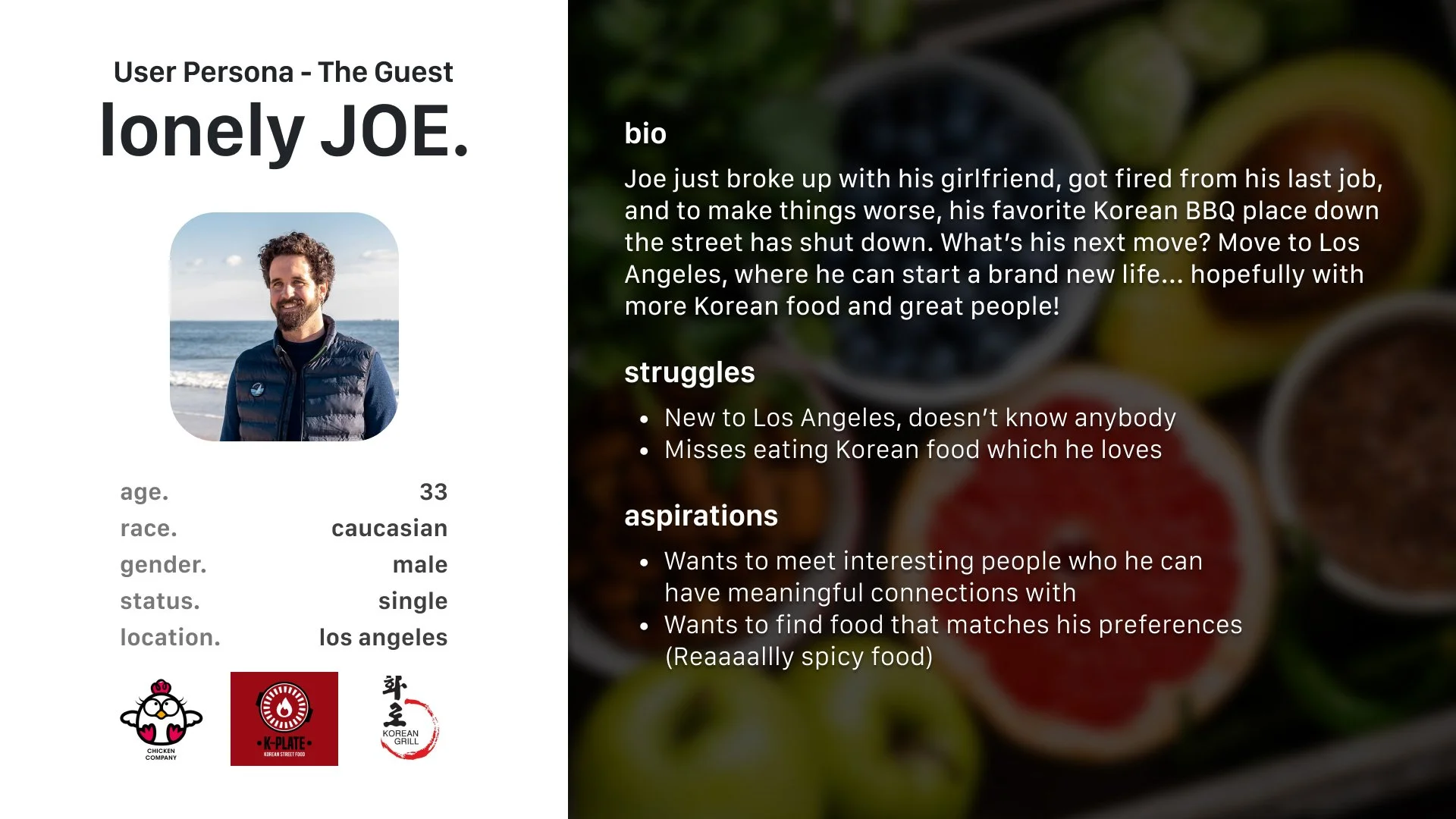
Jeremy has cooked in a fine-dining kitchen for nine years and wants to open a French-Korean place with a communal feel, but everyone he knows is too polite to give him real feedback. Joe is new in town, just lost a job and a girlfriend, and his favourite Korean restaurant closed. One has a kitchen; the other has an appetite.
The idea, in one breath
The dinner is the unit. Not the restaurant, not the cook.
Four decisions followed from that, and they shaped every screen. Each one was argued out in the team and checked against the survey before it went into the wireframes.
- Host and guest are one accountJeremy hosts on Friday and books someone else’s table on Sunday. One profile, two flows, no second app.
- The menu is the listingA dinner is sold on the dishes and the host’s rating, with the food photographed by the host, not by a brand.
- Allergens before appetiteDietary restrictions are asked at booking and shown on the host’s side, so the kitchen cooks for the room.
- The table keeps goingRatings, reviews, following and a feed, because the survey said the community part needed to be visible, not implied.
How it was made
One semester, from a survey to a prototype people could tap.
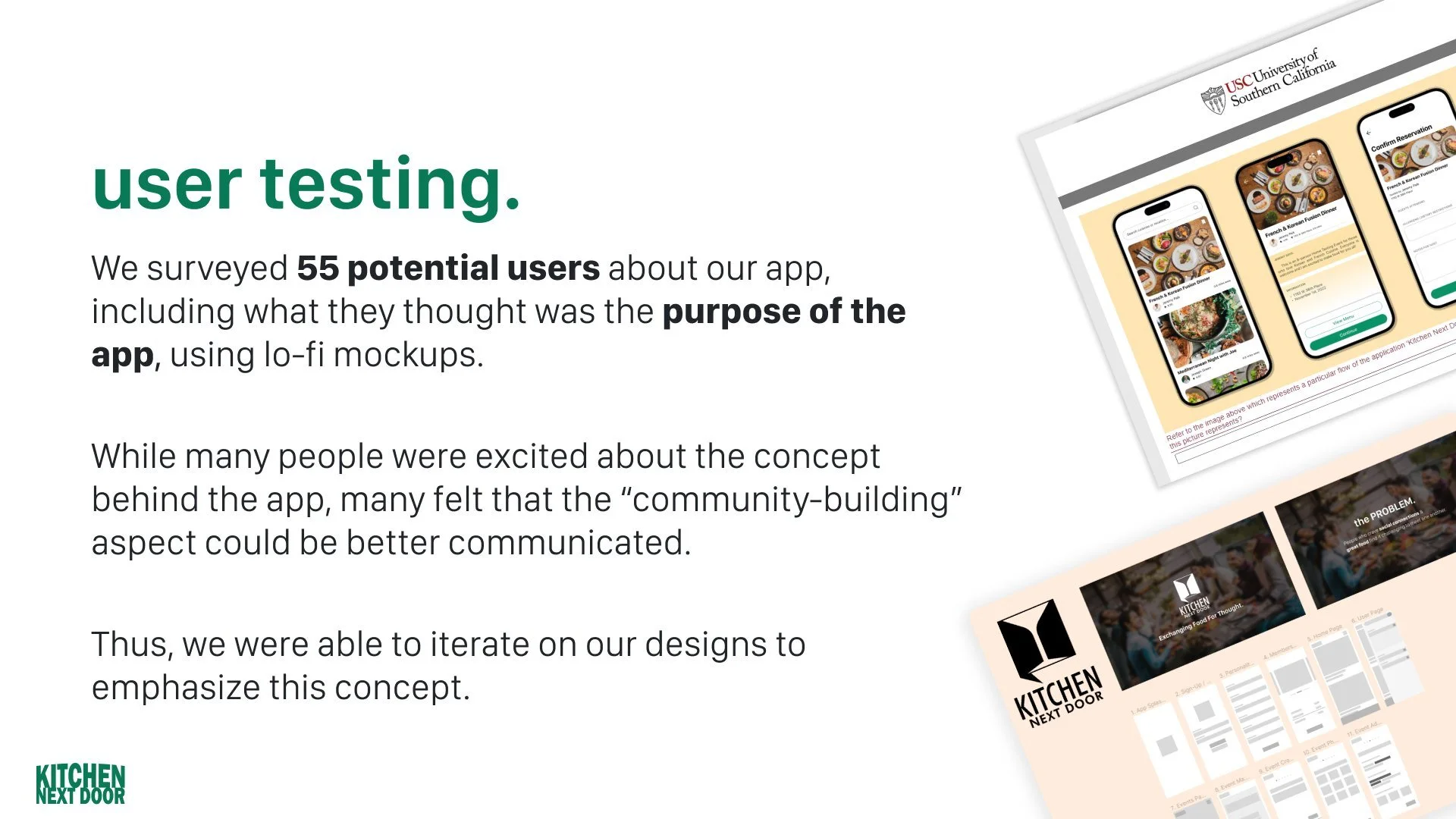
- ISurvey 55 peopleHow they eat, who with, and what they thought the app was for when shown lo-fi mockups.
- IITwo personasJeremy the host and Joe the guest: the two sides of one dinner, written from the survey.
- IIIStoryboards and flowsJoe finds Jeremy’s dinner; Jeremy sets the menu. Two flows, drawn before any screen.
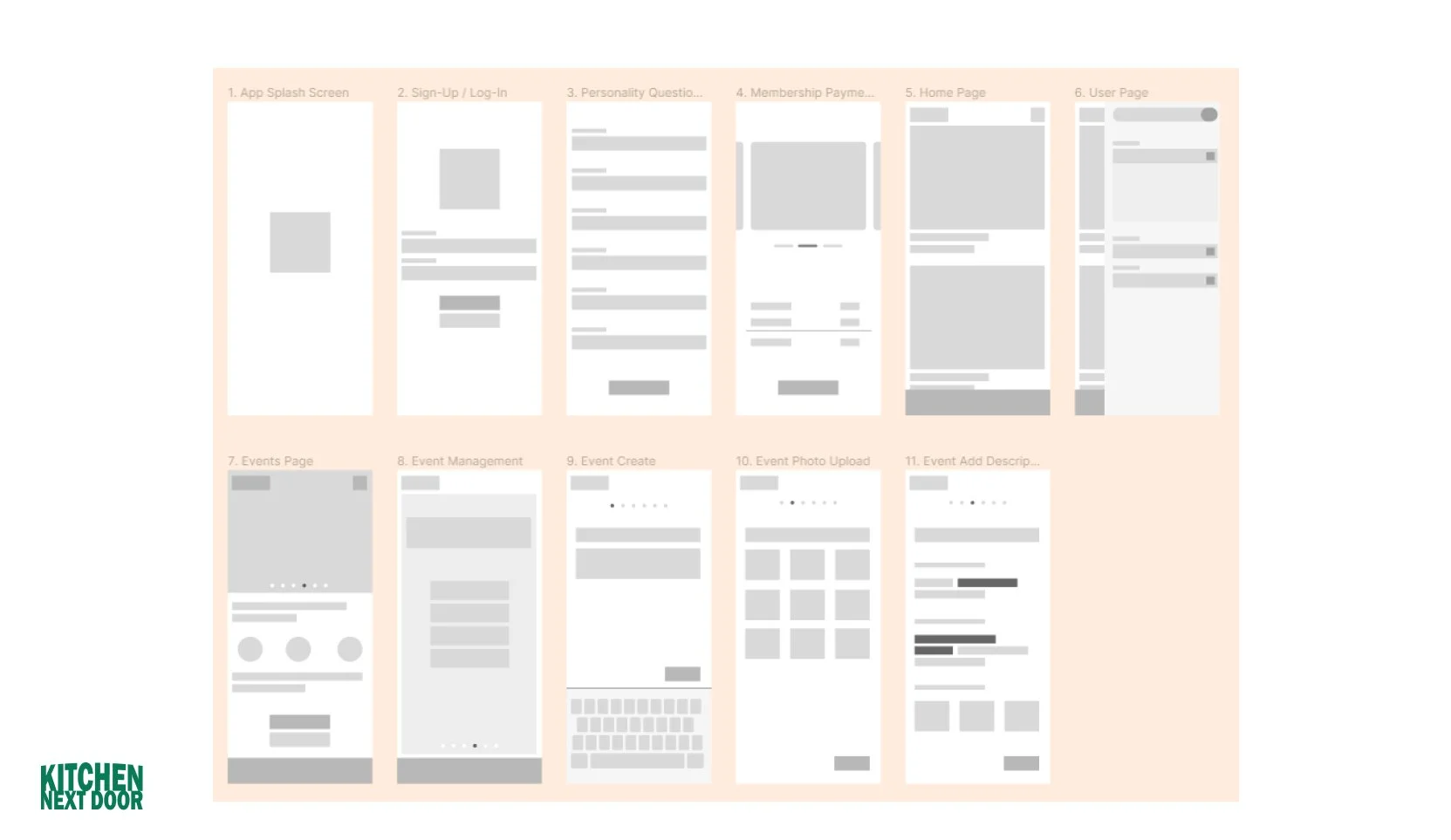
- IVWireframesEvery screen in grey boxes, so the team argued about the order of things before the look.
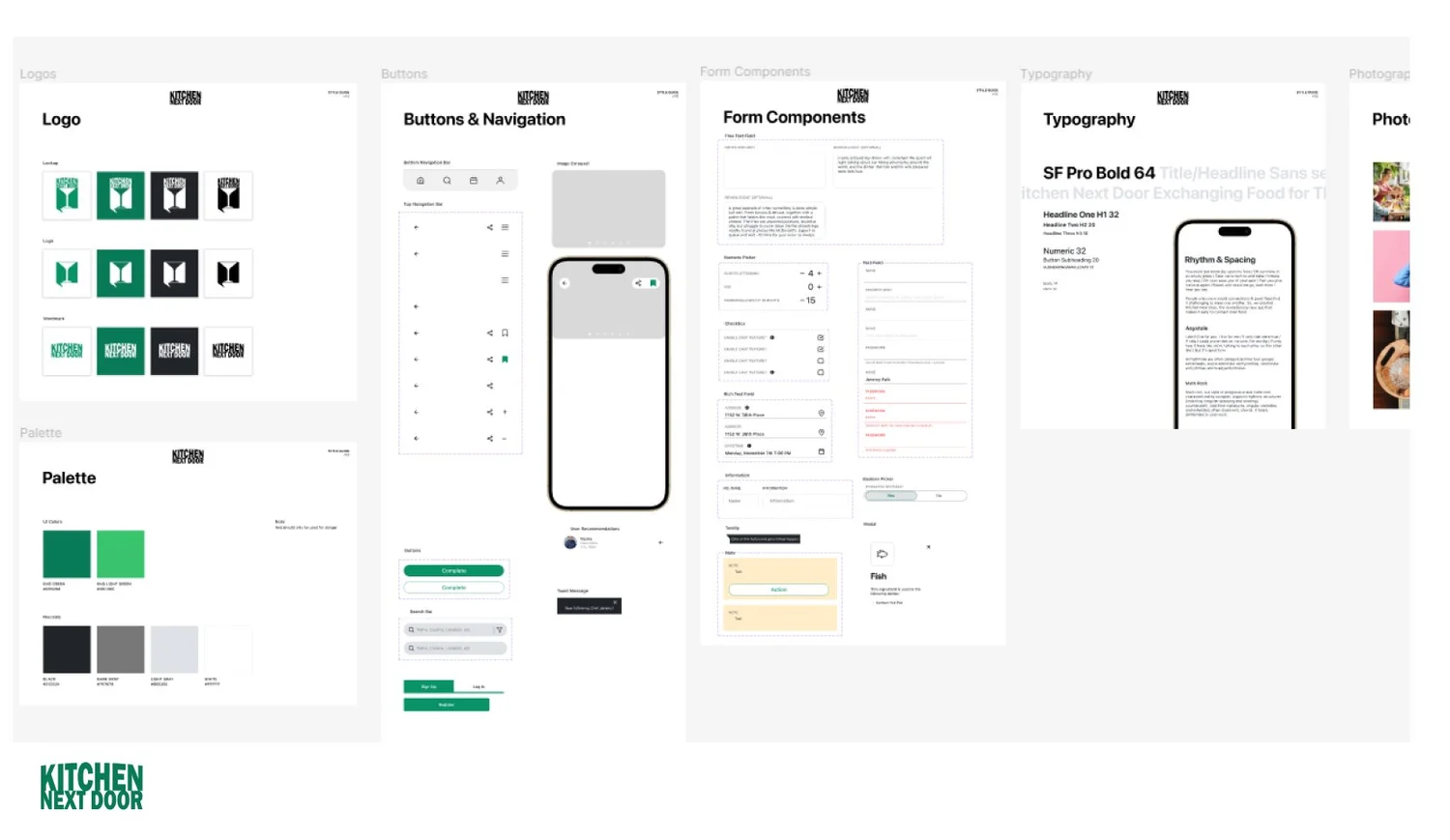
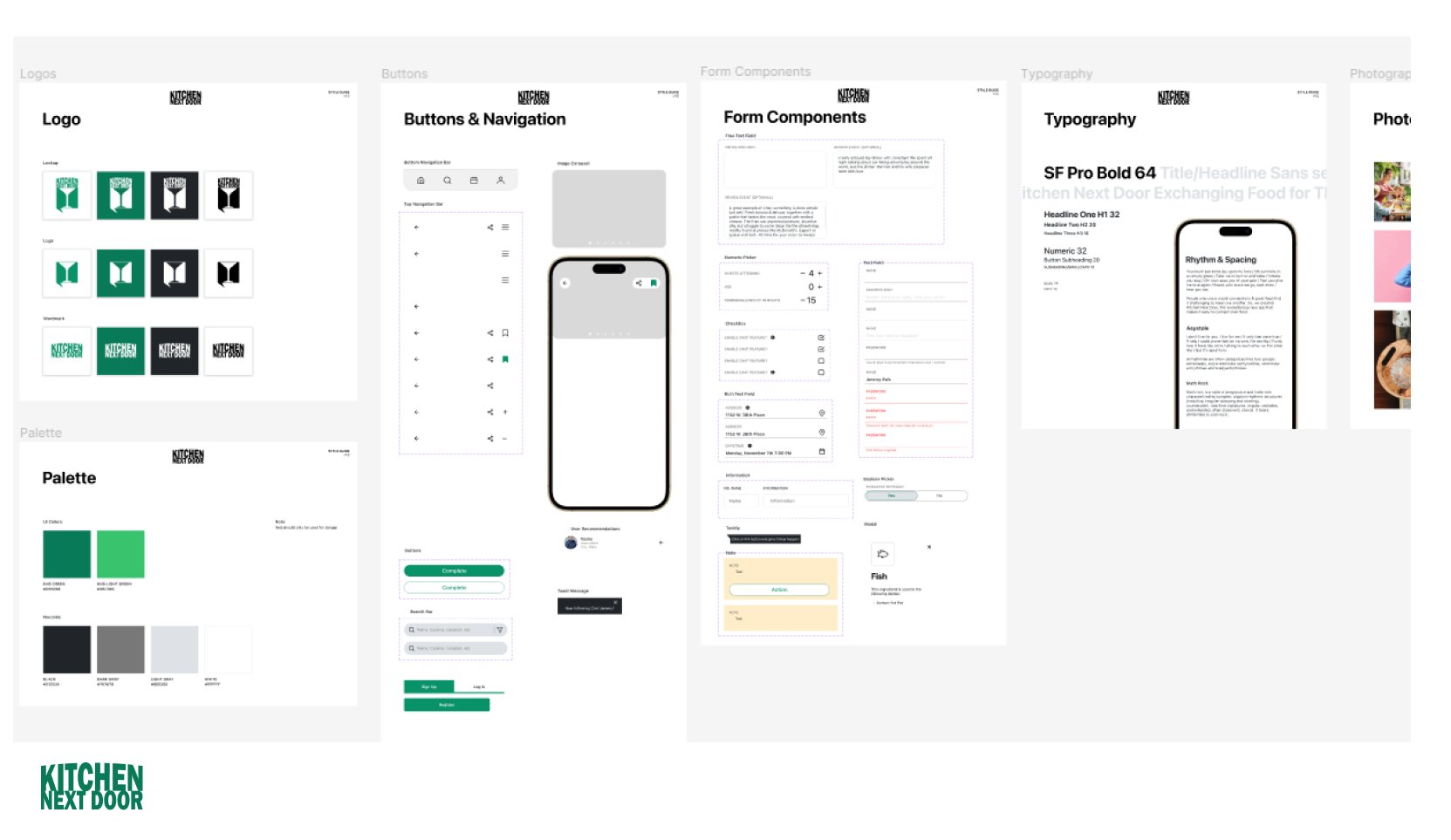
- VThe logo and the design systemA mark, a green, type and components, so three designers produced one app.
- VIPrototype and testA clickable Figma prototype, shown to the survey group again; the feed and the follow came out of their feedback.
The design
One green, a glass in a speech bubble, and the food doing the talking.
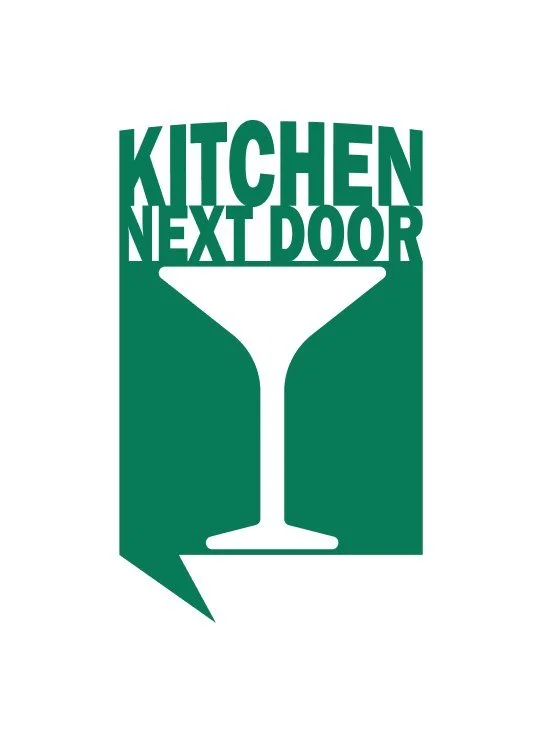
The brand stays out of the way of the photographs: a single green for the buttons and the mark, black and white for everything else, and the hosts’ own pictures of their dishes as the colour. The logo is a cocktail glass inside a speech bubble: dinner and conversation in one shape.
- Green#097A57 · The brand, the buttons, the ratings
- Ink#1C1C1E · Text
- Paper#FFFFFF · The screens, so the food photographs carry the colour
The app
What a host does, and what a guest does.
 1
2
3
01The host writes the dinner.
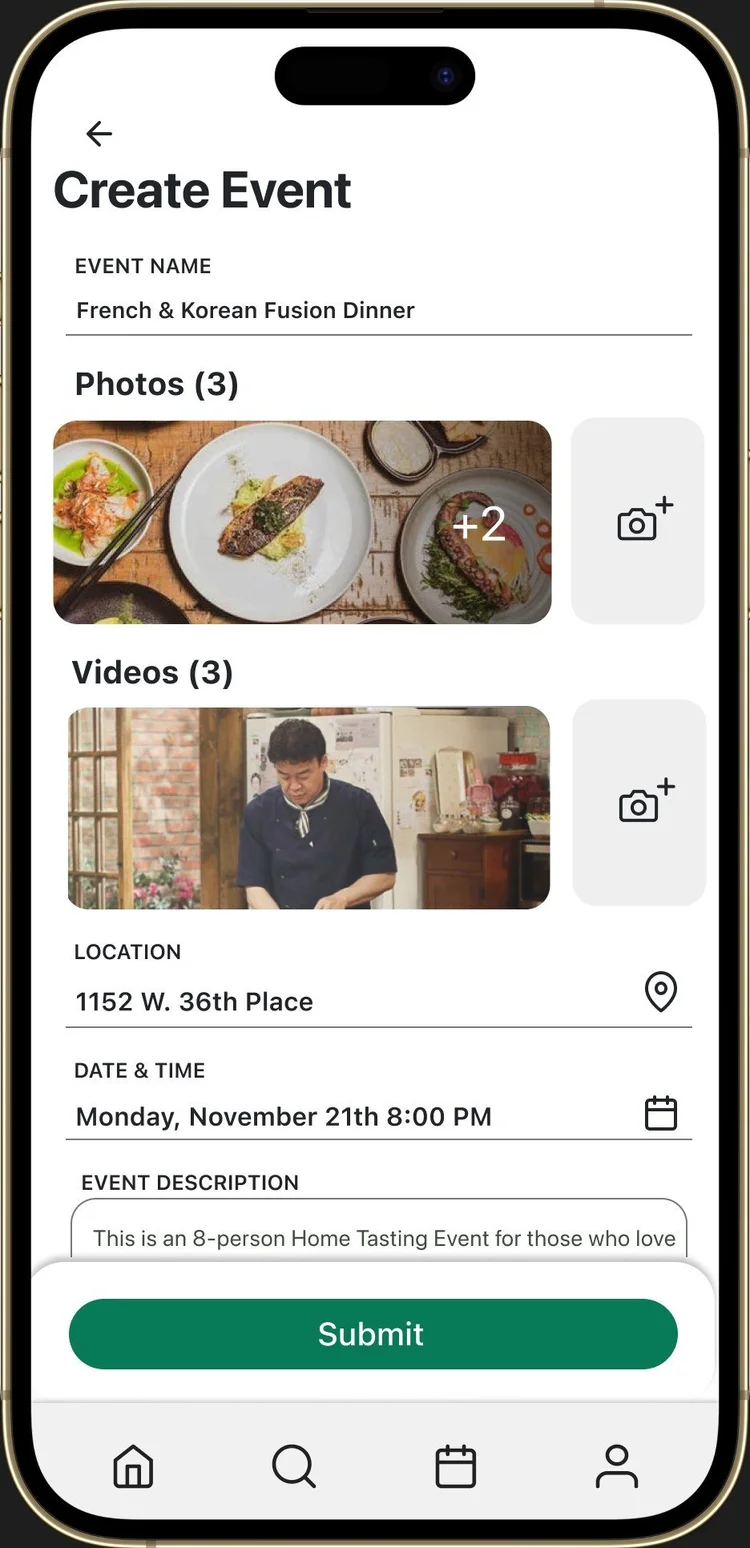
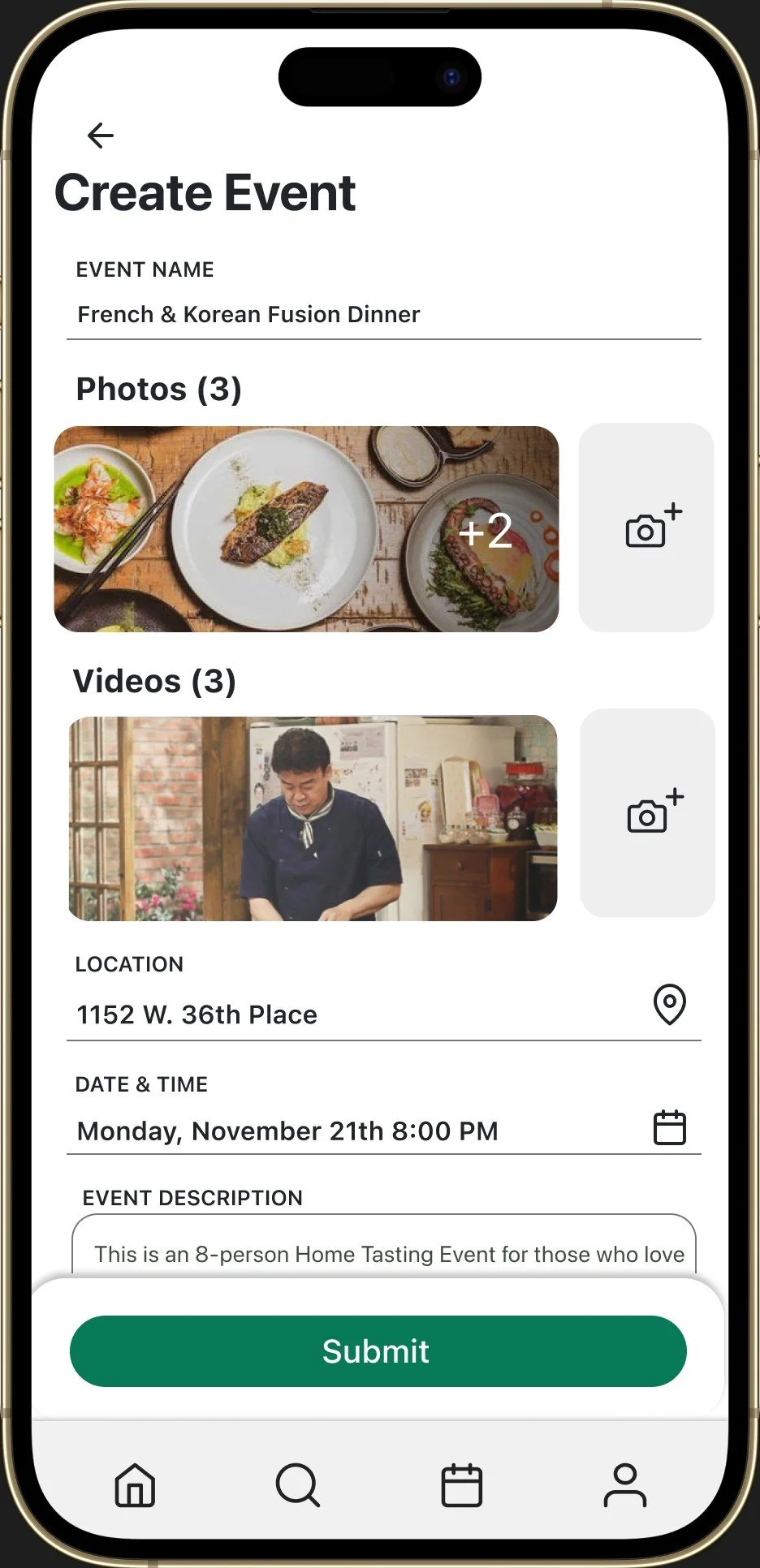
- 1One form makes a dinner: a name, a few photos and a short video of the cooking, a night and the number of seats.
- 2An address and a date: a dinner is a place and an evening, not a listing that is always open. The description is where the host says who it is for.
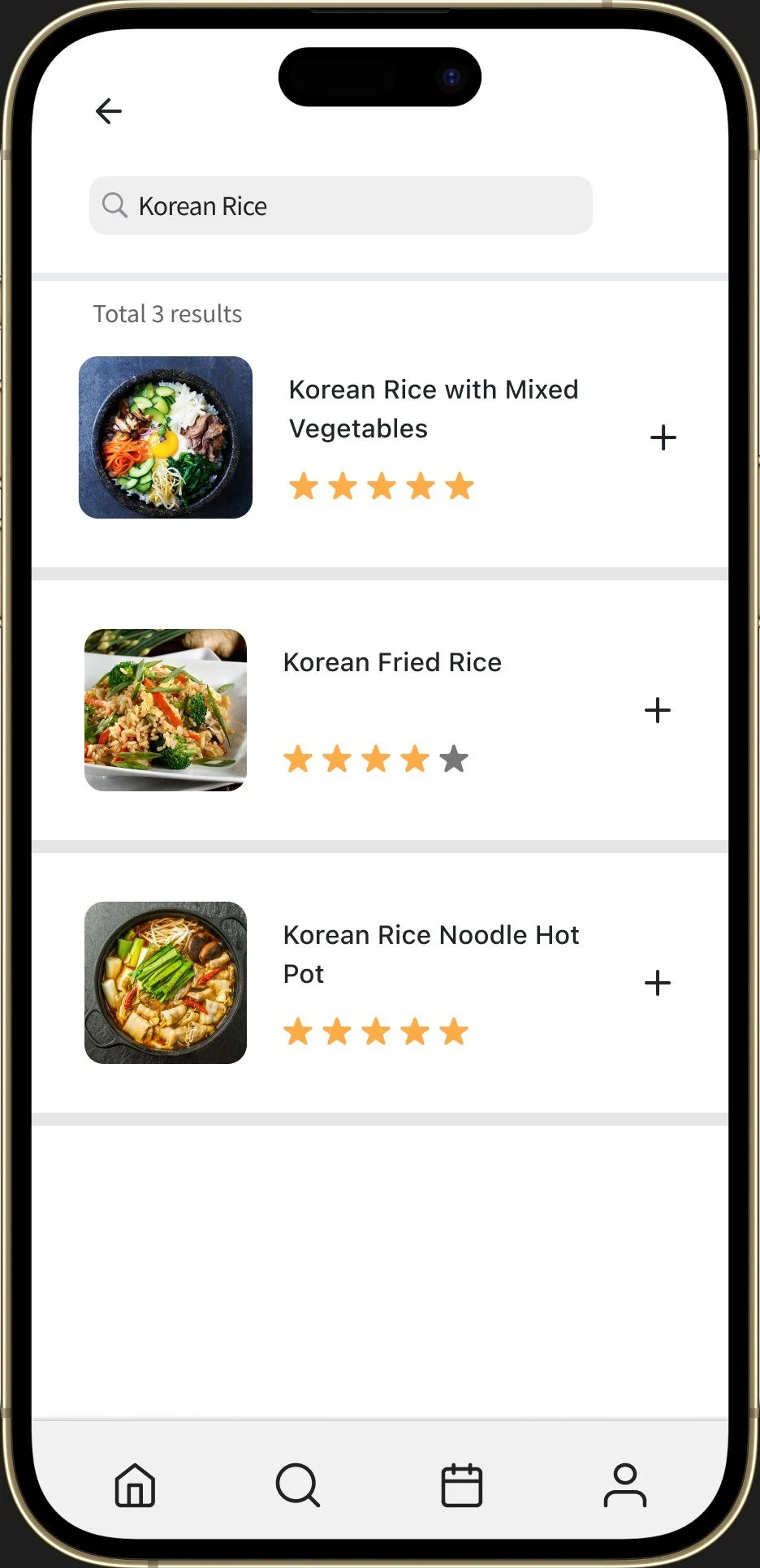
- 3The menu is its own page, dish by dish with a rating each. A host builds a reputation on the food, not on the venue.
1
2
3
02The guest books a seat.
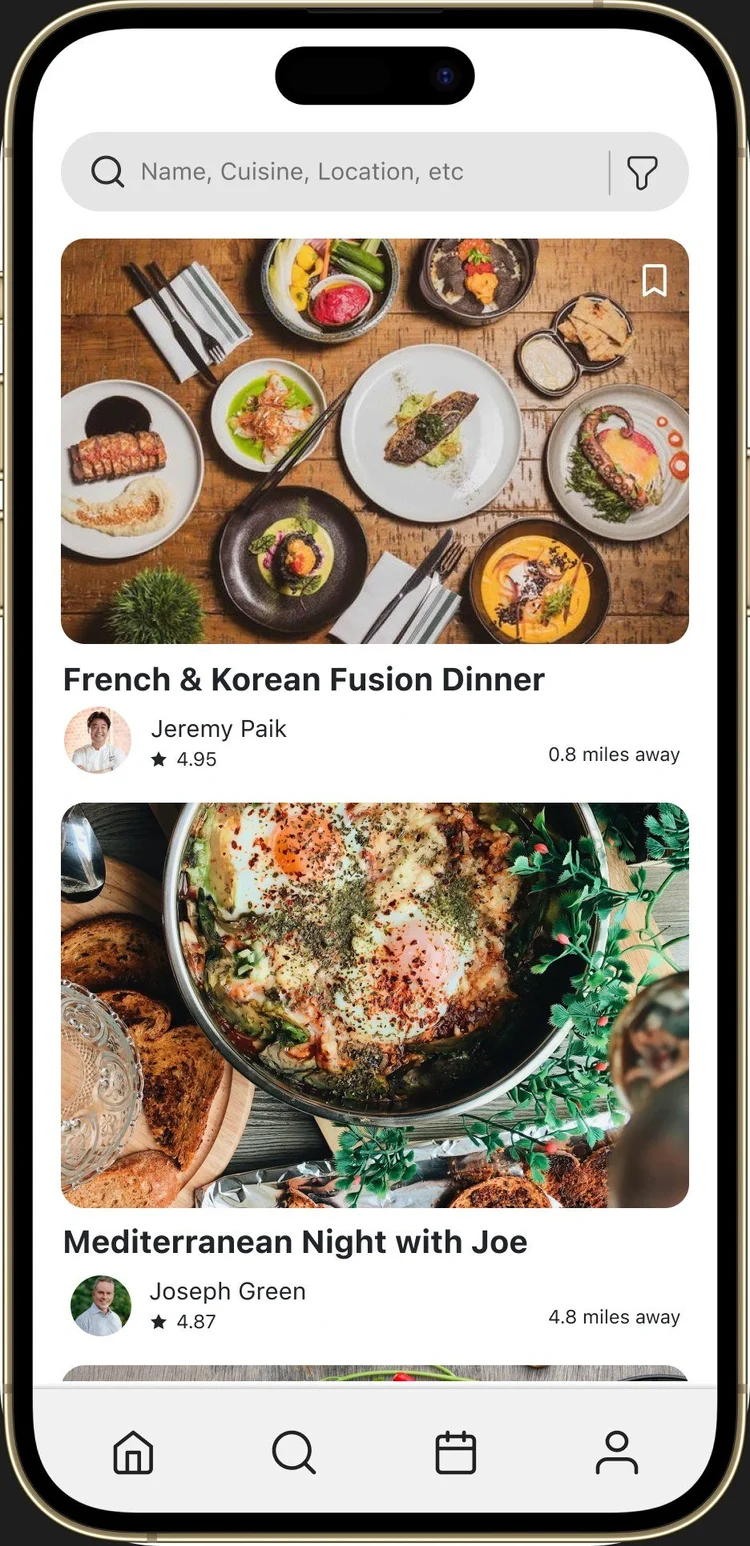
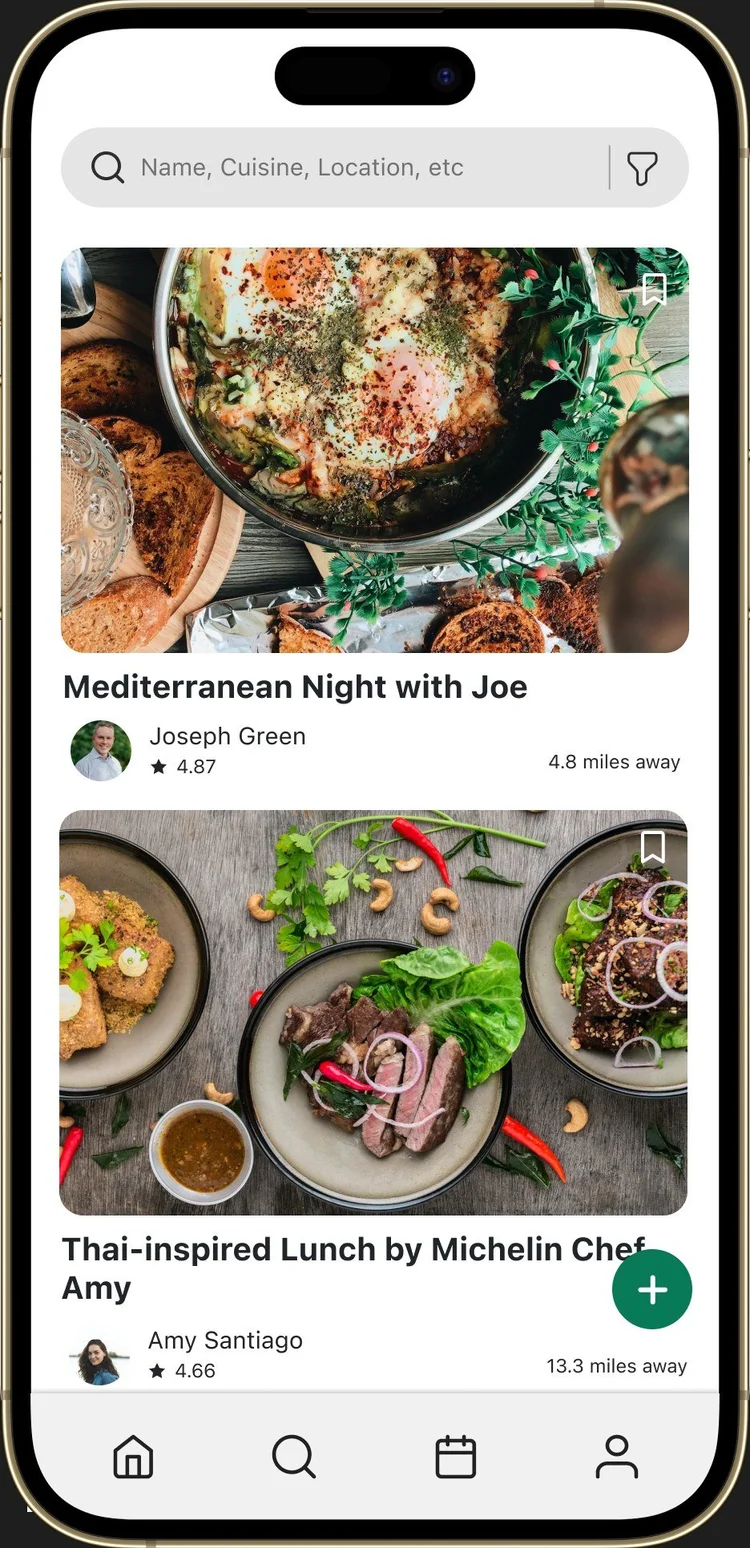
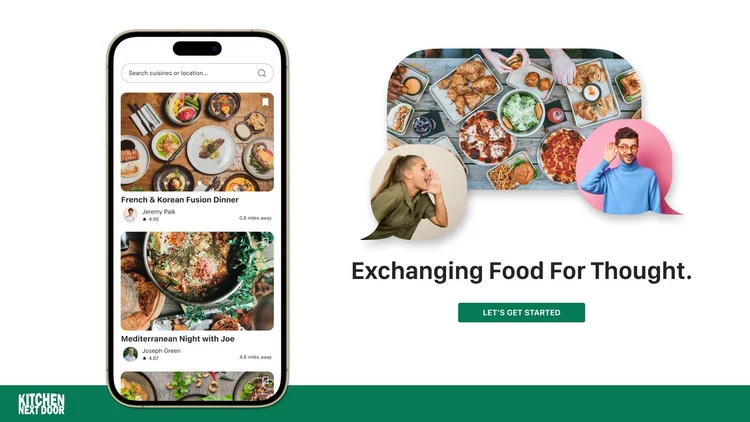
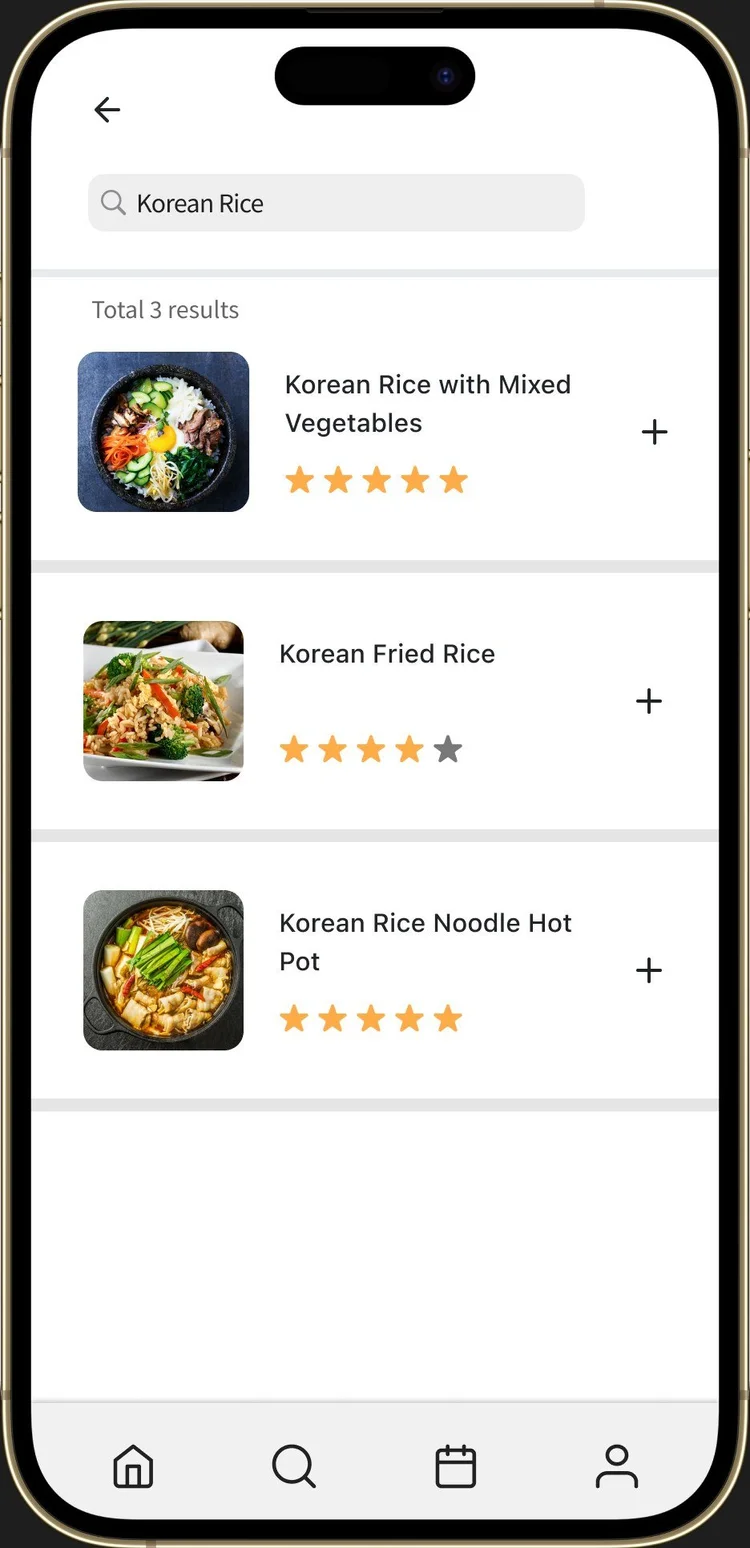
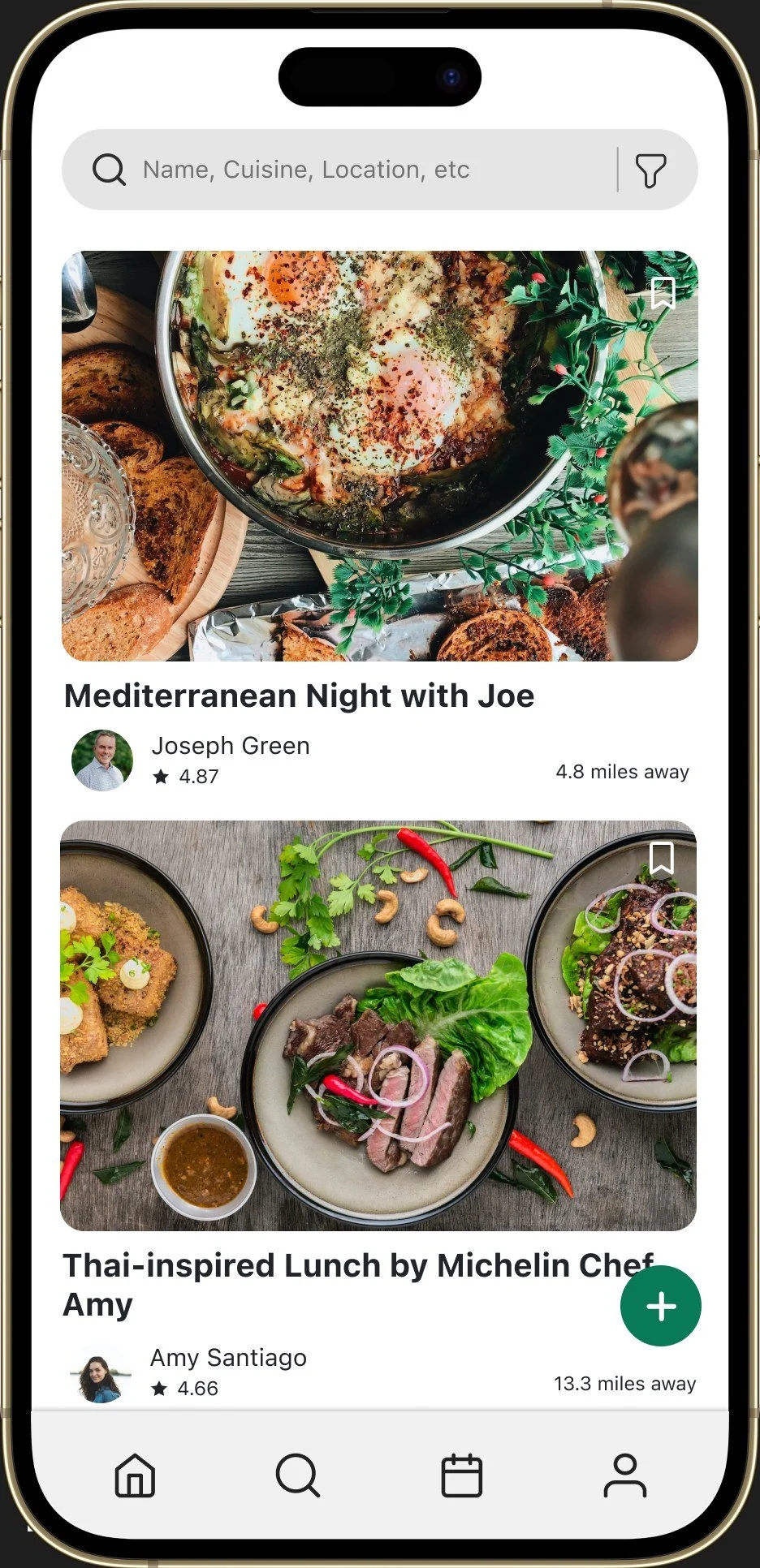
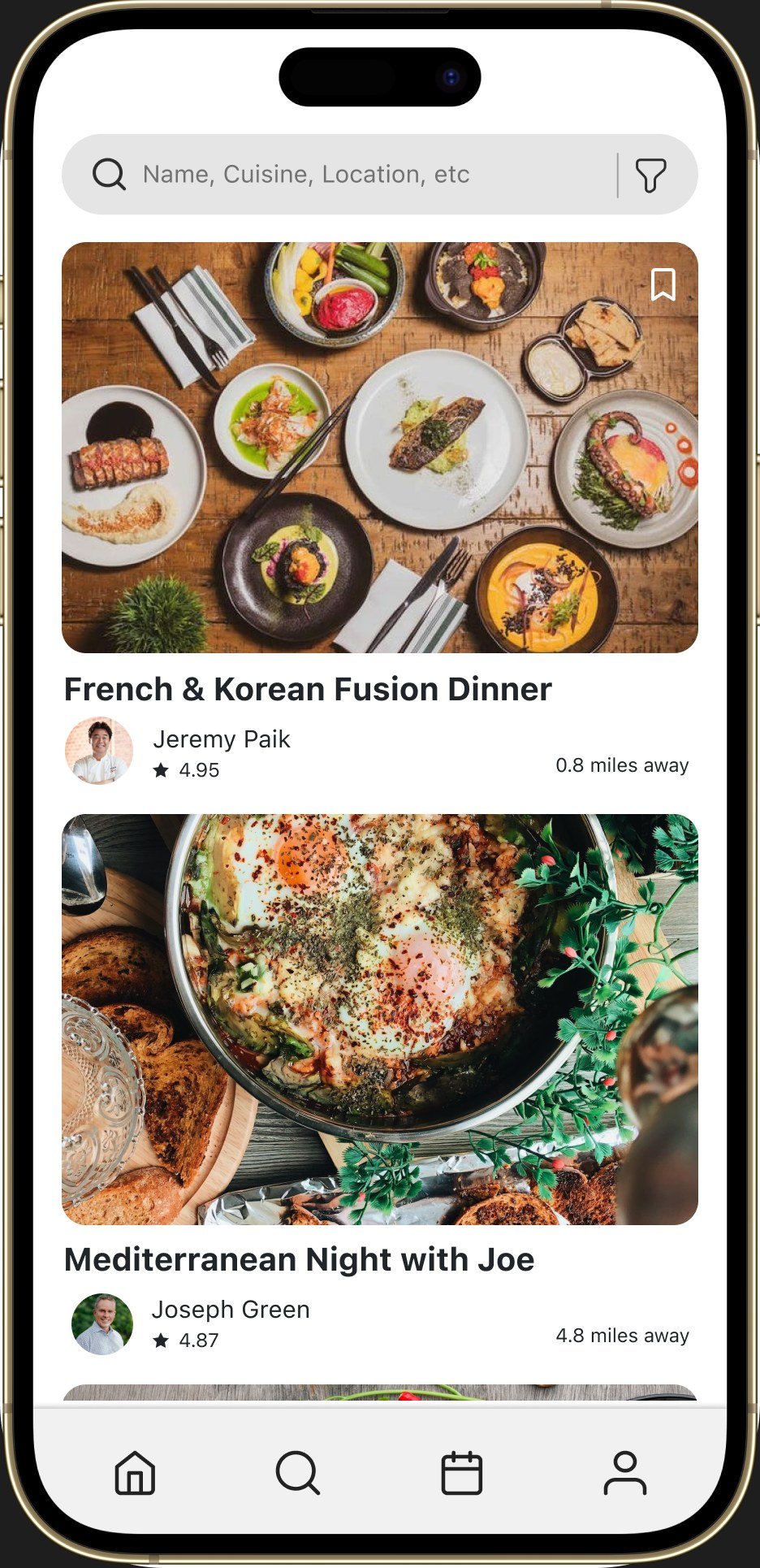
- 1Browse by cuisine, name or location. Each card is a dinner, not a restaurant: a picture of the food, the host, their rating and how far it is.
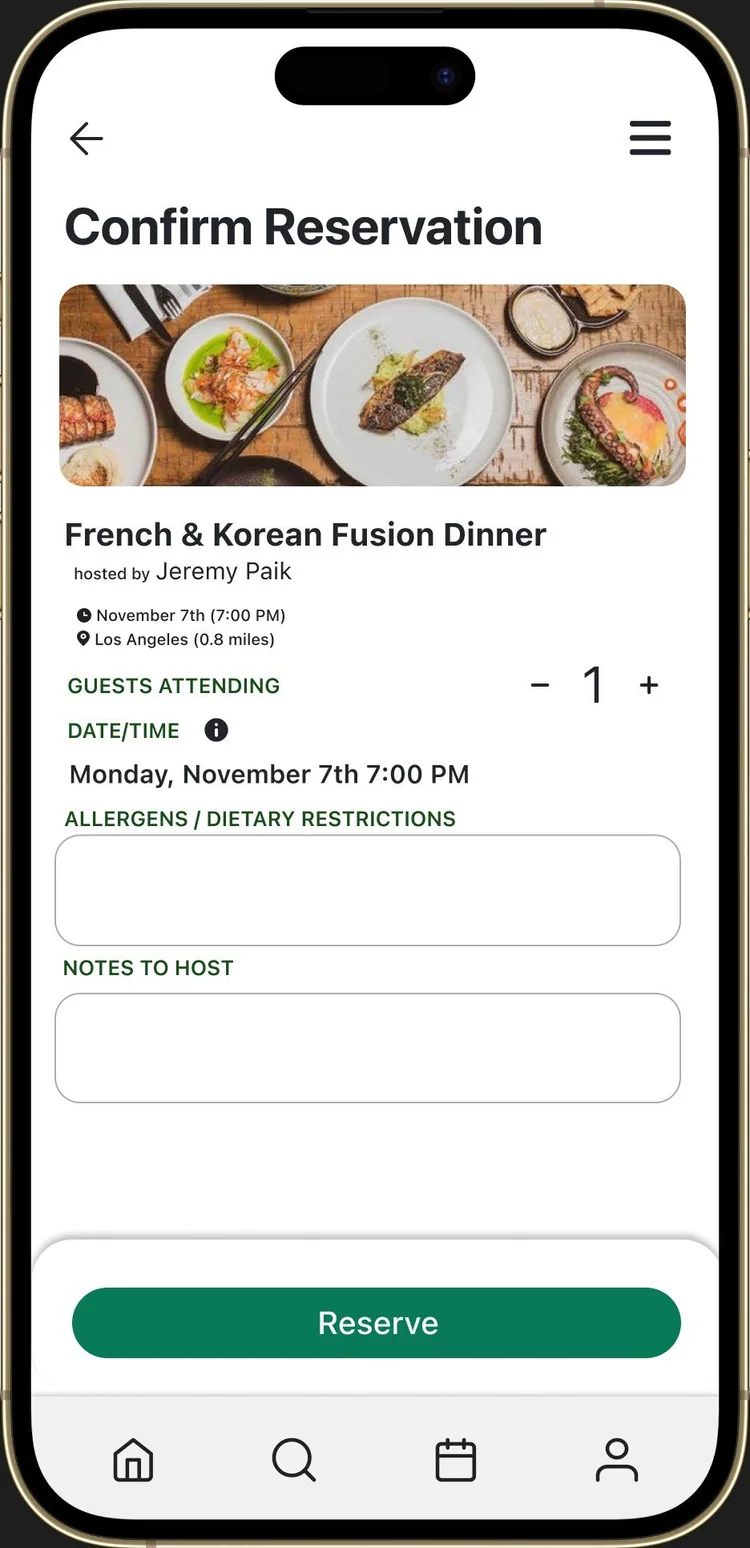
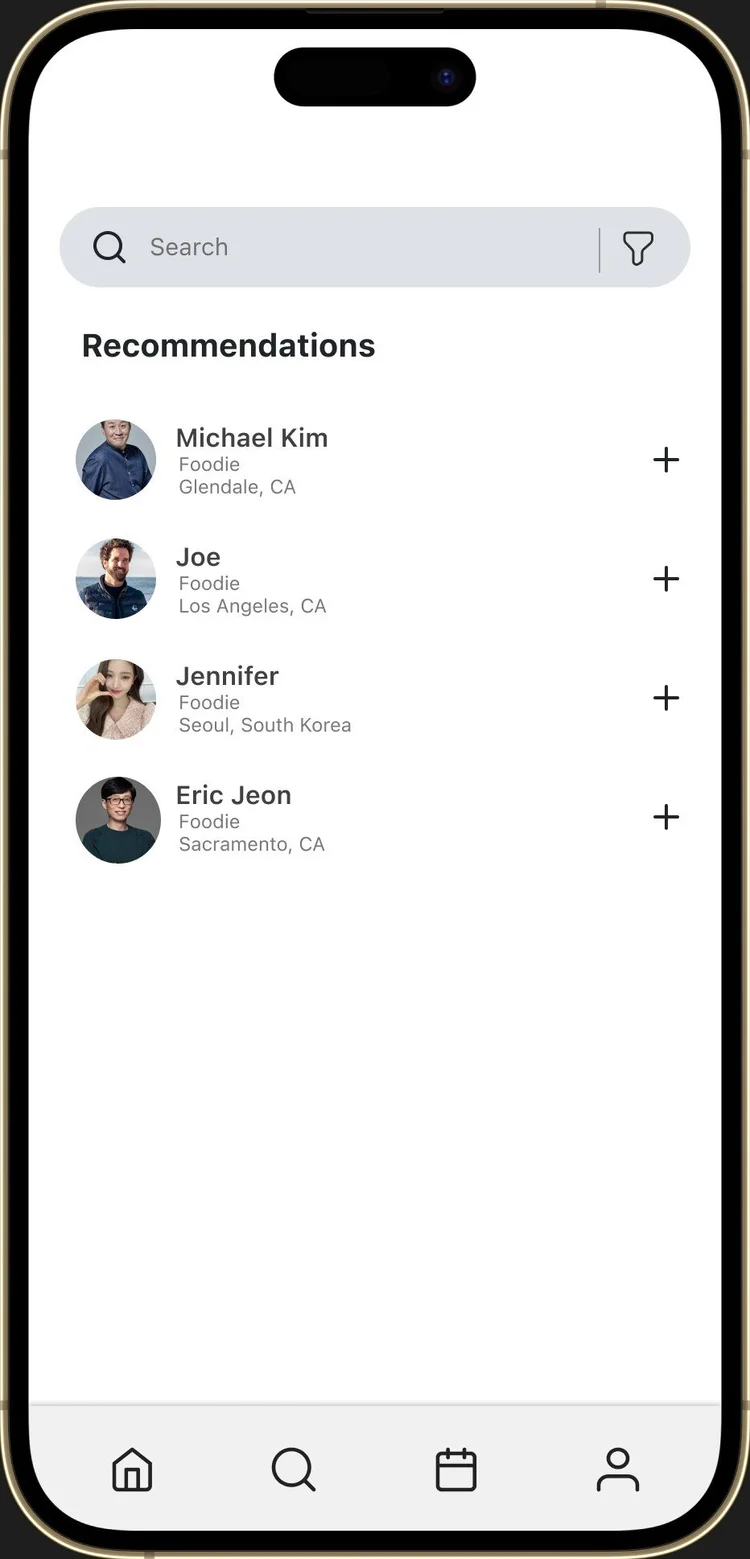
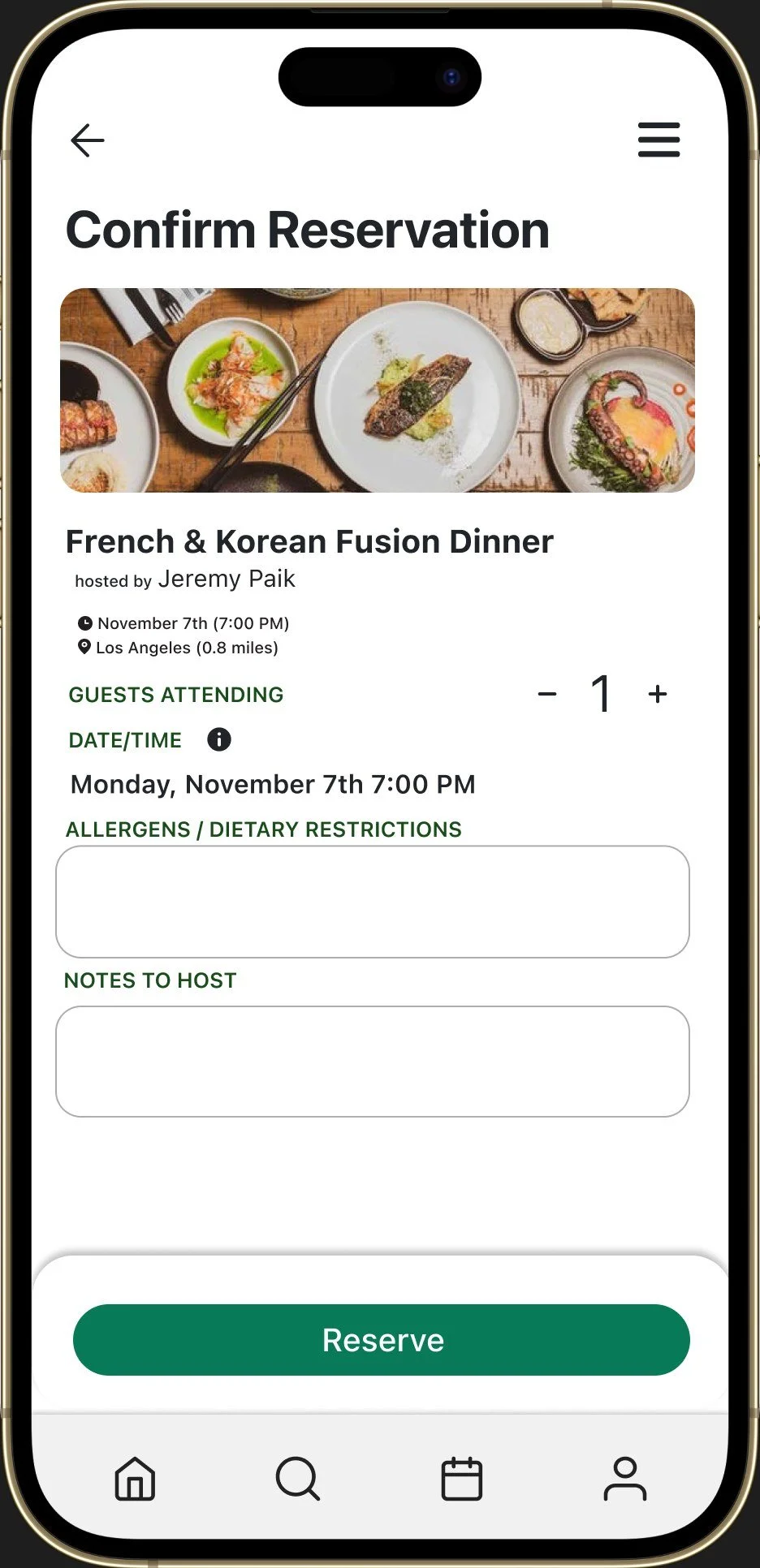
- 2The reservation page repeats the date and the seats and asks for allergens, so the host cooks for the people who are actually coming.
- 3A note to the host. The first message is written before the two have met, which is the point: the conversation starts with the booking.
 1
2
3
03The table doesn’t end at dessert.
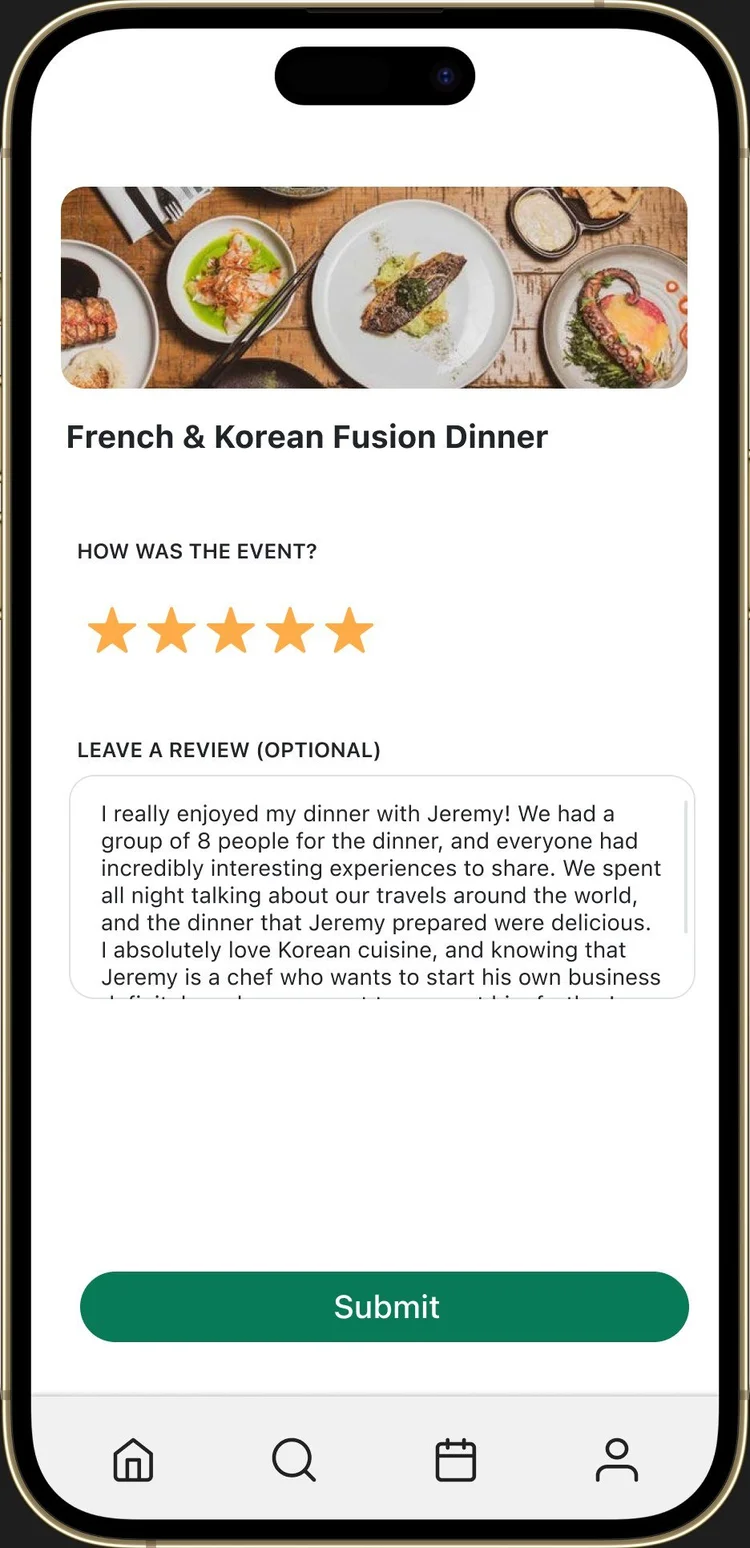
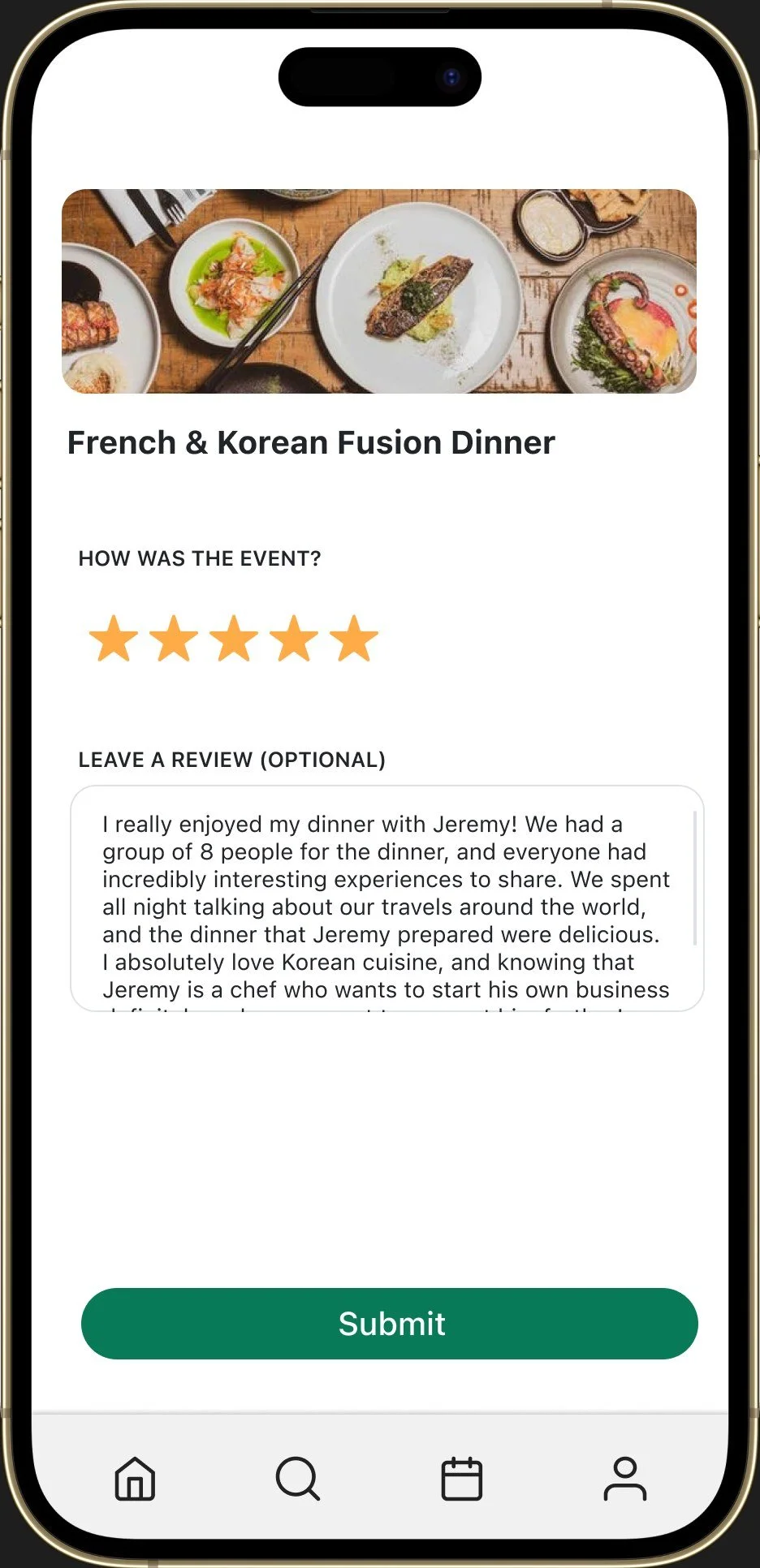
- 1After the dinner, a rating and a review. The review is the host’s feedback and the next guest’s reason to book.
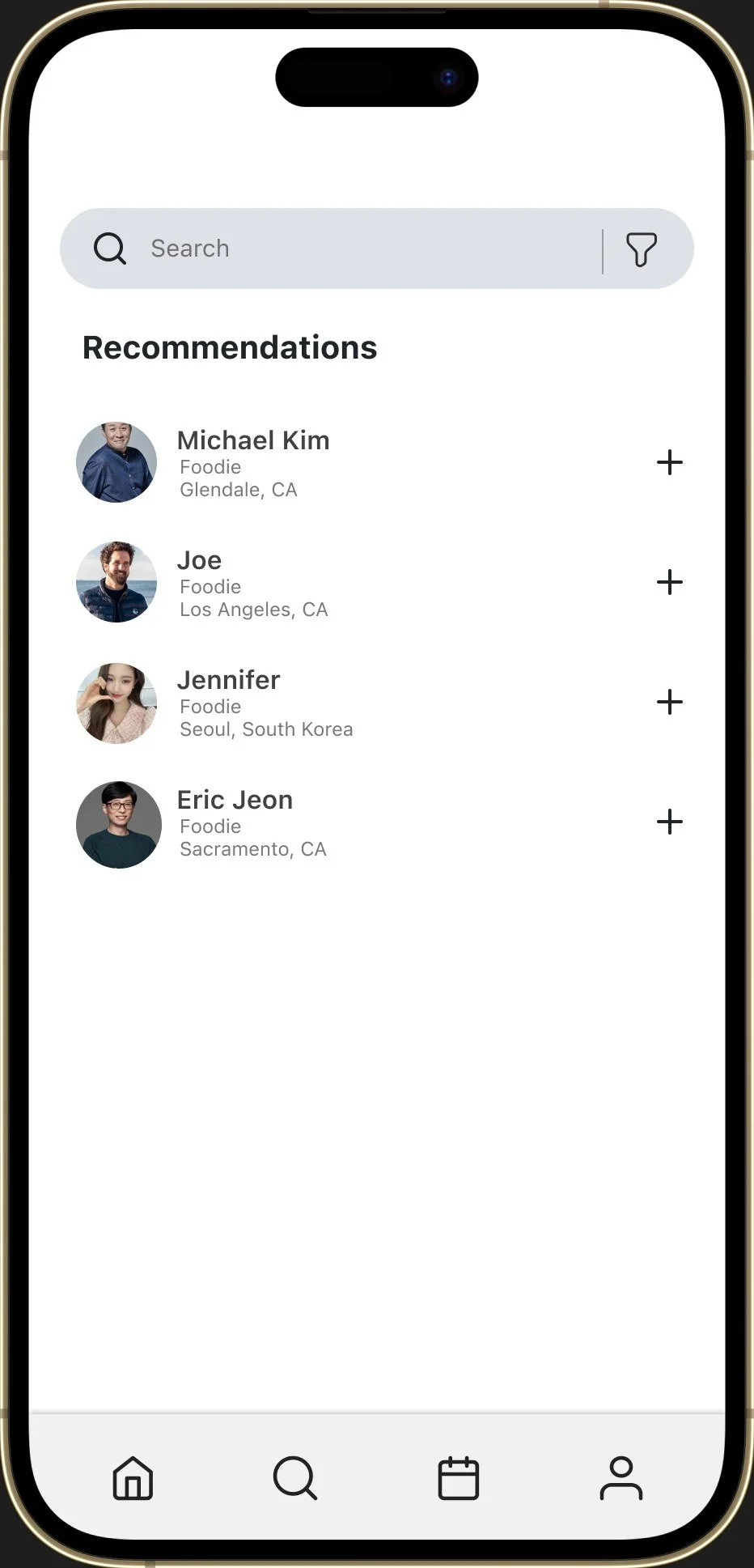
- 2Recommendations: people you ate with, people with the same taste. Following is how a one-night table becomes a circle.
- 3The feed grew out of the survey: people were excited about the food and wanted the community-building part to be clearer, so it got its own tab.
 1
2
3
04A profile that is about taste.
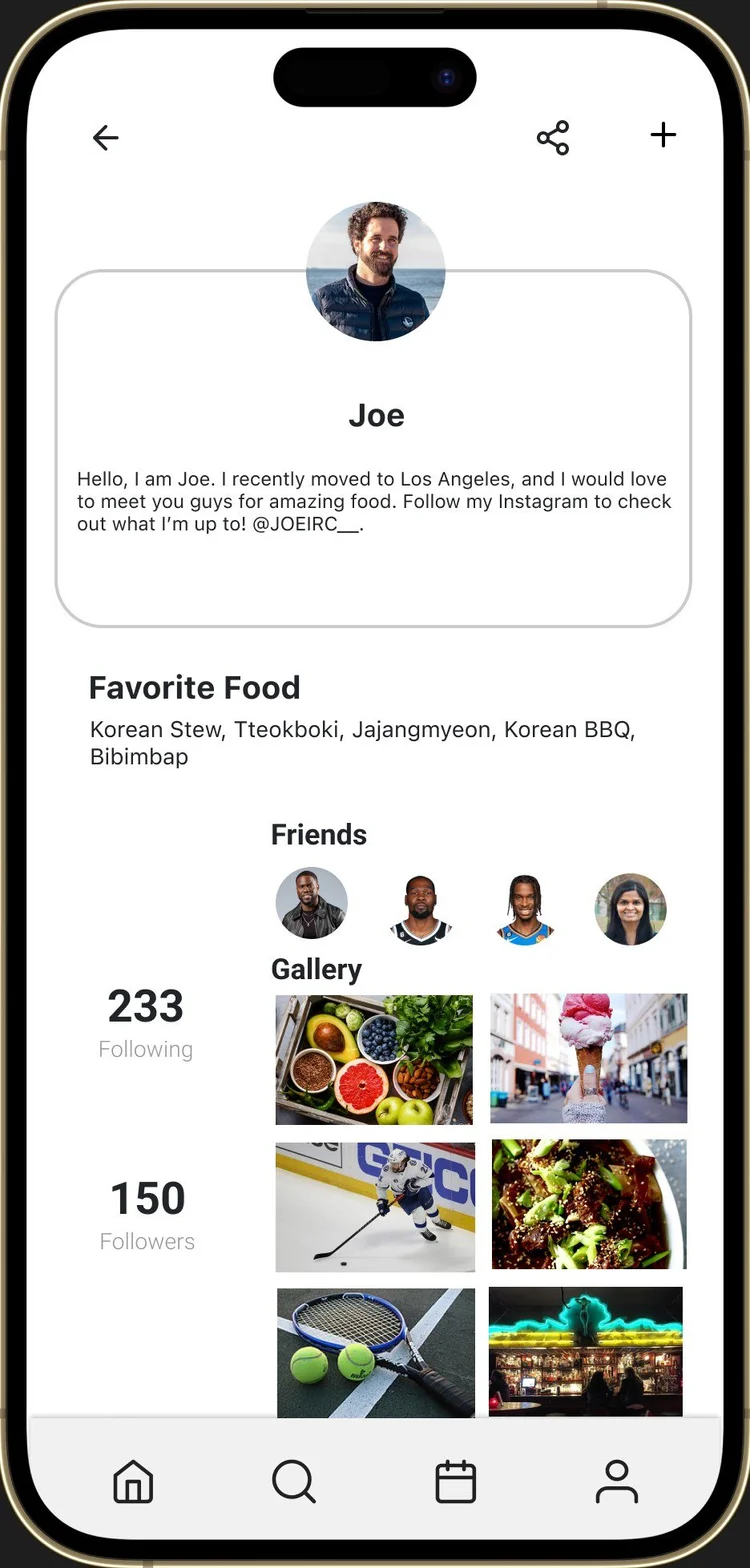
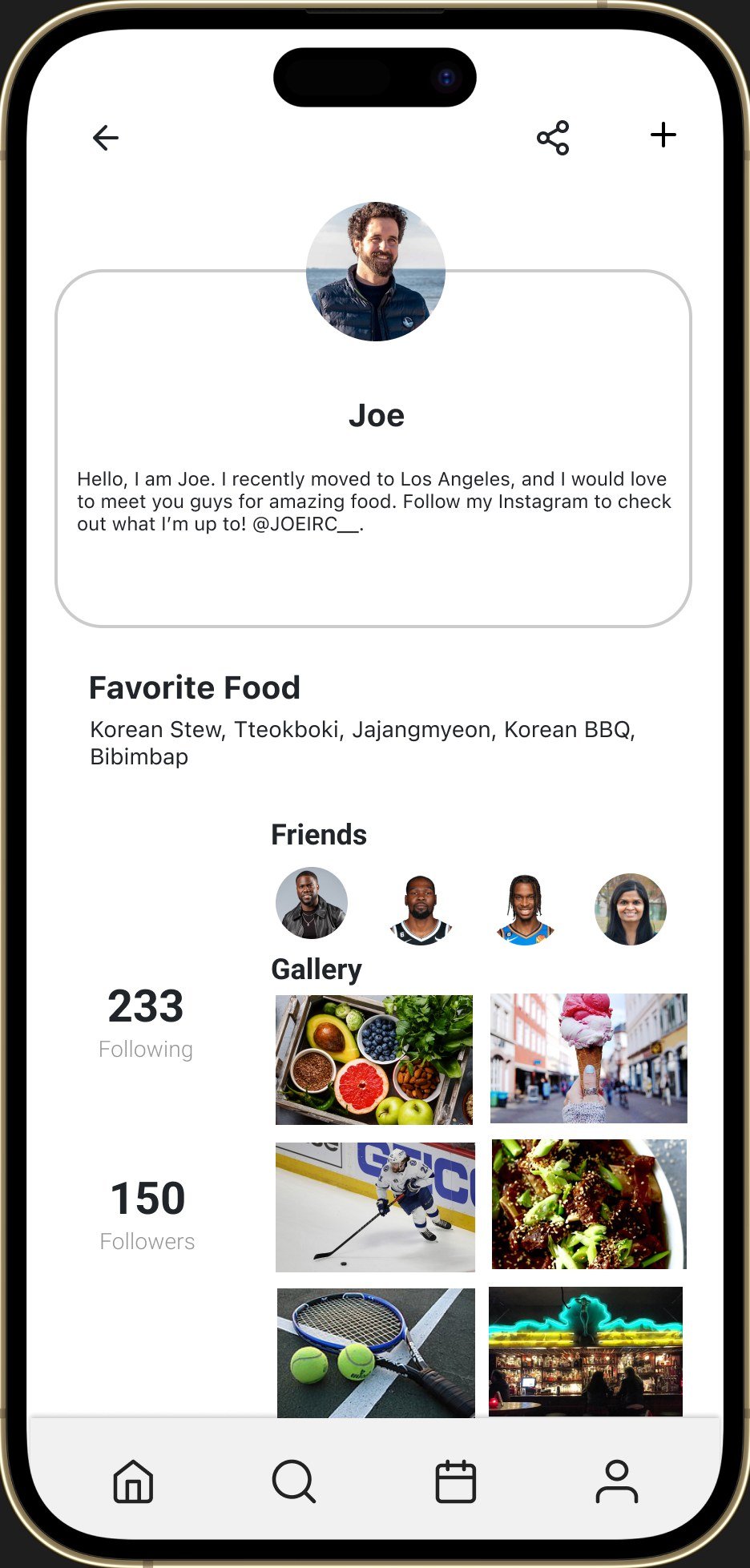
- 1A profile leads with a bio and favourite food, so a stranger has something to say before the first course.
- 2Friends and a gallery: the dinners you have been to, in pictures, as the proof that you are a good guest or a good host.
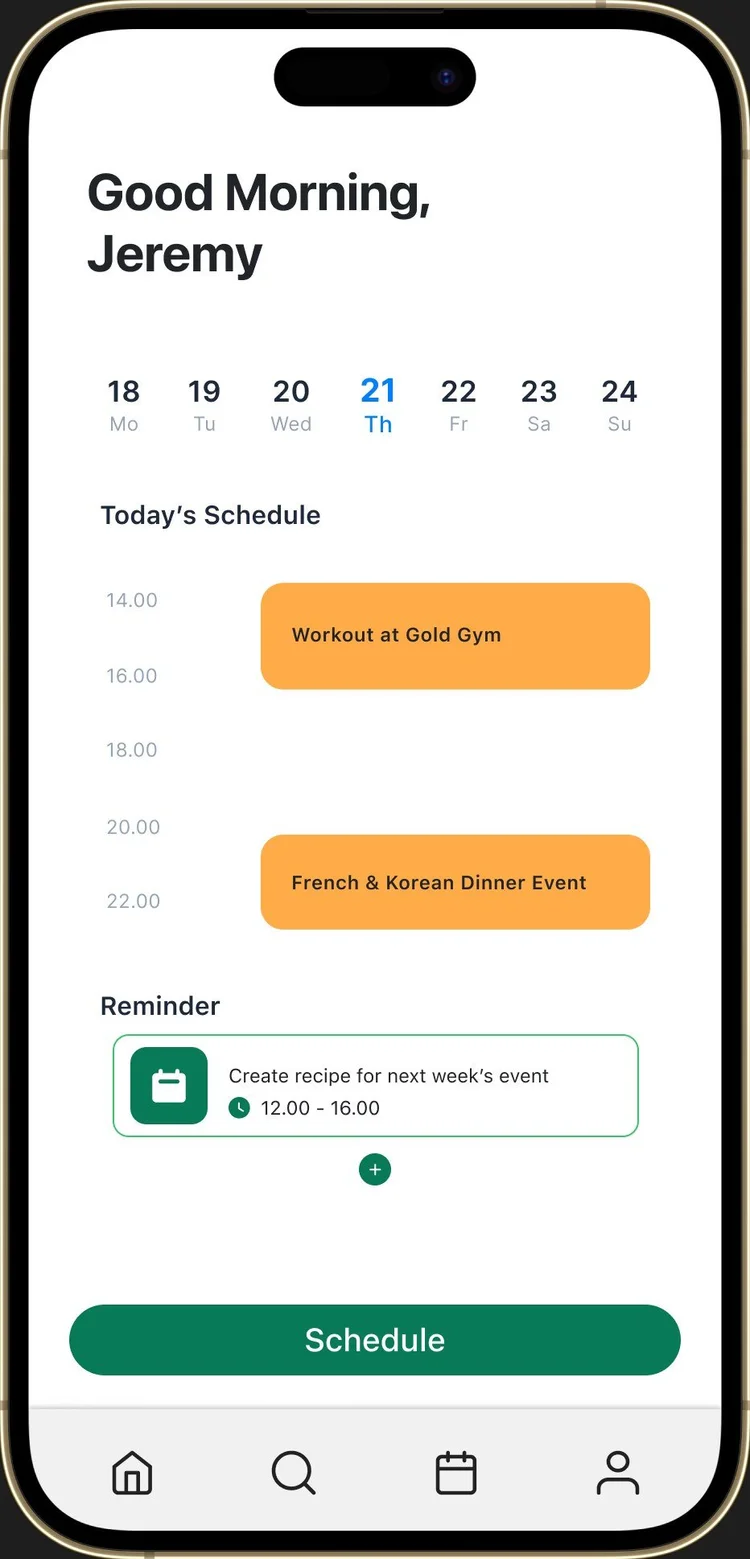
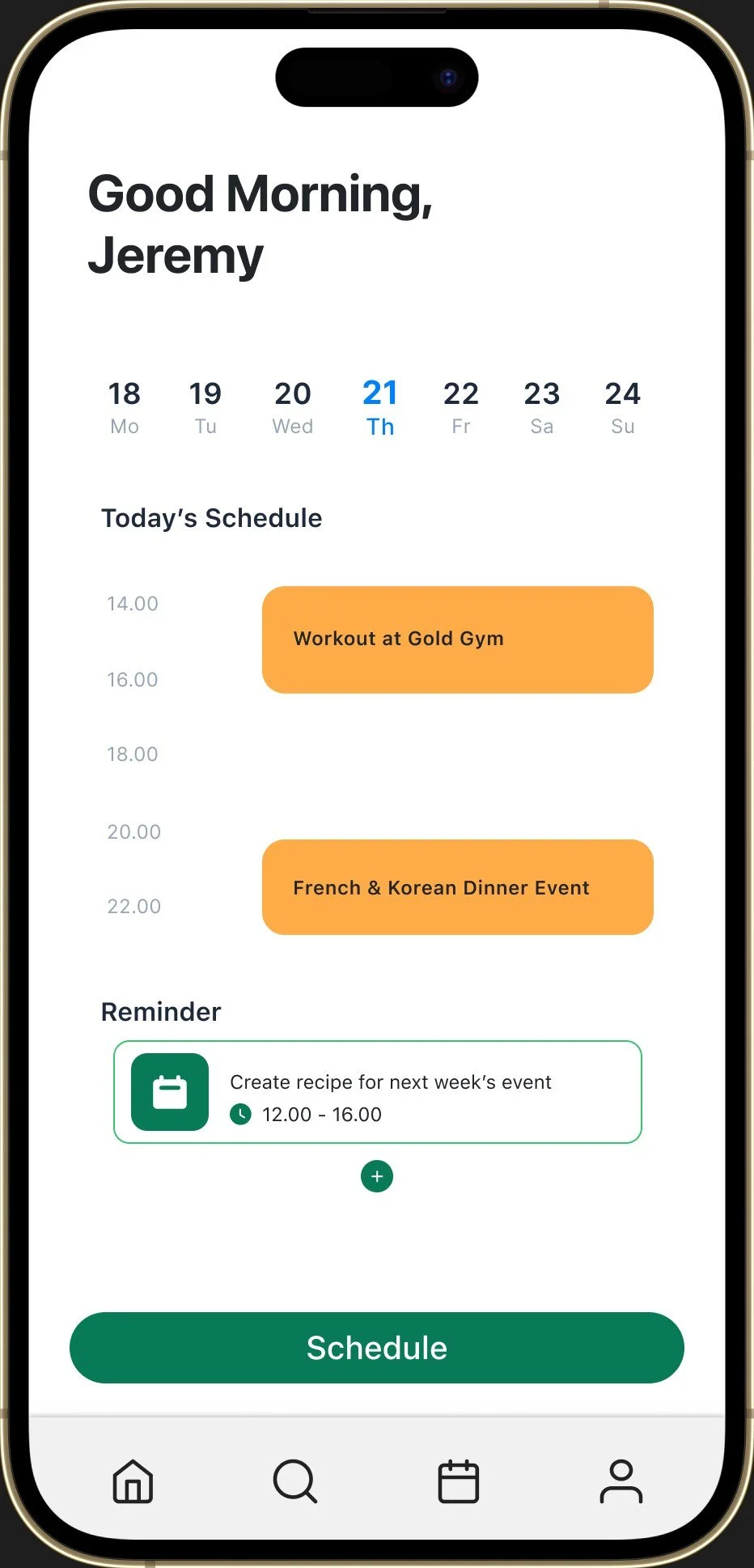
- 3A calendar of upcoming dinners with a reminder to the host to set the menu. Hosting is a plan, and the app keeps it.
Try it
The prototype, as it was tested.
Click through from the first screen.
Sign up, browse the dinners near you, open Jeremy’s French & Korean dinner and reserve a seat; then switch sides and create a dinner of your own. Where a screen has no hotspot, the arrow keys step through.
- The prototype View in Figma
- The design system View in Figma
- The final presentation View in Figma
Outcome
A prototype people understood, and one thing they asked for.
- 55people surveyed, twiceOnce about how they eat, once with the lo-fi mockups: what did they think the app was for?
- 2flows in one appThe host’s and the guest’s, sharing a profile, a calendar and a feed.
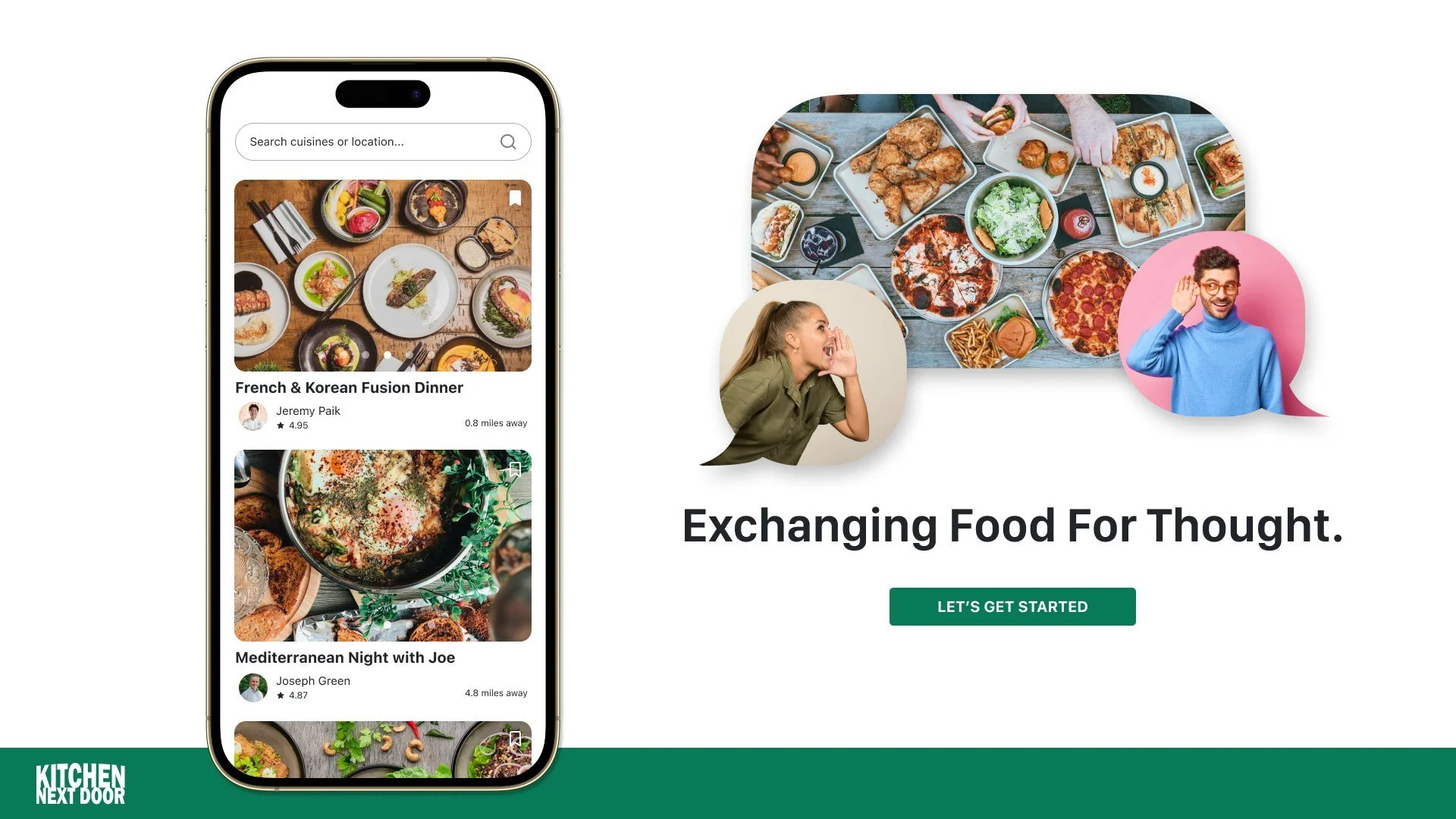
- 1change from testingPeople liked the dinners and wanted the community part to be clearer. The feed, following and recommendations were added, and the tagline became “Exchanging food for thought”.
- 1Three designers, one app. The design system came before the screens so that three hands produced one look, and I owned it as the lead.
- 2The same person on both sides. A host is also a guest. Keeping one account and one navigation for two jobs was the hardest structural problem.
- 3Trust between strangers. Ratings, reviews, the menu and the allergen field do the work a restaurant’s sign would do.
- 4A concept, not a company. It ended as a tested prototype. Safety, payment and liability are the questions a real launch would start with.
The whole collection
Every screen, at full size.
Scroll sideways. The app first, then the research, the design files and the brand. Each opens at full size in a new tab.
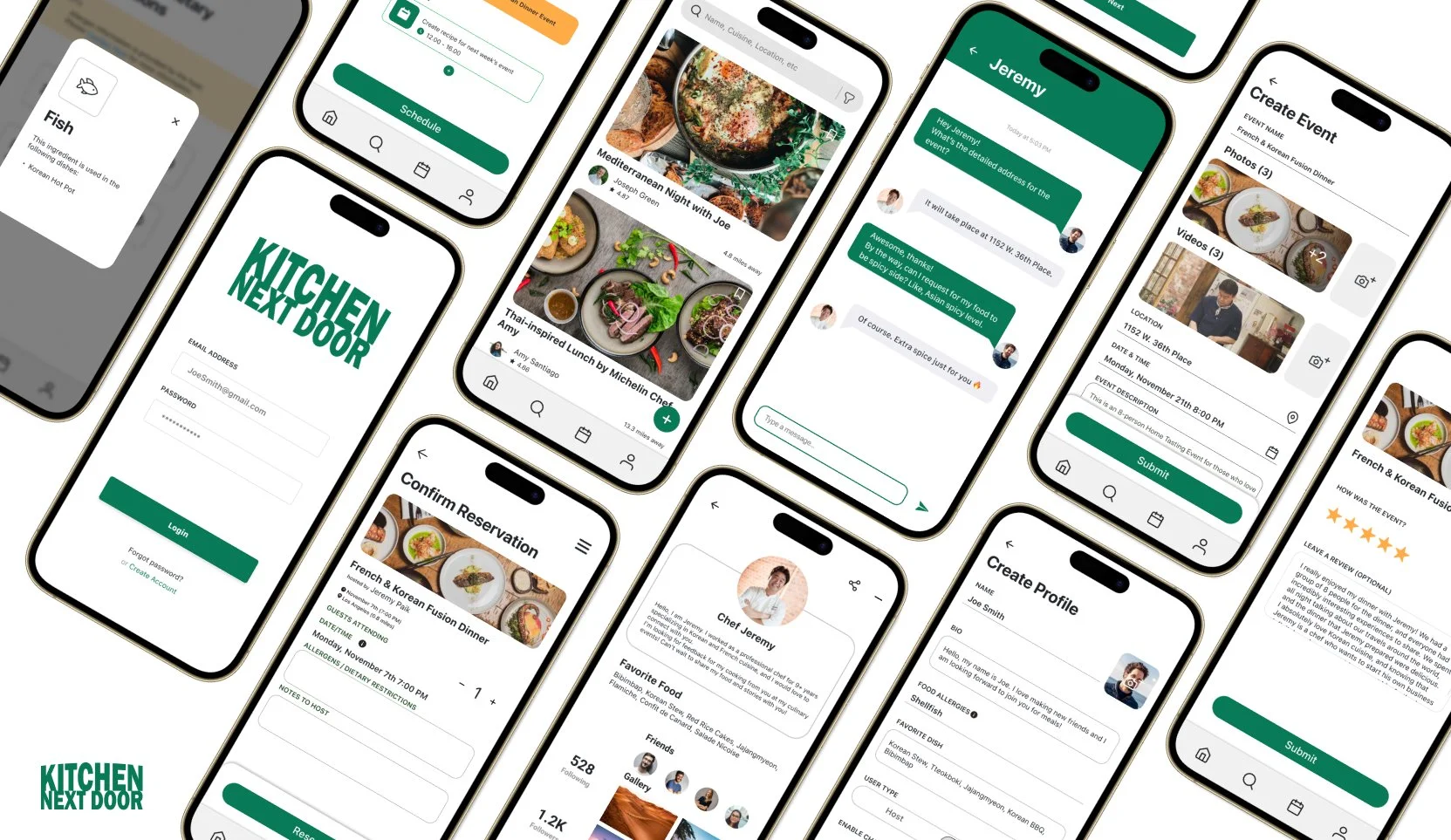
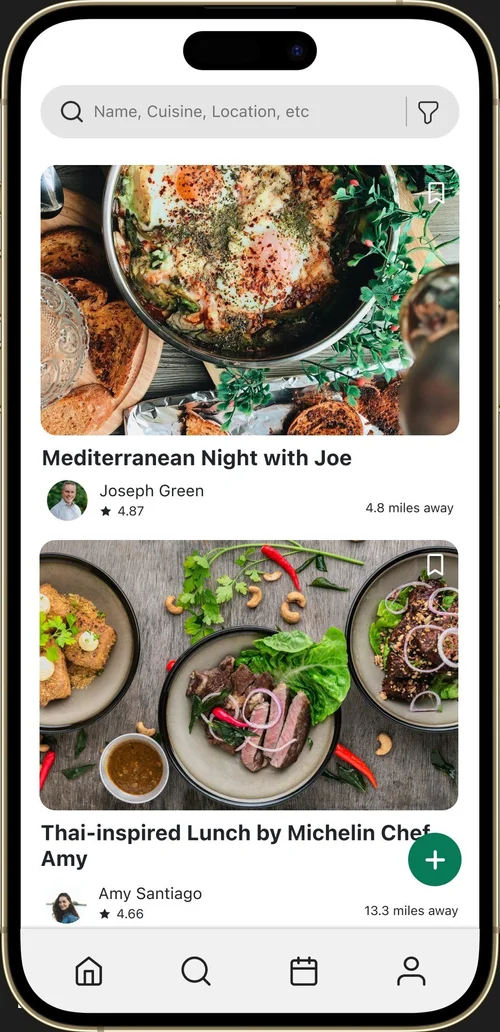 App Home: dinners near you
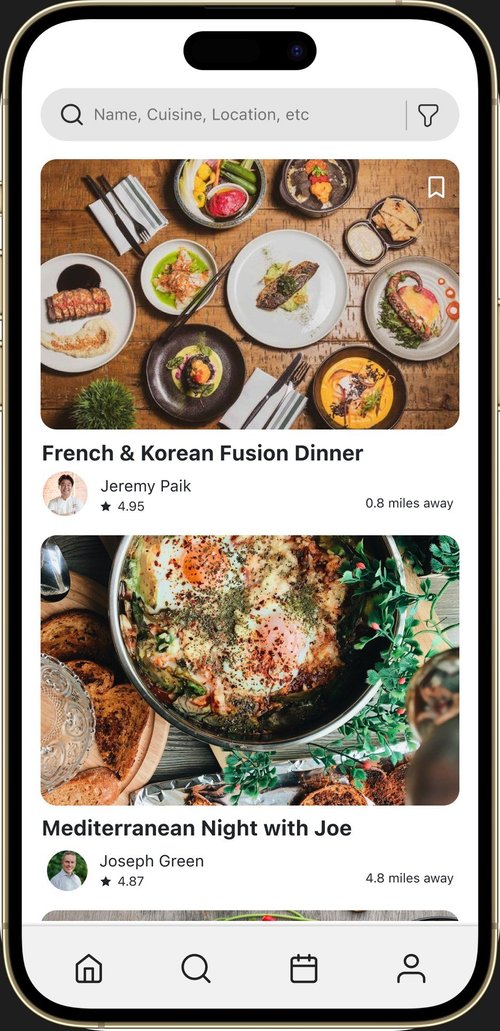 App Event search
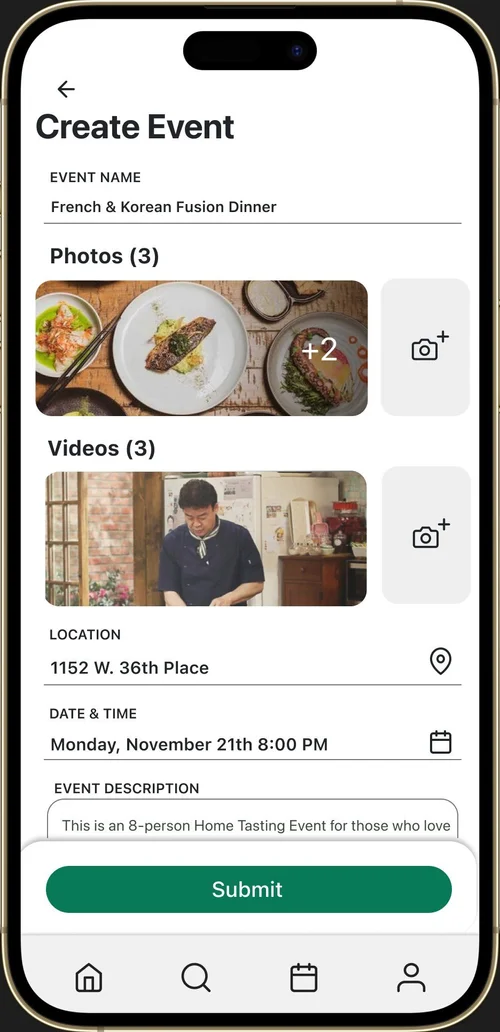 App Create Event
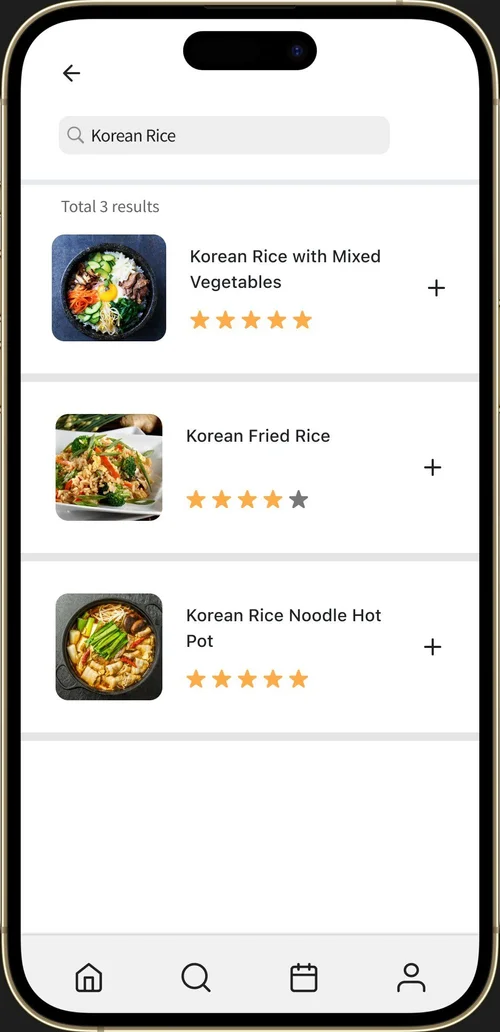 App The menu
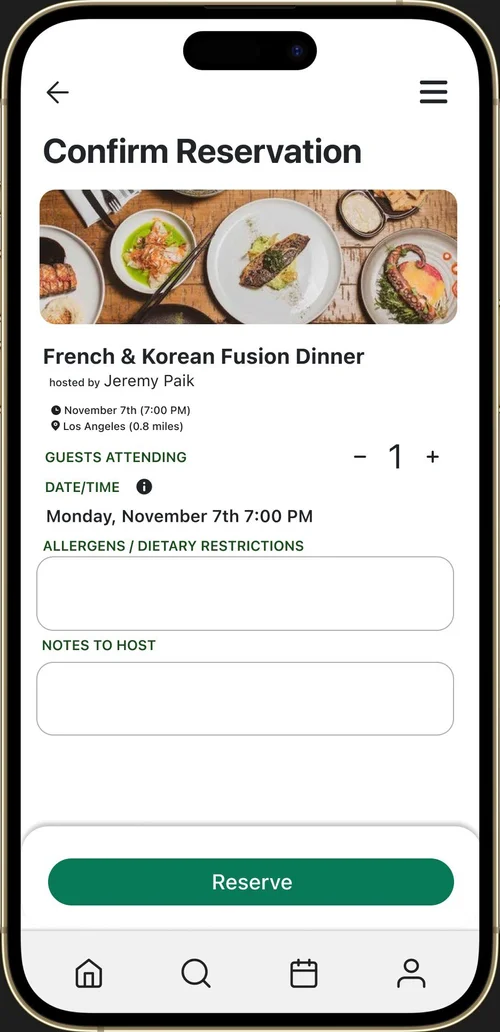 App Confirm Reservation
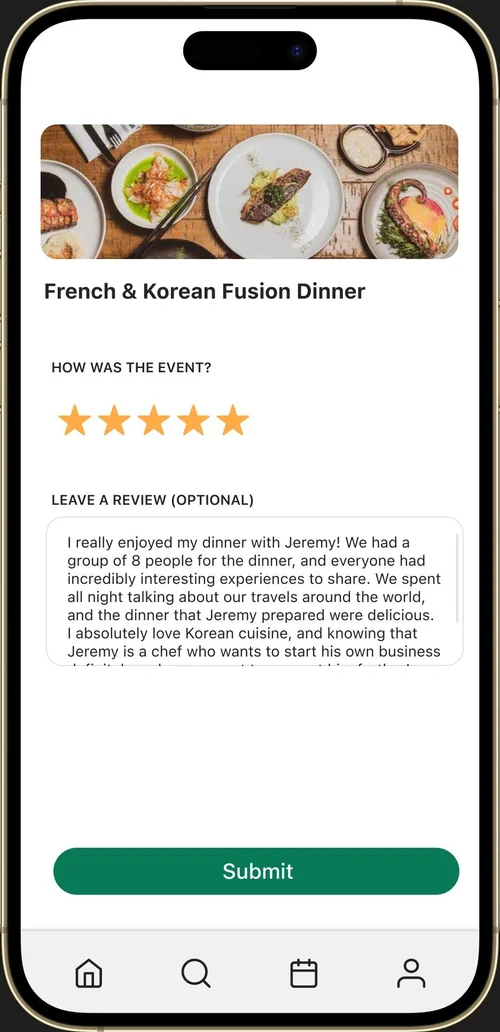 App Rating
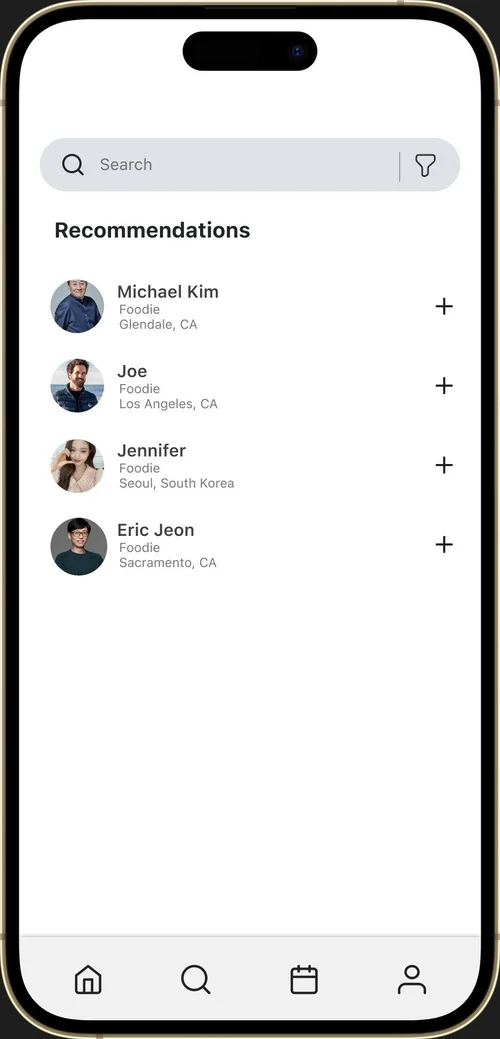 App The social feed
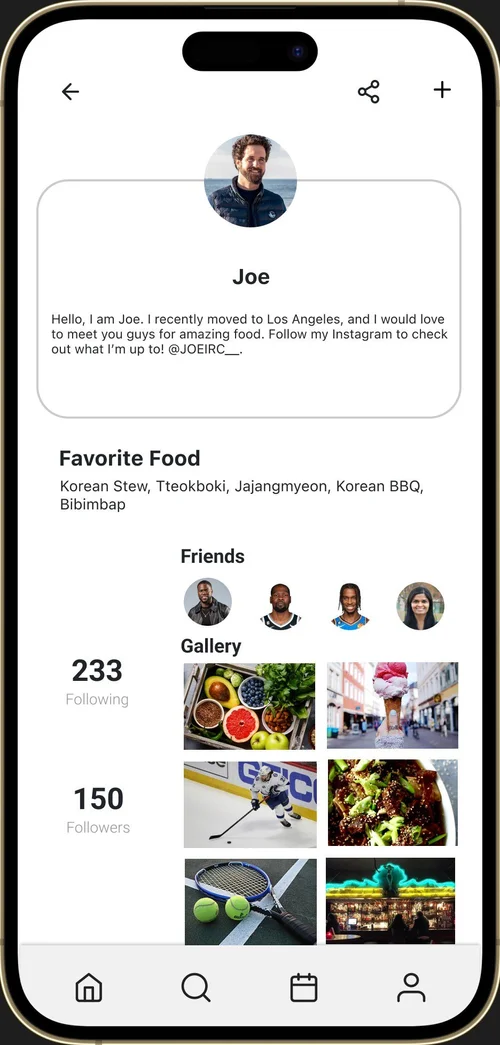 App User profile
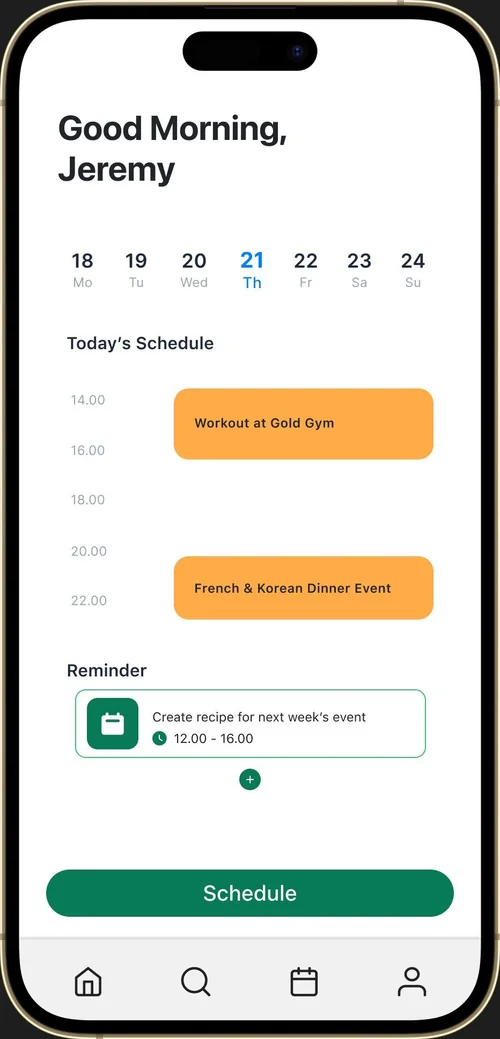 App Calendar
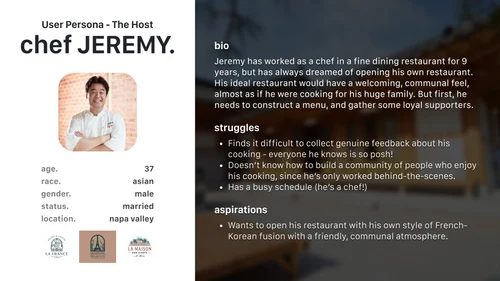 Research Persona: Jeremy, the host
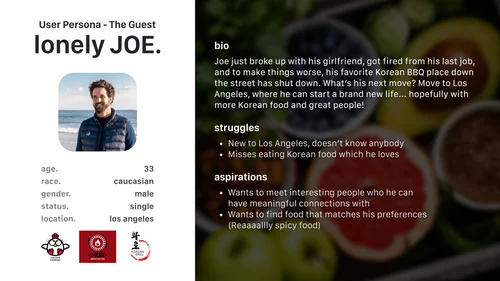 Research Persona: Joe, the guest
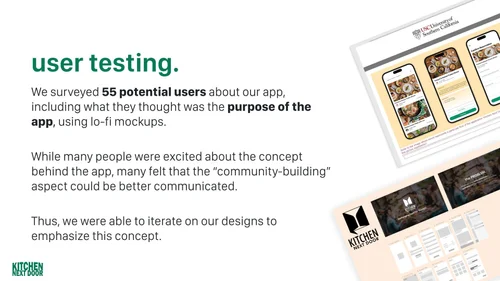 Research User testing, from the final presentation
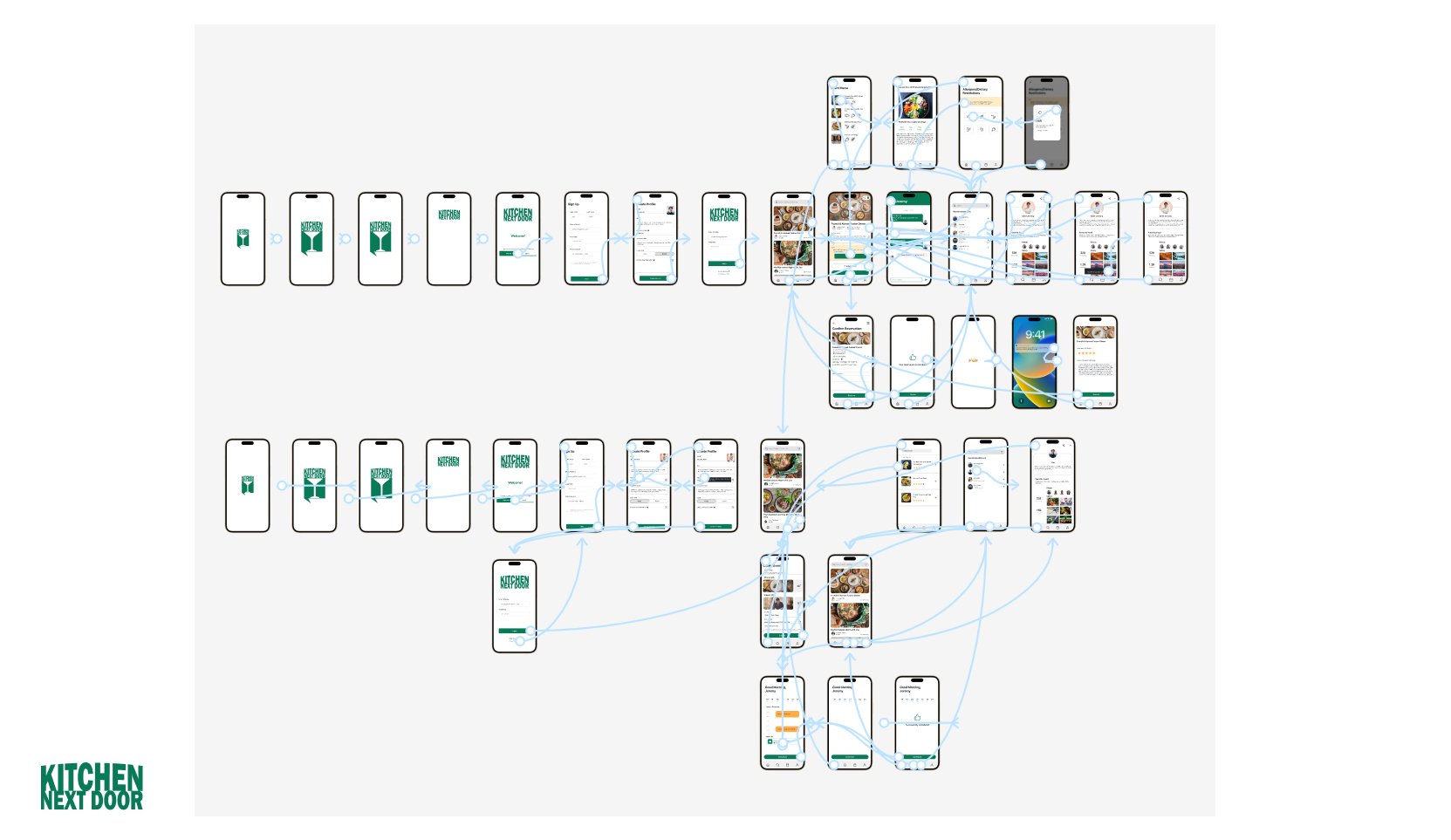
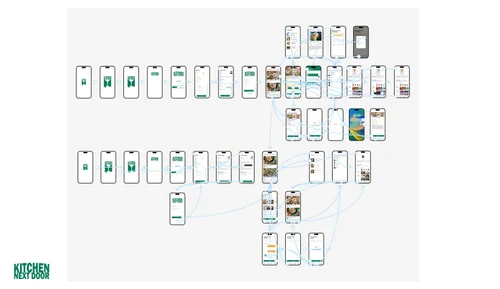 Design The user flow
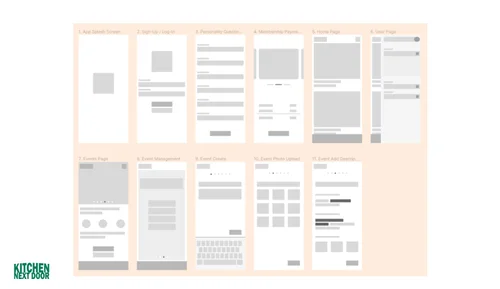 Design The wireframes
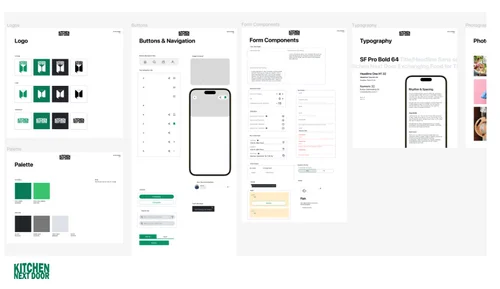 Design The design system
 Brand The logo
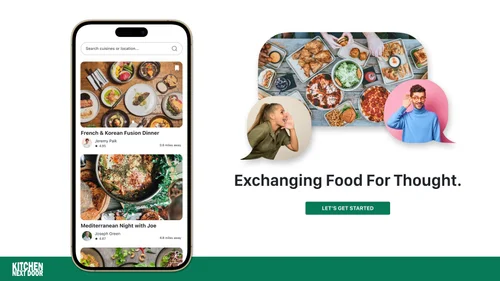 Brand Exchanging food for thought
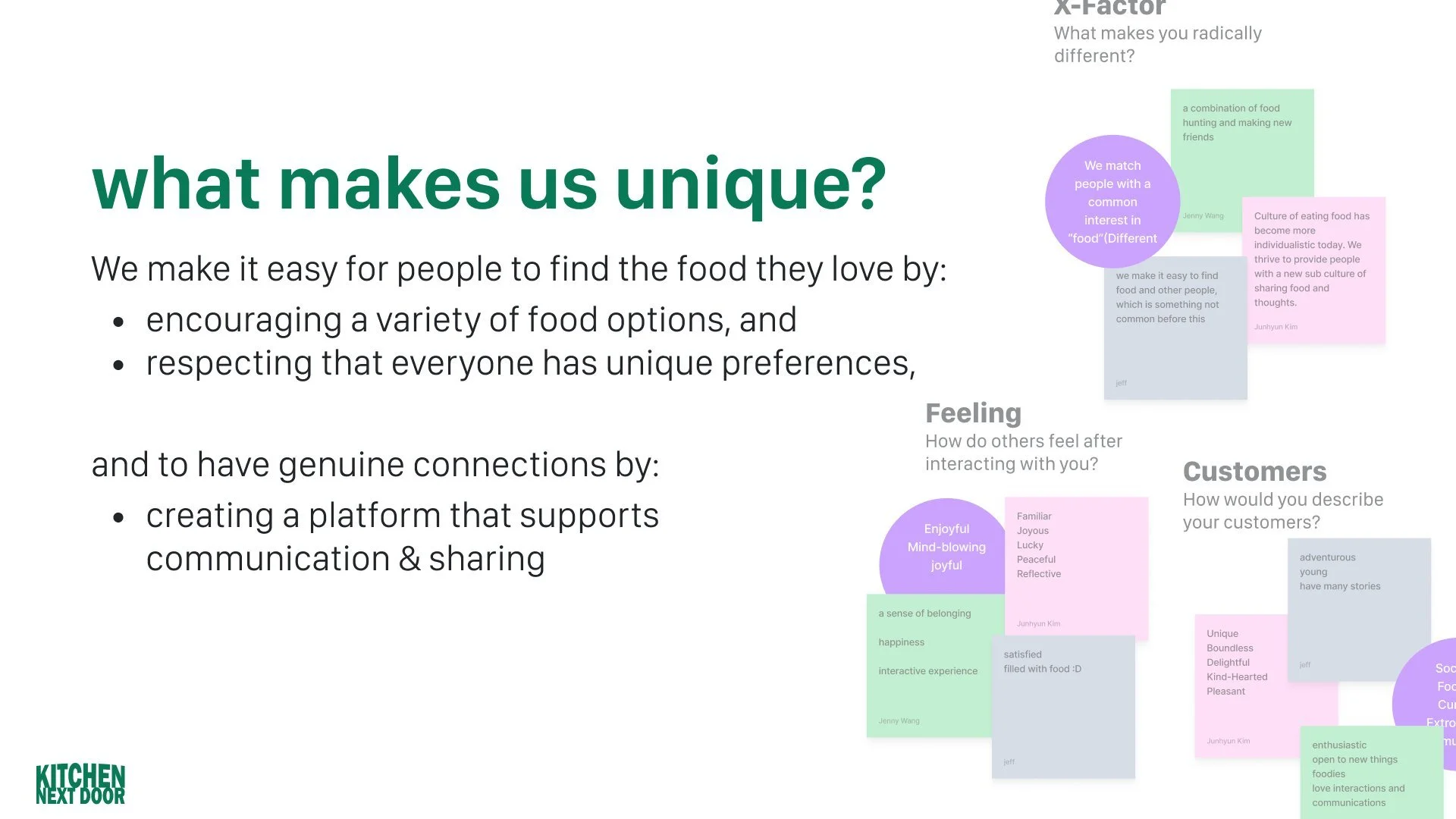
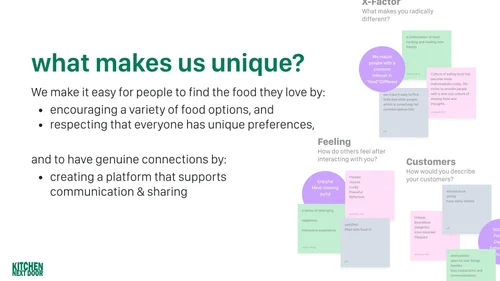 Brand What makes us unique
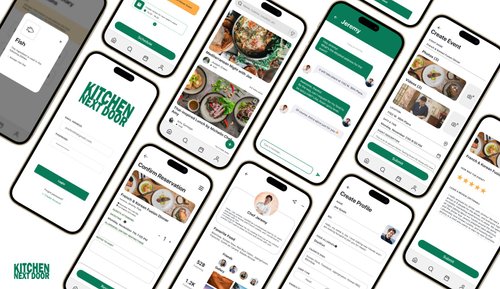 App The screens, fanned
What I learned
Lead with the system, then let the food talk.
- Pick the unit first. Once the dinner was the thing being listed, the screens almost designed themselves.
- A design system is how a team ships one app. Three designers, one semester: the components were the coordination.
- Ask people what they think it is for. The survey with mockups found the gap between what we built and what we meant.
- Trust is a set of fields. Allergens, ratings and a menu did more for a stranger’s confidence than any copy.
- Photographs beat brand colour. A quiet green and the hosts’ own pictures made the app feel like dinner, not like an app.
- Leading is deciding. The lead’s job was to settle the arguments the research could not, and to write down why.
Kitchen Next Door ended as a tested prototype of a simple idea: a stranger’s kitchen, bookable, with the menu in front.
Exchanging Food For Thoughts
Welcome to Kitchen Next Door, a UX project designed to foster social connections through the power of food. At KND, we understand that food is more than just sustenance – it's a universal language that brings people together, transcending cultural boundaries and creating meaningful interactions.
By leveraging the social nature of food, KND enables people to connect on a deeper level, exchange ideas, and broaden their perspectives. We believe that when diverse minds come together, possibilities are endless. Whether you're a passionate foodie, a traveler, or simply someone seeking connections, our service offers a unique opportunity to expand your horizons and create lasting memories.
Join us on this culinary journey where food becomes a catalyst for forging new friendships, fostering cultural understanding, and igniting meaningful conversations.
Context
SS 2022 Academic Project
We are 3 Designers + 1 Product Manager
We are Dedicated to help people network in post-Covid Individualism
As Project Lead
Designed and Managed Logo | Design System
Conducted User Research | Storyboarding | Wireframing | Prototyping
Used Figma | Illustrator | Photoshop
The Problem with Post-Covid Individualism.
In the prolonged fight against COVID-19, the society has shifted towards individualism following governmental regulations and policies. Back home in Korea, people were restricted from taking part in social activities, limiting the number of attendees of personal gatherings to 2 people and restaurants operating only until 9:00 pm under government policies.
Although these policies are no longer in place, the after effects still impact our social and daily lives. According to our survey on 55 people, it was shown that people now experience difficulties networking due to their increased dependencies on remote platforms that encourages distance from people.
A New Way of Networking.
Introducing Kitchen Next Door, a revolutionary food service and social networking platform that brings together food enthusiasts, facilitates restaurant discovery, and fosters meaningful connections online and in person. Our platform is designed to provide a safe and enjoyable environment for you to explore a diverse range of culinary options, while respecting each individual's unique preferences. We believe that sharing a meal is a powerful way to connect with others, and we're dedicated to creating a thriving community centered around communication and sharing.
At Kitchen Next Door, our mission goes beyond satisfying your culinary cravings. We strive to cultivate a sense of community and belonging in today's fast-paced world, where face-to-face interactions are becoming increasingly rare. Our platform offers a space for individuals to come together, share a meal, and engage in thought-provoking conversations that go beyond the plate.
2 User Flows.
Introducing the two user flows in our design: The Host and The Guest.
On the Sign-up page, you have the flexibility to choose which role you'd like to assume.
Regardless of the role you choose, our platform provides social media integration, allowing you to interact with other users and share your experiences. This feature fosters a vibrant community of food enthusiasts where connections can be forged and culinary adventures can be celebrated.

The Host.
You have the privilege of creating events, where you can set the date, time, location, and even the food that will be provided. This empowers you to curate unique experiences for your guests.

The Guest.
You can explore and register for events created by Hosts. This allows you to discover exciting dining opportunities and connect with like-minded individuals.
Design System.

Low Fidelity Design

Design System

Prototype / Wireframe