
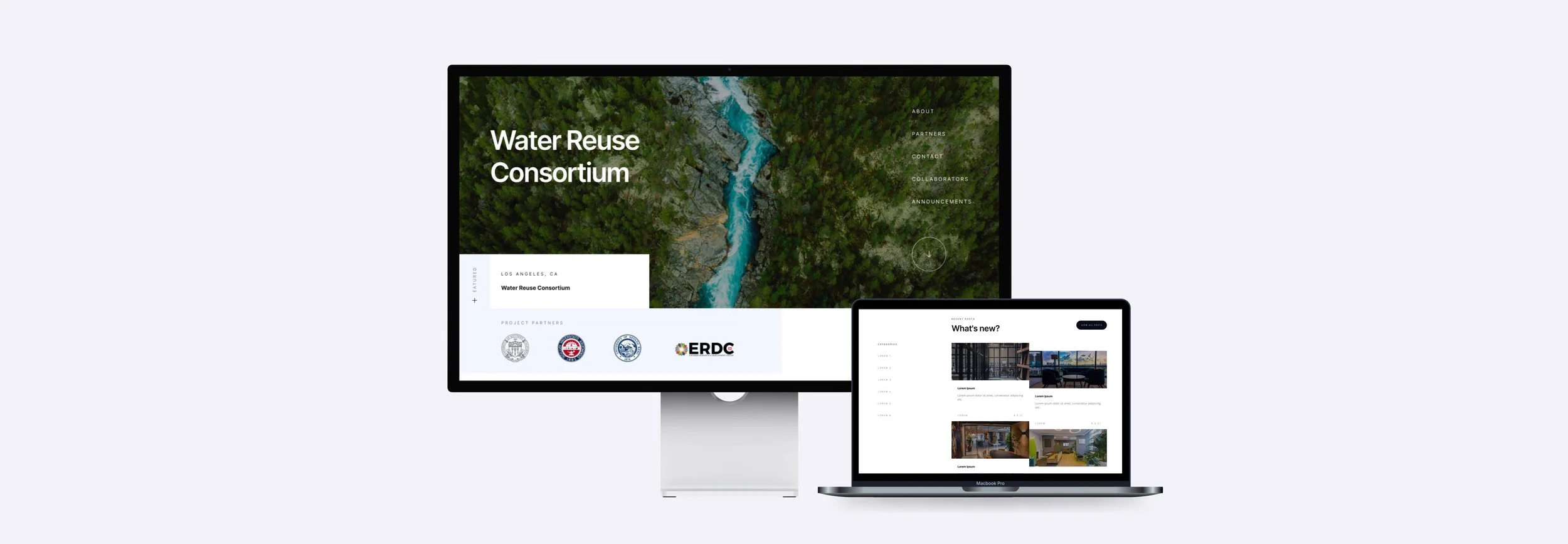
USC ReWater Internship
In Spring 2024, I undertook an internship as a web designer at the University of Southern California, specifically for the Water Reuse Consortium project. This government-funded initiative was an invaluable opportunity to apply my academic learning in design to real-world challenges, aligning perfectly with my career aspirations in UX/Product design.
Duration
5 Months
Team
4 People - 1 Design
Time
Spring 2024
Role
Web Designer
Design
During my internship at the University of Southern California, I spearheaded the redesign of the ReWater Center homepage and developed three mid-fidelity prototypes for the Water Reuse Consortium’s new website, alongside creating graphic reports. Tasked with establishing a compelling online presence for these government-funded initiatives, I applied a user-centered design approach to enhance accessibility, engagement, and clarity.
The ReWater Center homepage focused on improving user experience through multimedia integration and a streamlined navigation system. For the Water Reuse Consortium, I crafted prototypes that reflected the project’s sophisticated and innovative ethos, while addressing the needs of a diverse stakeholder base.
One of the proposed prototypes has now been fully developed and launched as the live Water Reuse Consortium website. This final result demonstrates my ability to take a large-scale digital product from concept to launch—ensuring that both design vision and usability goals were preserved throughout the development process.
Overview
Primary Duties
My primary duties revolved around developing and enhancing web interfaces that would resonate with the project's technical and educational goals. Initially tasked with creating demo website designs from scratch for the Water Reuse Consortium, I employed Figma to conceptualize several prototypes. Each design reflected the institution’s sophisticated yet innovative spirit. Notably, I developed a dual-column layout integrating an existing video with a new email subscription form, aimed at boosting user engagement and information dissemination.
Learning Outcomes
The internship was a crucible of learning. Technically, I honed my skills in Figma and WordPress, tools essential for modern web design. I also mastered integrating MailChimp for email services, crucial for effective communication strategies on the websites. On a broader scale, the experience enhanced my project management abilities, teaching me to meet deadlines and respond constructively to feedback. Most importantly, working within a diverse team honed my collaborative skills, affirming the necessity of interdisciplinary approaches in creating impactful design solutions.
Insider
Challenges Encountered
The process was often punctuated with challenges. One significant challenge was integrating complex functionalities into the websites, such as the email form alongside multimedia content. This required not only technical acumen but also a creative problem-solving approach. Additionally, the task of merging various experts’ opinions into cohesive designs involved extensive iterations and adjustments, highlighting the dynamic nature of design work in a professional setting. Moreover, the scale of the project sometimes proved mentally burdensome as I navigated the responsibilities of being the sole designer in a massive project.
Career Impact
This internship has been pivotal in shaping my career trajectory. Direct engagement with large-scale, impactful projects provided a clearer picture of my potential role and responsibilities as a future UX/Product Designer. It reinforced my passion for designing solutions that are not only aesthetically pleasing but also user-centric and goal-oriented. The hands-on experience with complex web design projects at USC has solidified my career aspiration to become a Creative Director, where I can lead projects that marry design with user experience at a strategic level.
Reflection
Notable Outcomes and Reflection
One of the most notable outcomes was transforming a research paper provided by the team into a magazine layout, making it easier to consume and more visually appealing. This task underscored the importance of design in communicating complex information effectively. Additionally, designing a simple email form that was ultimately sent to the head of the EPA illustrated the unforeseen scale and impact of my work. These experiences have not only challenged me but also highlighted the unique opportunities available in working under a massive team and project as the sole designer.
Conclusion
Reflecting on my internship experience, I am profoundly grateful for the myriad opportunities it presented for personal and professional growth. The skills and insights gained are stepping stones toward my future endeavors in design. I am more equipped than ever to embark on my journey in the tech industry, driven by a commitment to innovation, efficiency, and impactful design.