
RE:TRACT

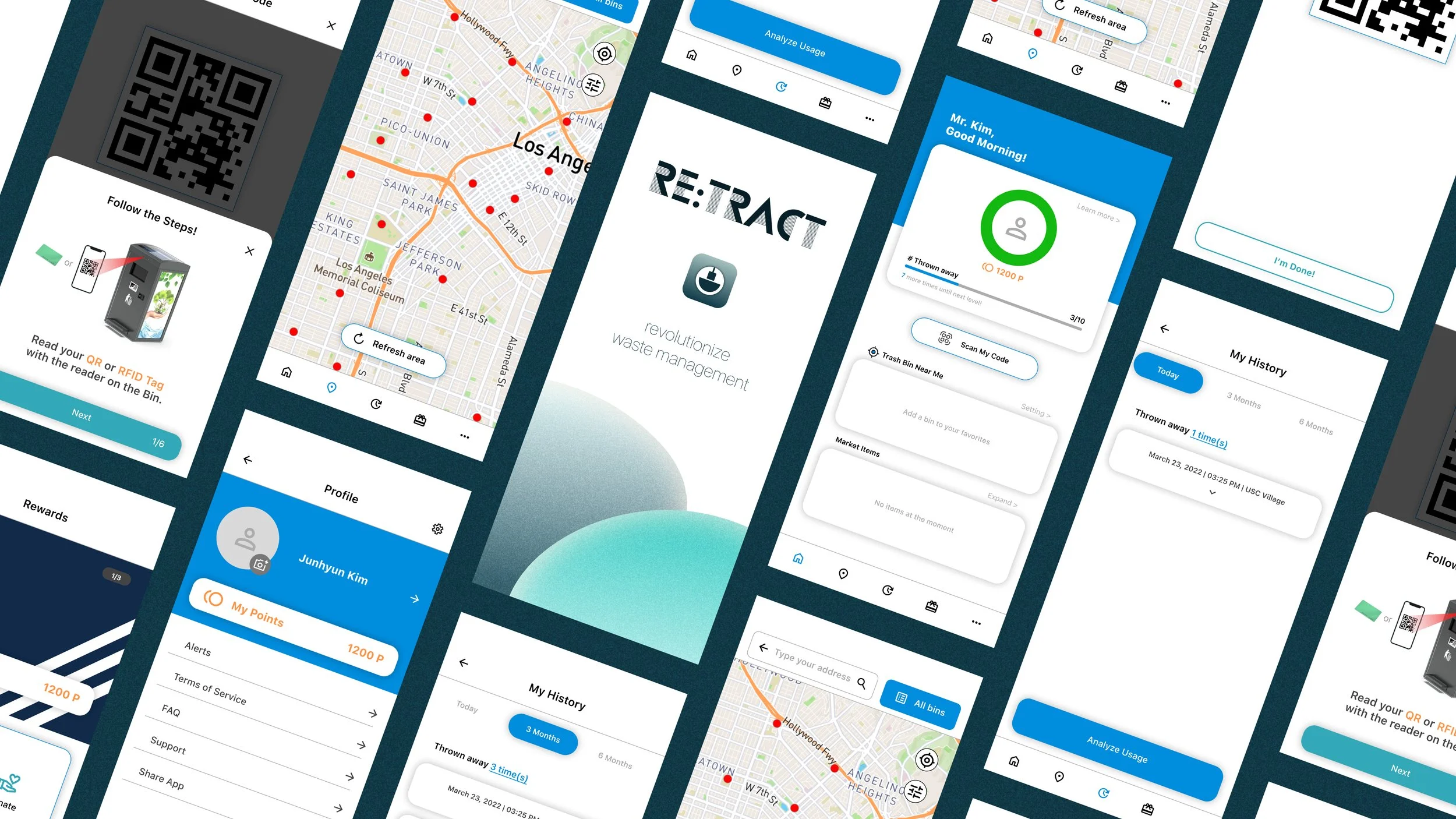
Revolutionize Waste Management
In this one-person project, I developed an innovative mobile application called “RE:TRACT” with the goal of revolutionizing waste management.
The app aims to tackle the pressing challenges associated with waste disposal and recycling, particularly focusing on organic waste in California. By leveraging technology and user-centric design principles, RE:TRACT offers a comprehensive solution that empowers individuals and businesses to make a positive impact on the environment.
The service extends its reach to encompass users without mobile devices by implementing physical ID cards as an alternative to mobile phones, thus eliminating the dependency on mobile technology.
Responsibilities
Conducted research on waste management challenges and California's waste statistics.
Defined project goals and objectives based on the findings.
Created wireframes to establish the overall structure and layout of the RE:TRACT mobile application.
Developed interactive prototypes using Figma, visually representing the app's user interface and user flows.
Designed visually appealing and intuitive user interfaces using Illustrator and Photoshop.
Ensured consistency in design elements, colors, typography, and iconography throughout the app.
Conducted usability testing and incorporated user feedback into the design iterations.
Considered accessibility principles and guidelines while designing the user interface
Conducted regular design reviews and quality checks to maintain design standards and consistency.
Research & Outline
This presentation provides a brief overview of the problem of waste in California and introduces the proposed solution that became the basis of my UX design.
Before exploring the prototype, here is a brief summary of the key slides:
Waste Statistics: Highlighting the significant amount of organic waste generated in California and the alarming statistics related to food insecurity.
SB1383: Introducing California's Short-Lived Climate Pollutant Reduction law, which mandates recycling of organic materials and sets goals for waste reduction and food recovery.
Proposed Solution: Presenting a unified system utilizing RFID tags to streamline waste management processes and improve efficiency.
RFID Methods: Exploring different methods of utilizing RFID technology for waste measurement and disposal.
Expectations: Outlining the expected benefits of implementing the proposed solution, including increased efficiency and reduced greenhouse gas emissions.
UX Outlines: Addressing user experience aspects, such as raising awareness, gamification elements, and user accessibility through QR codes or RFID tags.
This brief overview sets the stage for exploring the prototype and gaining a deeper understanding of how the solution revolutionizes waste management by promoting responsible practices, environmental sustainability, and improved efficiency.