
Artify
Artify represents a paradigm shift in how art students interact with their most fundamental resource: art supplies. As a member of this vibrant community, I recognized the untapped potential in unused materials—often a byproduct of abundance rather than scarcity.
Thus, Artify was envisioned as a sustainable, communal solution to reduce waste, inspire creativity, and cultivate collaboration. Every feature is imbued with the spirit of 'Connect, Collaborate, Create'—a slogan that encapsulates our ethos and the transformative journey we're embarking upon with Artify.
✌Artify won the Sustainability Idea Competition held on Fall 2023.
My Role
Lead, Product Designer
Project
Sustainability Competition
Timeline
30 Days (2023)
Tools Used
Figma, Adobe Illustrator, Photoshop
Overview
Prompt
The University of Southern California's Roski School of Art and Design is dedicated to fostering a vibrant, inclusive, and eco-conscious community. Our challenge is to empower our students with sustainable practices in their creative endeavors, ensuring equitable access to art resources. Design an experience that not only integrates sustainability into our community but also makes art creation universally accessible.
Faced with this imbalance, Artify emerged as our creative response—a platform conceived to champion ecological responsibility and inclusivity. It's a system designed to bridge gaps, allowing the full lifecycle of art materials to be as dynamic and interconnected as our diverse student body.
Solution
Artify reimagines the way art students interact with materials—turning waste into worth. It's a sustainable exchange platform where students can 'Connect, Collaborate, Create,' repurposing materials within a vibrant Roski community.
Artify facilitates this transformation by providing an accessible digital space where students can list surplus supplies and find needed items with ease. The app streamlines the art material lifecycle, from sharing and trading to repurposing, ensuring every resource is valued. It's more than an app; it's a community initiative fostering creative synergy and sustainable practices.
Initial Thinking
Our team focused on understanding the depth of the problem—excessive waste of art materials and a lack of accessibility for all students. Our mission became clear: to cultivate a sustainable, inclusive community within the Roski School of Art and Design. Through workshops, surveys, and discussions, we mapped out our path, prioritizing features and initiatives that would directly contribute to reducing waste and fostering a supportive network for art material exchange.
Target Users
Mainly Roski Students
USC students seeking Art studies
Problem
Excessive waste of art materials
Lack of accessibility for all students
Research Methods
Survey (Qualtrics) + In-person Interview
Online Research
Planning Phase
I. Research and Engagement
Engaging with students and faculty to gain insights into challenges and opportunities for sustainable practices.
II. Mission Formulation
Establishing a clear mission to guide Artify—creating an accessible, sustainable platform for all students to share and find art materials.
III. Sustainability Integration
Embedding sustainability into every aspect of Artify, from user interactions to the lifecycle management of materials.
User Research
Background Research
Research Goals
Pinpoint Art Material Challenges: Identify student encounters with surplus and wastage in art material use.
Quantify Material Difficulties: Assess the frequency and types of obstacles students face with art materials.
Measure Eco-Consciousness: Evaluate the level of student concern regarding the environmental impact of art material waste.
Test Engagement Strategies: Investigate student interest in sustainable art practices and related competitive activities.
Examine Community Building: Explore student readiness for collaborative, sustainability-centric art projects.
Validate App Concept: Gauge student interest in an app for exchanging and repurposing art materials.
Collect Open-Ended Feedback: Encourage sharing of broader views on art material waste and potential solutions.
User Interview
Research I - Online Surveys & Interviews
Have you experienced difficulties in acquiring course art materials?
7.3
out of 10 average
Have you purchased art materials that you didn't end up using?
54.6%
has excess materials
Challenges faced when acquiring or disposing art materials?
Uncertainty in Selection
Financial and Transportation Barriers
Accessibility and Availability
Expectation vs. Reality
Roski Program
Roski Students, both Design or Art Major, all take mandatory art classes as a part of their freshman curriculum.
The school recommends students buy art materials in sets from Blick, which contains various art materials.
Most students purchase these packages, but end up not using or needing the majority of its contents, thus having an excess of art materials
Trend Insight
Lowerclassman are more likely to look for aid in obtaining art materials, especially to avoid purchasing Blick’s expensive package.
Upperclassman are more likely to have excess materials from the curriculum and are willing to exchange them for other necessities.
How concerned are you about the environmental impact of art material waste?
Environmental Impact
A bell curve response indicates a varied but notable concern for material waste's environmental effect.
Would you be interested in collaborating with other students on art projects related to sustainability?
6.8
/10 willing to collaborate
How likely are you to participate in a competition related to sustainable art material practices?
Collaborative Spirit
Majority show willingness to collaborate thru sustainability-related art projects.
Are you interested in the idea of a mobile app that facilitates the exchange,sharing, and repurposing of art supplies among students to reduce waste?
App Acceptance
Strong interest shown in an app facilitating material exchange, with emphasis on convenience and community impact.
Community Comments
Digital Supply Exchanges: Promote an online platform for easy art supply swaps among students.
Creative Reuse of Waste: Trend waste as a resource for new art, embracing trash-to-treasure aesthetics.
Sustainable Programs for Youth: Engage younger students with art through recycled supply donations.
Collaborative Sustainability Hubs: Pair up with local businesses to turn material exchanges into creative workshops.
Waste Management Solutions: Innovate eco-friendlier disposal methods for art byproducts.
Campus Eco-Campaigns: Drive sustainable art practices through campus-wide activities and information drives.
Circular Economy Markets: Set up markets or boxes for the reuse and redistribution of art materials.
Conscious Consumption Guidance: Encourage mindful material use and sharing of surplus.
Sustainability Clubs: Form student groups dedicated to ongoing sustainability efforts in art.
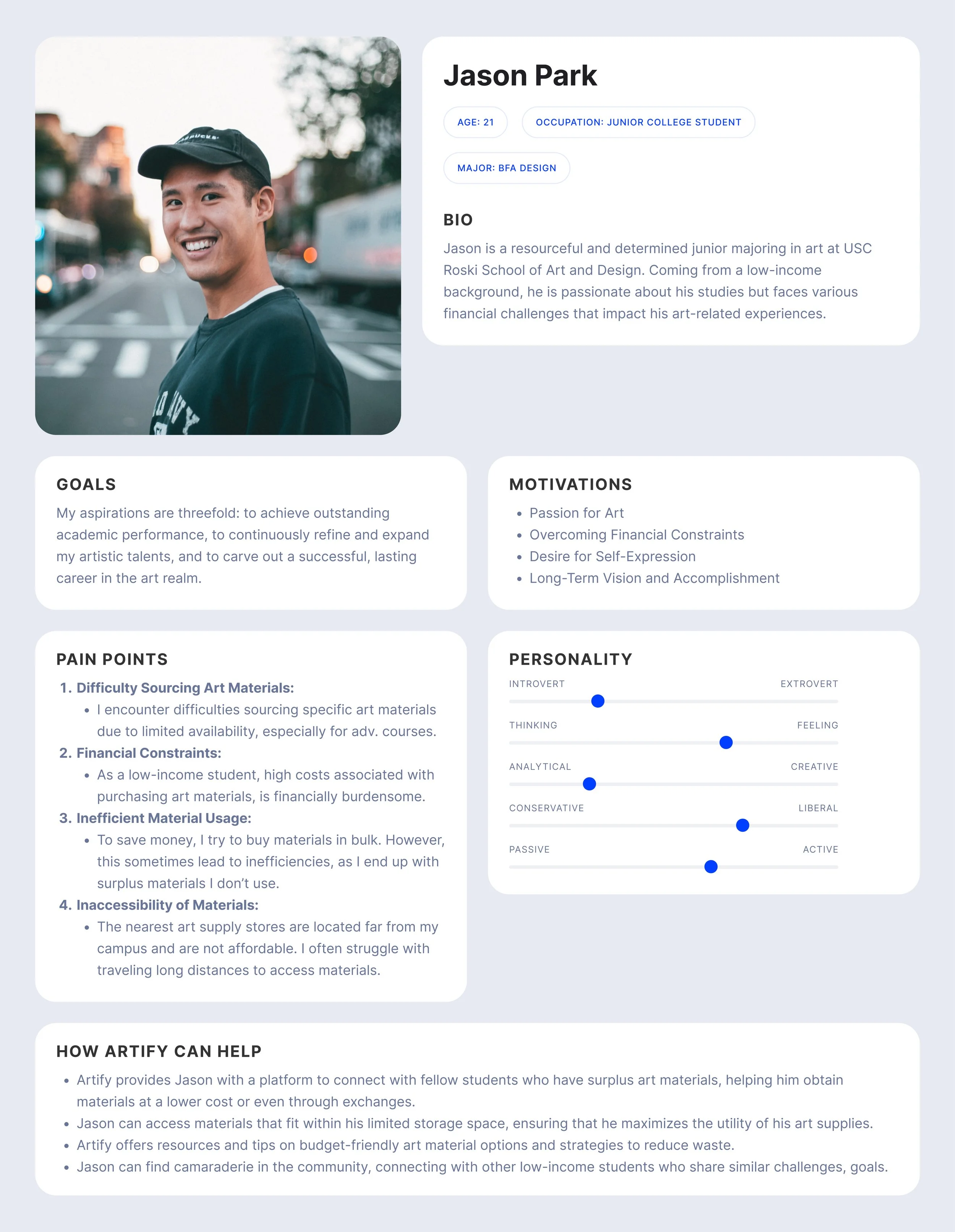
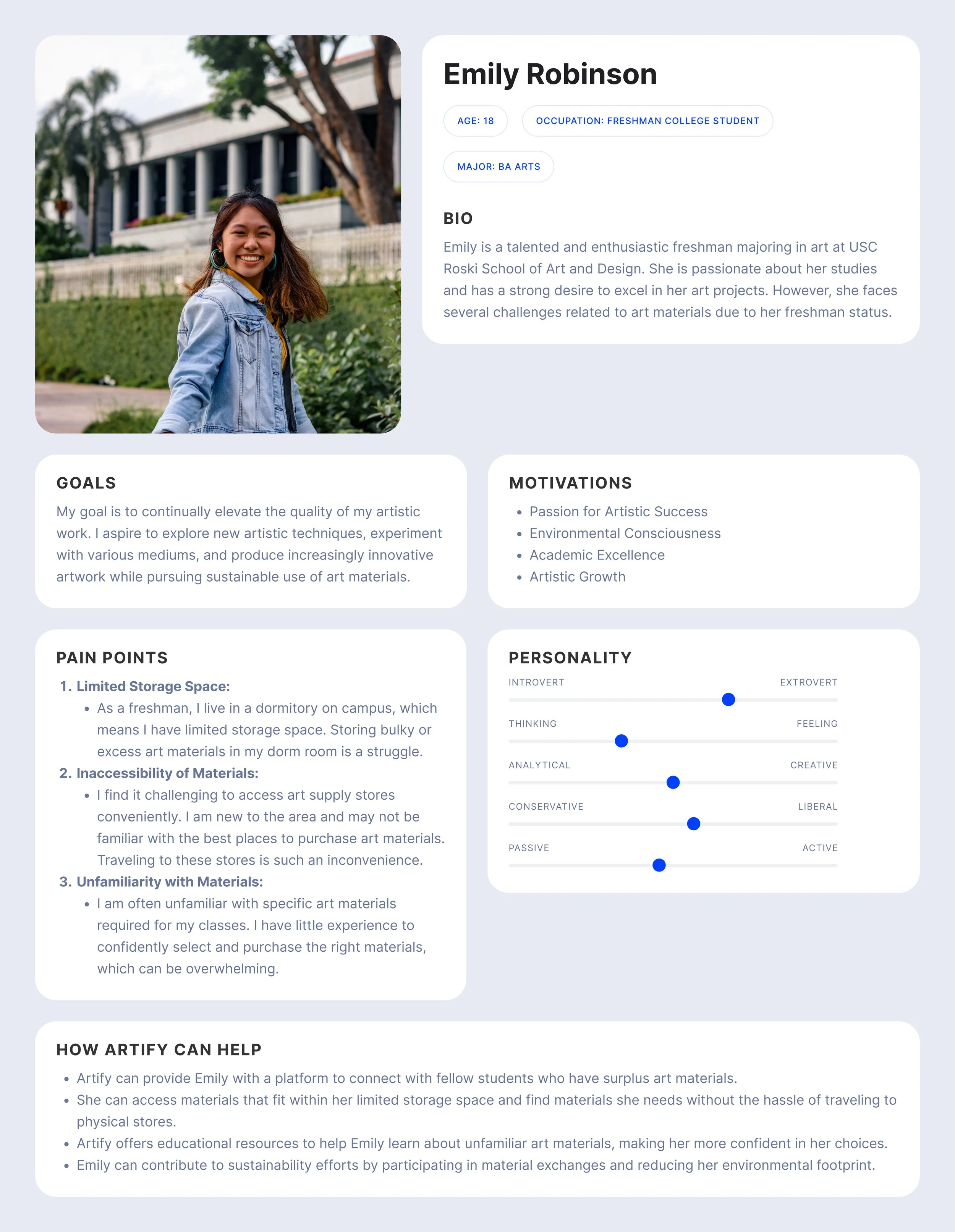
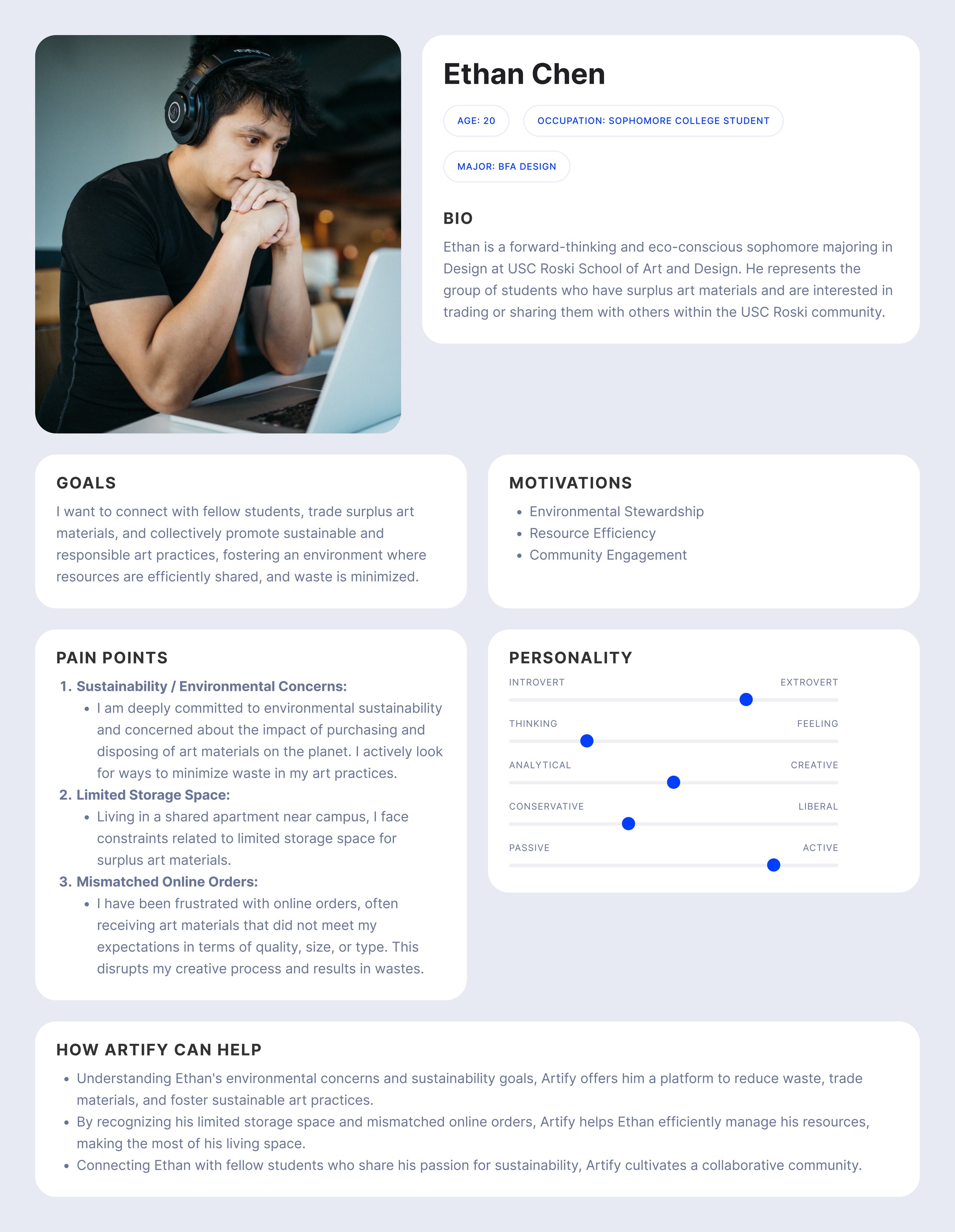
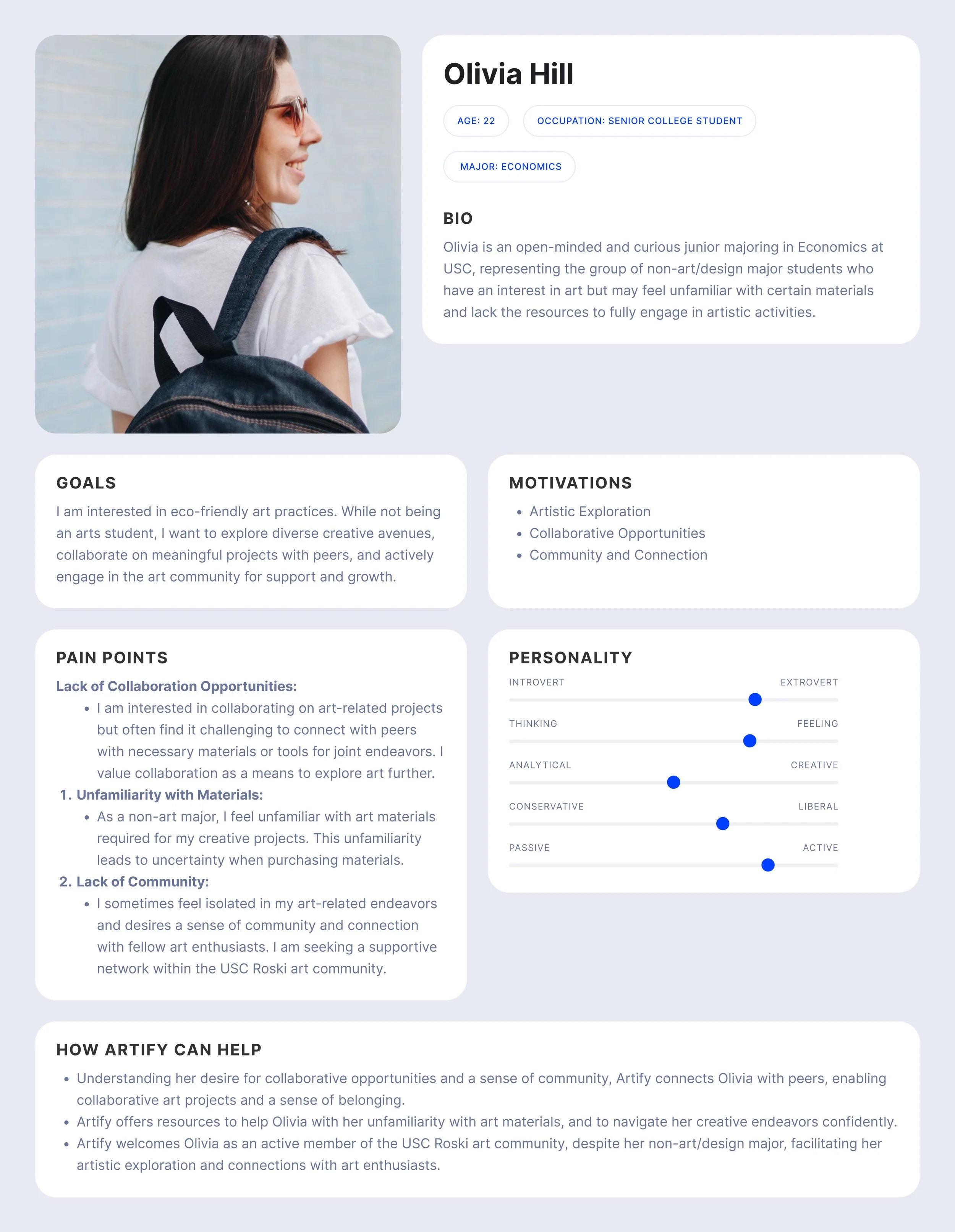
User Persona
Meet the Community
Competitor Analysis
Research II - Existing Systems
Artify emerges not as a competitor to established marketplaces like eBay, Amazon, and Etsy, but as a platform learning from their successes and limitations. Our analysis underscores the need for a service tailored to sustainable practices in art material transactions at a community level.



-
Amazon's vast product selection and prime shipping set a benchmark in convenience. However, its scale often overlooks the niche requirements for sustainable art materials.
Artify adopts this convenience while narrowing its focus to create a more sustainable lifecycle for art materials.
-
While eBay's global reach and auction format excel in variety and excitement, its broad focus means that specialized needs, like those of art students seeking sustainable options, are not directly addressed.
Artify learns to fill this gap with a dedicated and curated approach.
-
Etsy's support for unique and handmade items underlines the value of a community-driven marketplace. However, it doesn’t specifically cater to the exchange of art materials with a sustainability focus.
Artify adopts Etsy's community spirit, directing it towards resource sharing and sustainability among art students.
Adaptations
From these marketplaces, Artify adopts the importance of a user-friendly platform, trustworthy transactions, and community building.
It addresses the lack of a dedicated platform for art students to transact in a way that promotes sustainability, recycling, and reusability of materials.
Unique Offerings
Artify integrates the strengths of these platforms but focuses on enabling students to buy, sell, or exchange art supplies in a manner that prioritizes environmental friendliness and community engagement.
The platform is committed to providing a space where every transaction supports sustainable practices, whether it's through the use of recycled materials or ensuring supplies get a second life instead of ending up in landfills.
Why Artify is Necessary
Artify isn’t just an alternative; it's a response to a significant need for a platform that understands and serves the specific, eco-conscious needs of the Roski School's art community. By building on what works in global marketplaces and focusing on local, sustainable solutions, Artify becomes not just a marketplace, but a movement for sustainable art practices.
Research Findings / Pain Points
Students need easy access to affordable art supplies, a gap not fully addressed by current marketplaces.
There's a strong student demand for sustainable art practices, including reusing and recycling materials.
A platform that supports the exchange of ideas and materials within the art student community is highly desired.
Encouragement and facilitation of creative reuse of materials are lacking in the market, leading to unnecessary waste.
The absence of a specialized transactional platform for art materials signifies a market opportunity for Artify.
Problem Statement
Art students lack a dedicated platform that combines affordability, accessibility, and sustainability for art materials. Artify seeks to fill this gap, creating a community-centric solution for a more creative and eco-conscious future.
Design Concept
User Flow
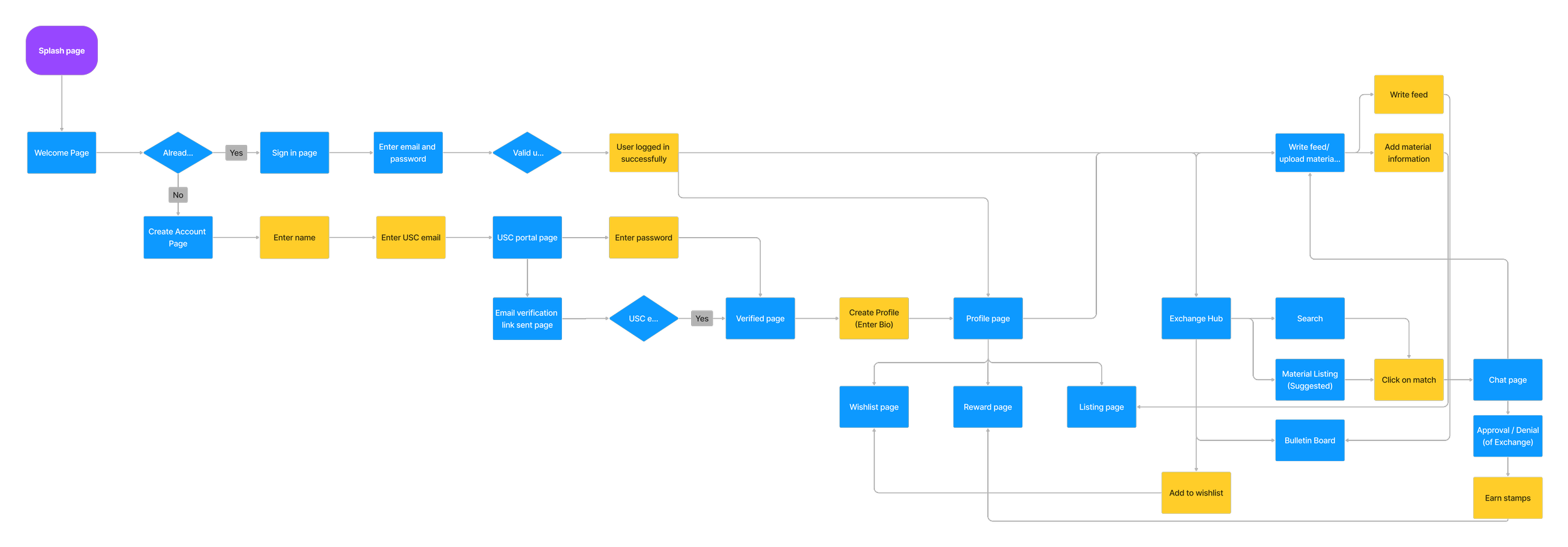
Design Concept
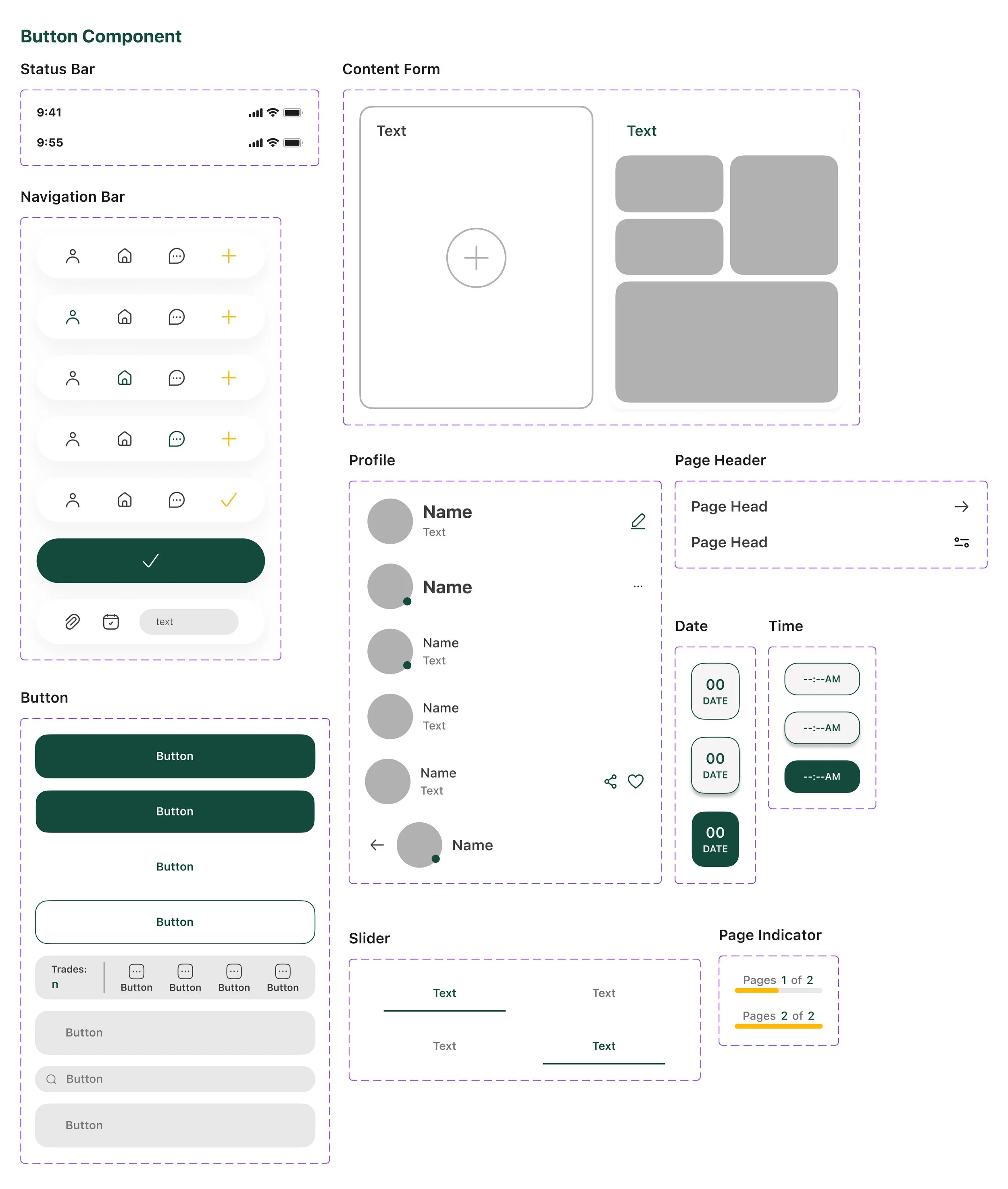
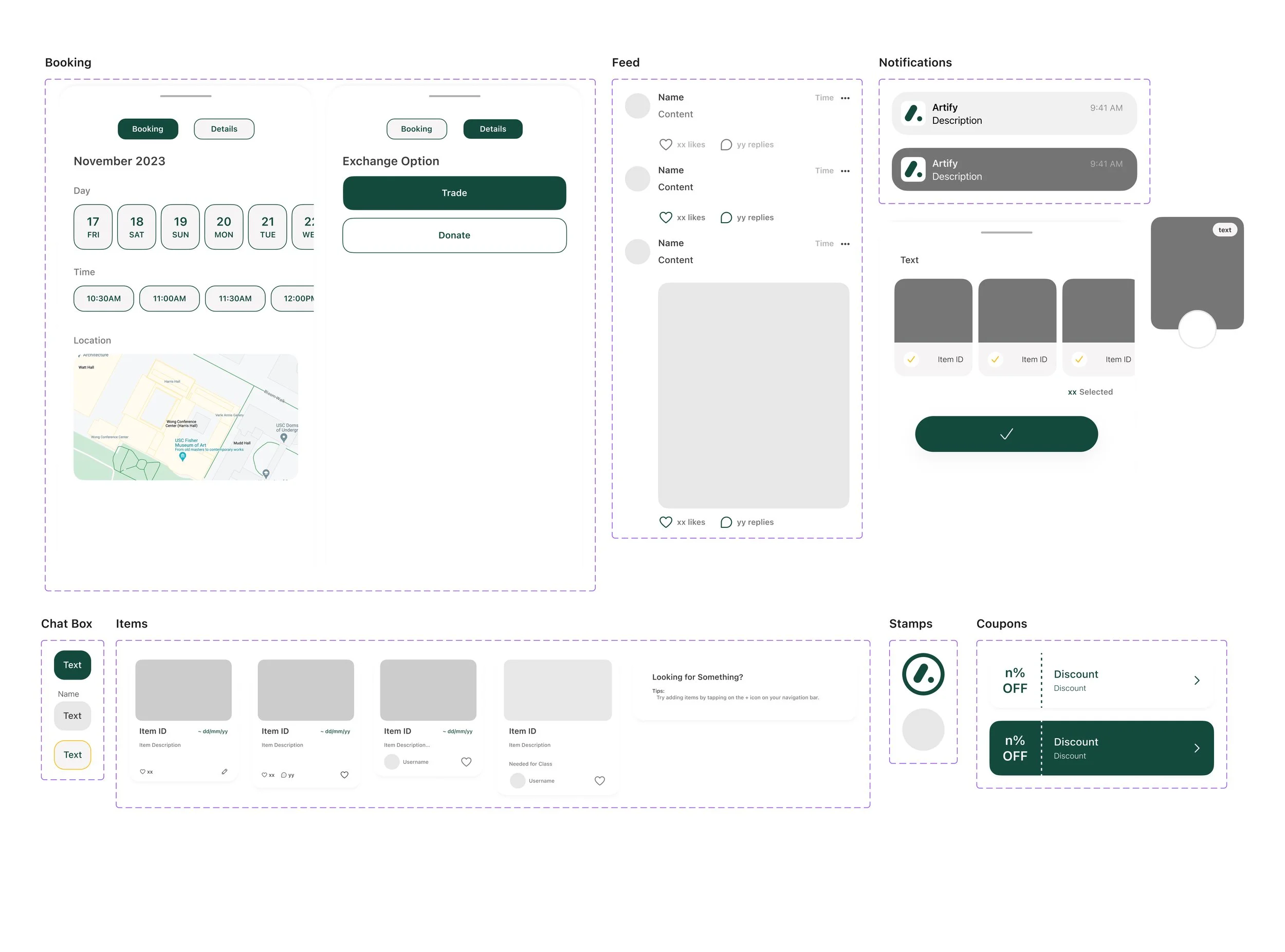
Design System




Components
Prototype
Wireframe
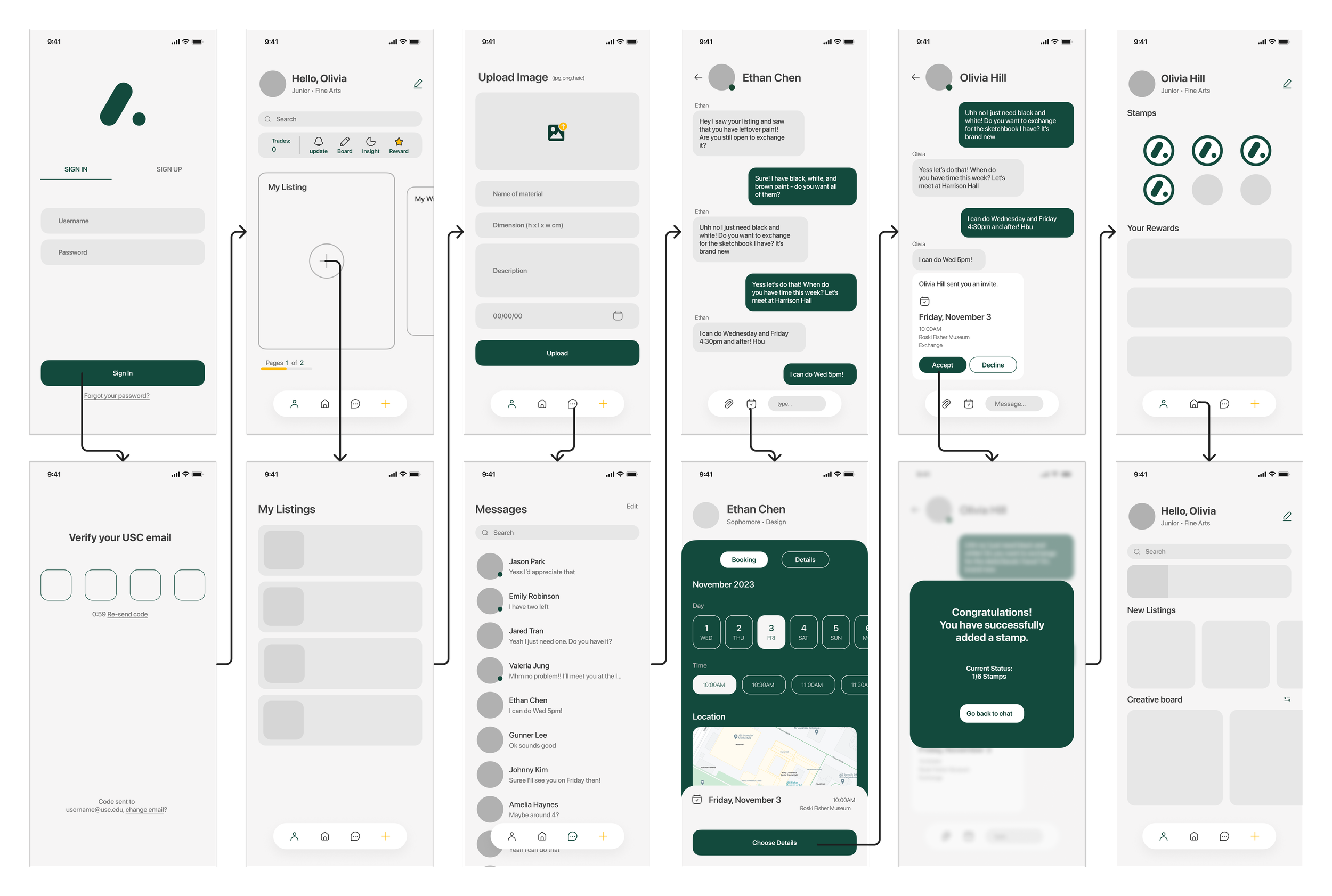
High Fidelity Design
Design Solution
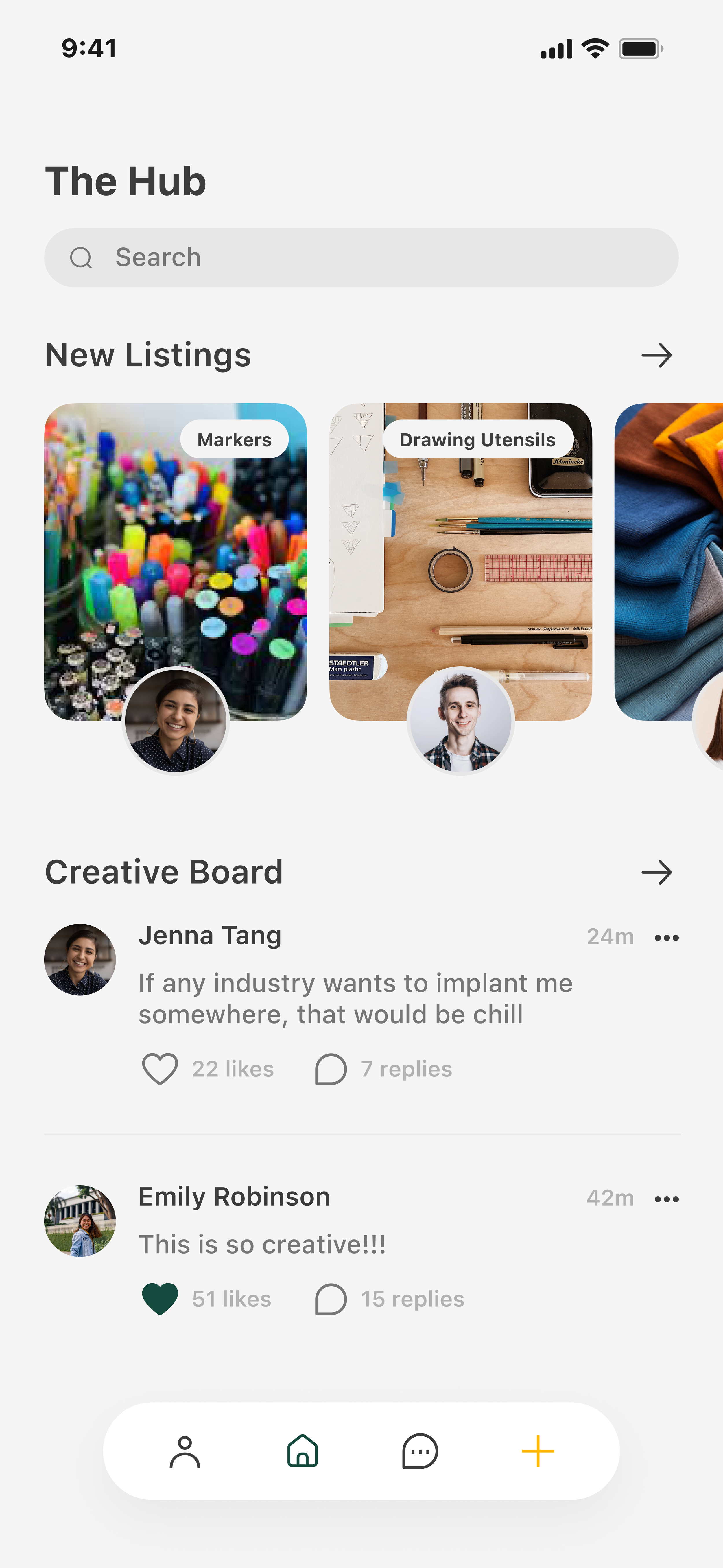
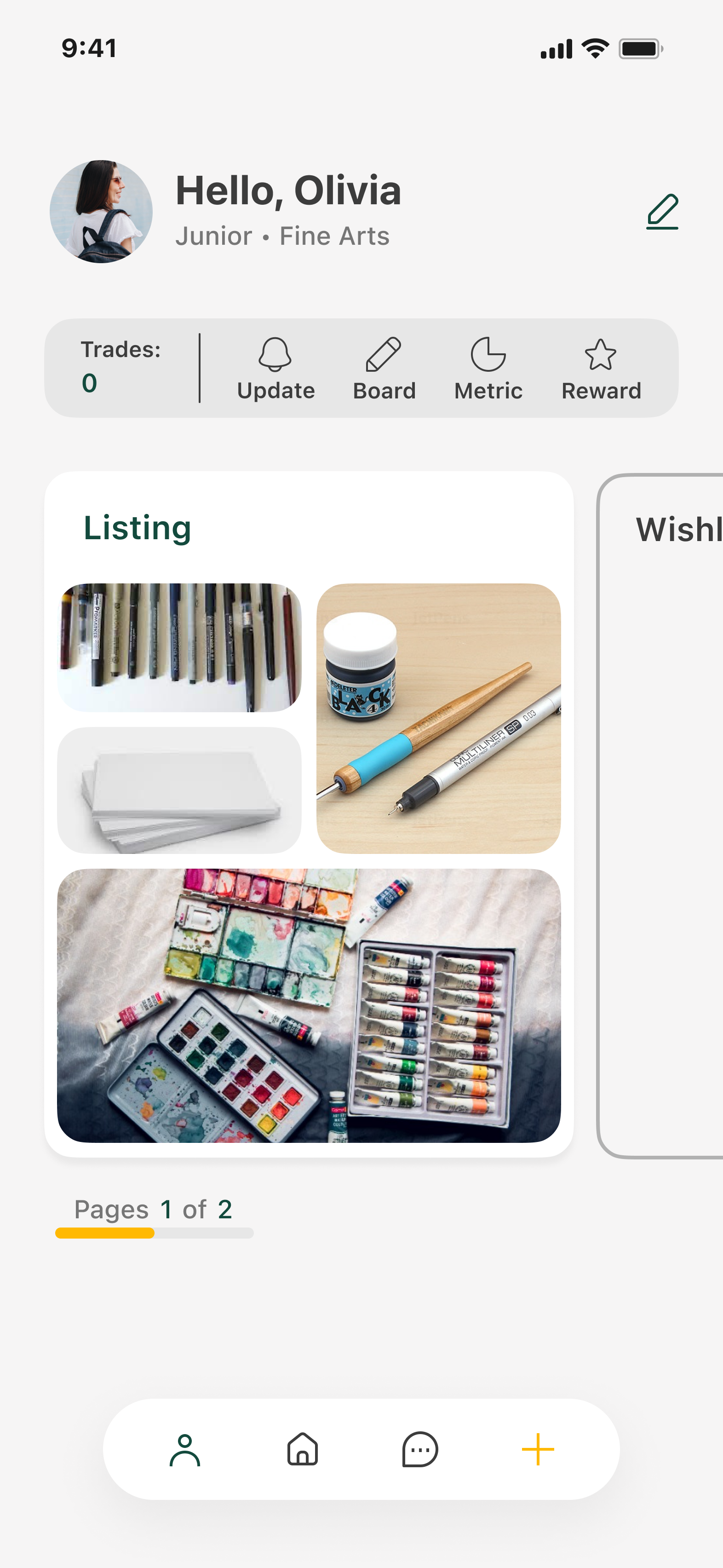
01
Multi-Purpose Platform
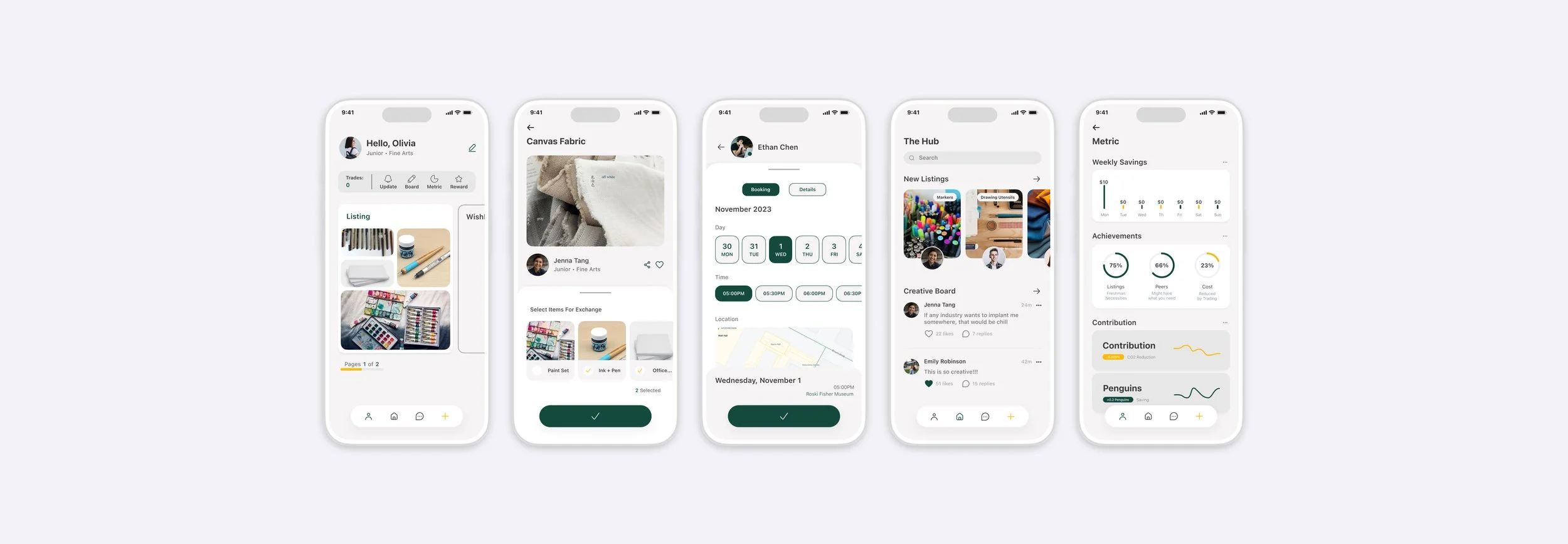
An ecosystem that was crafted for versatility, seamlessly integrating features for social connection, material exchange, and rewards. Students can effortlessly navigate listings, engage with fellow creators, and participate in a rewards program that incentivizes contribution. The platform is a one-stop hub where students’ artistic needs and the spirit of collaboration converge.
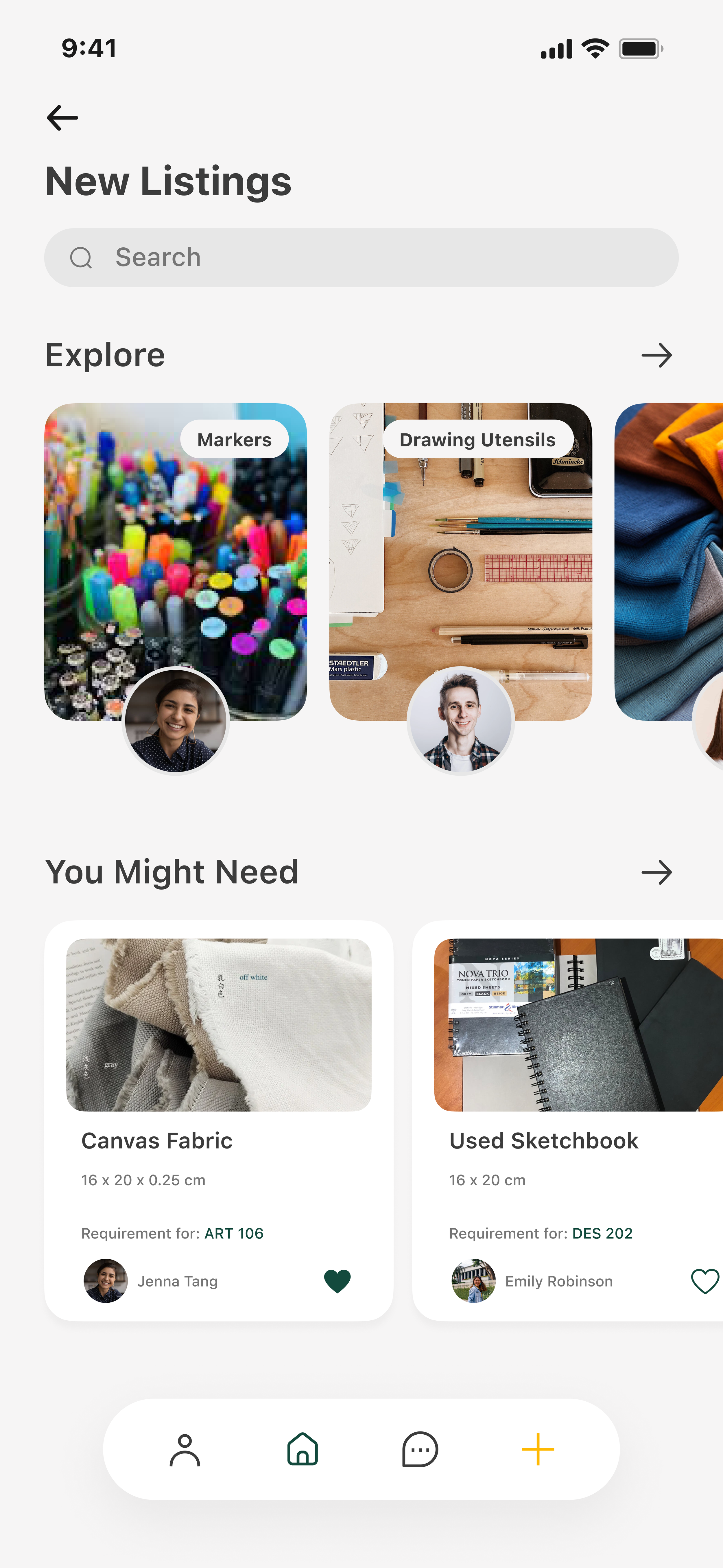
02
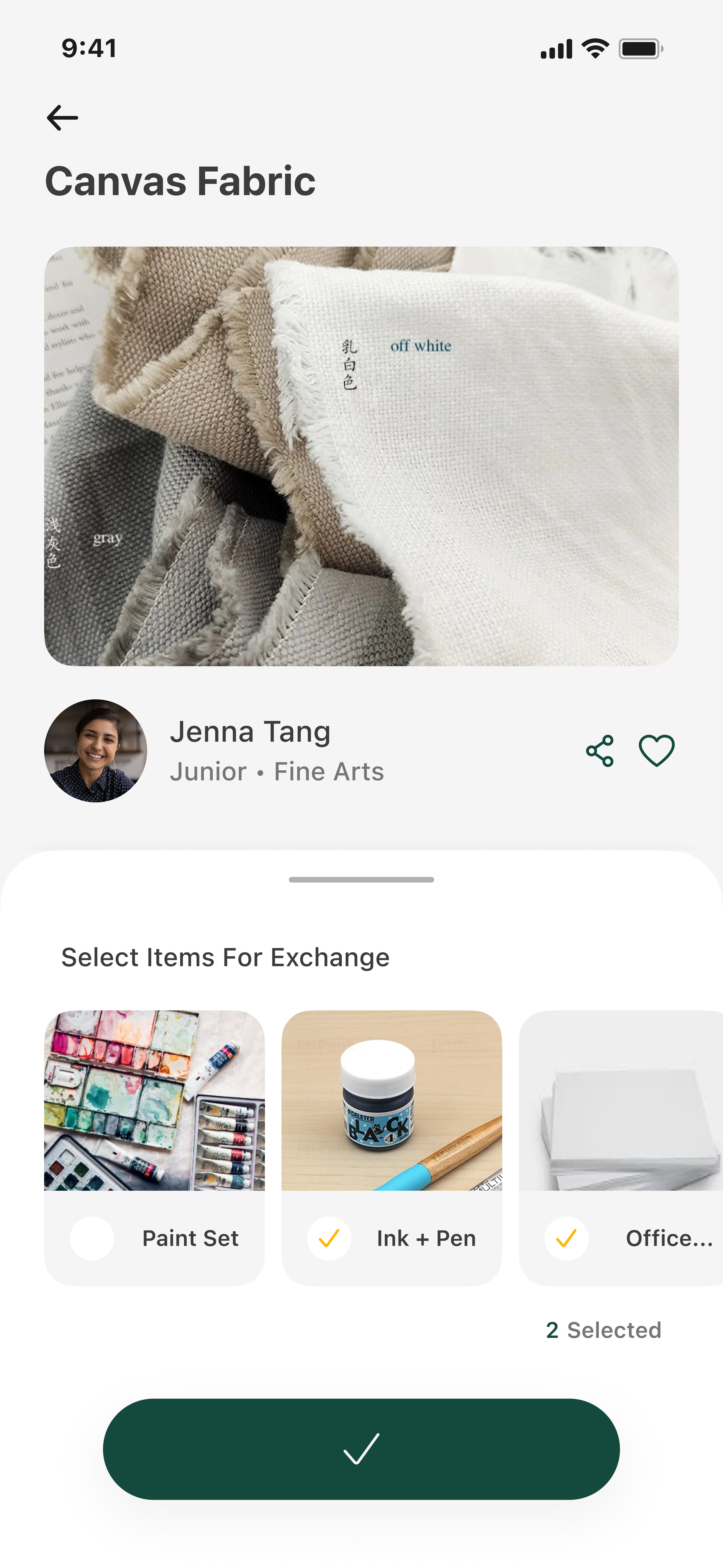
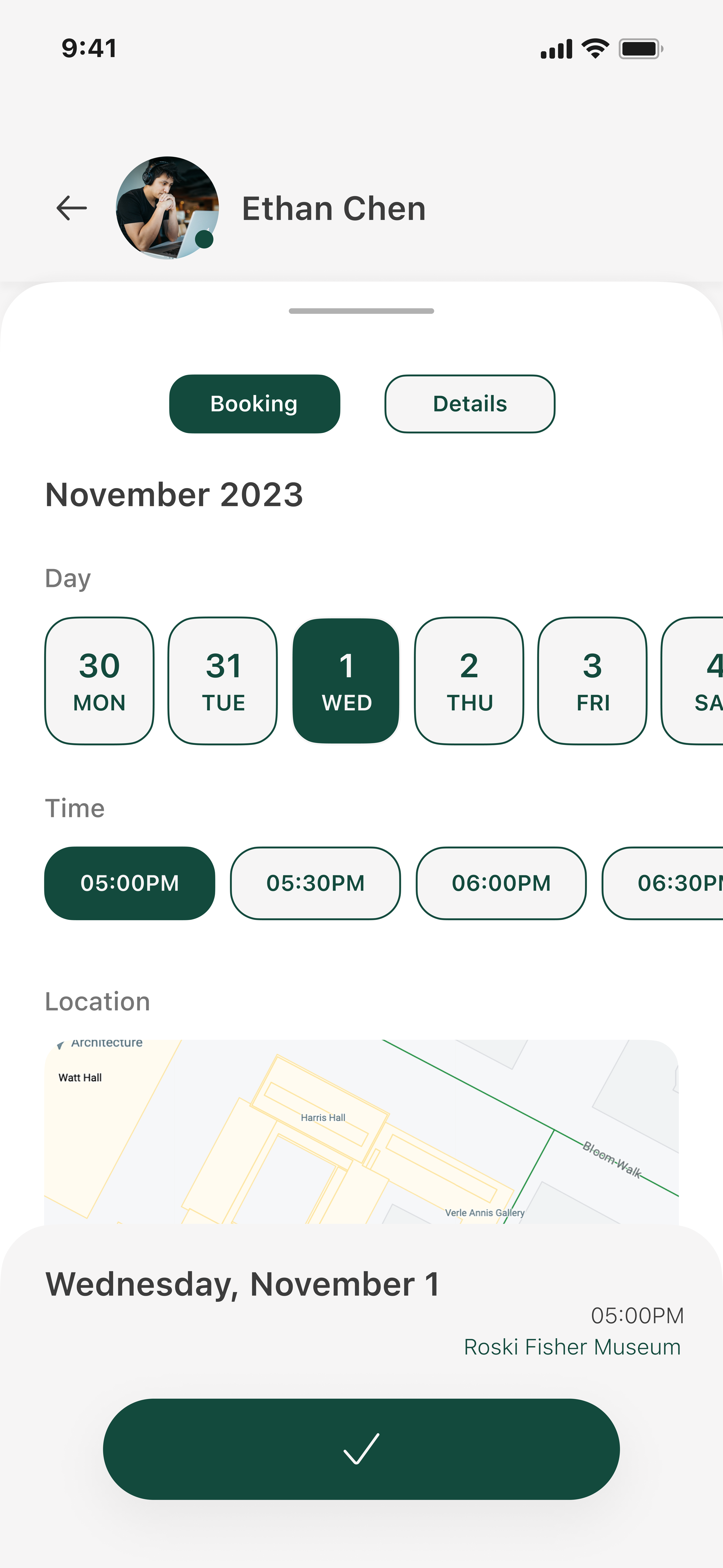
Personalized Requests and Recommendations
Artify personalizes the exchange experience by recommending materials tailored to students’ academic levels and previous exchange history. It streamlines the process of requesting items, allowing users to handpick materials for potential trades, fostering a dynamic and responsive exchange environment.
03
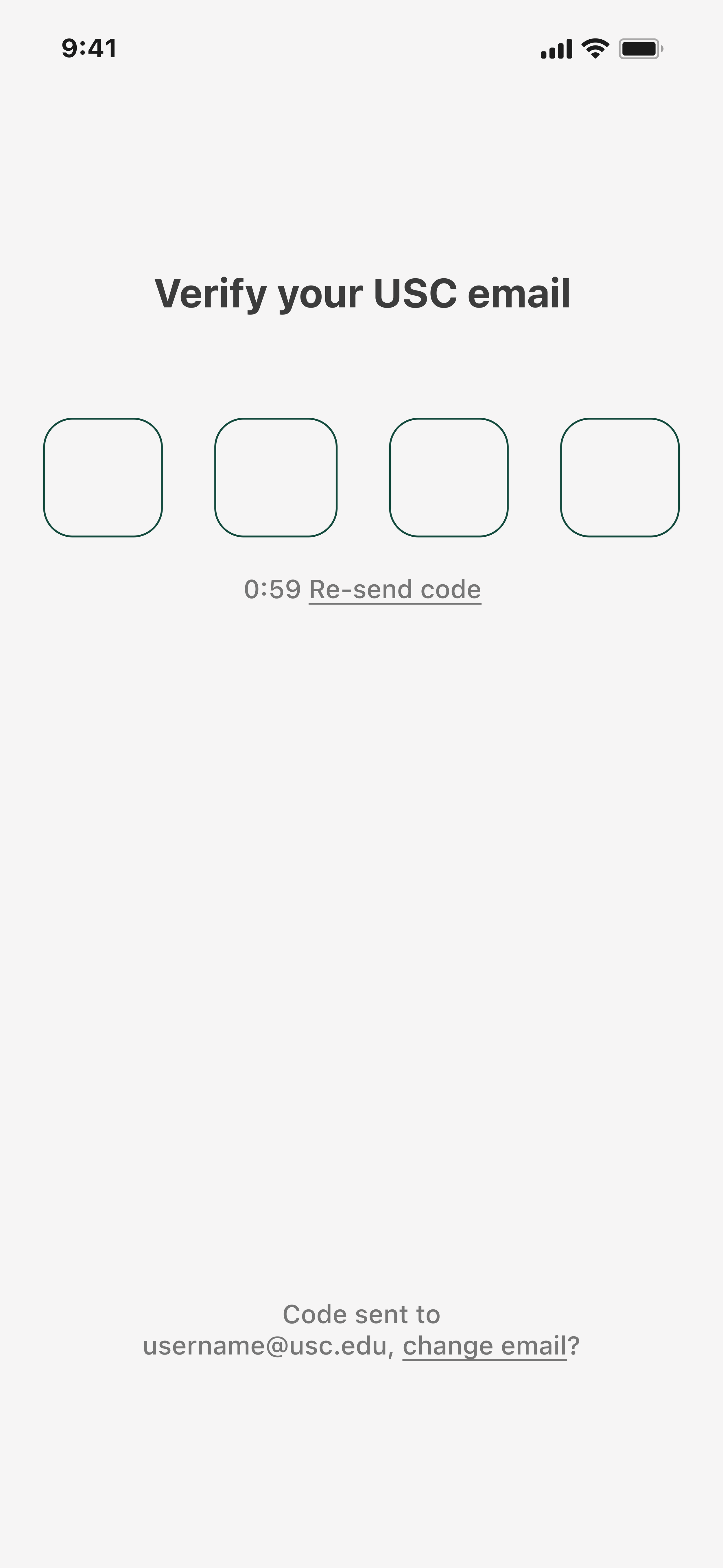
Safe and Effective Trading
Artify emphasizes safety and trust by mandating USC email verification for all users, creating a secure environment for trade among the USC community.
This verification process ensures effective and safe transactions, exclusively within the trusted campus boundaries.
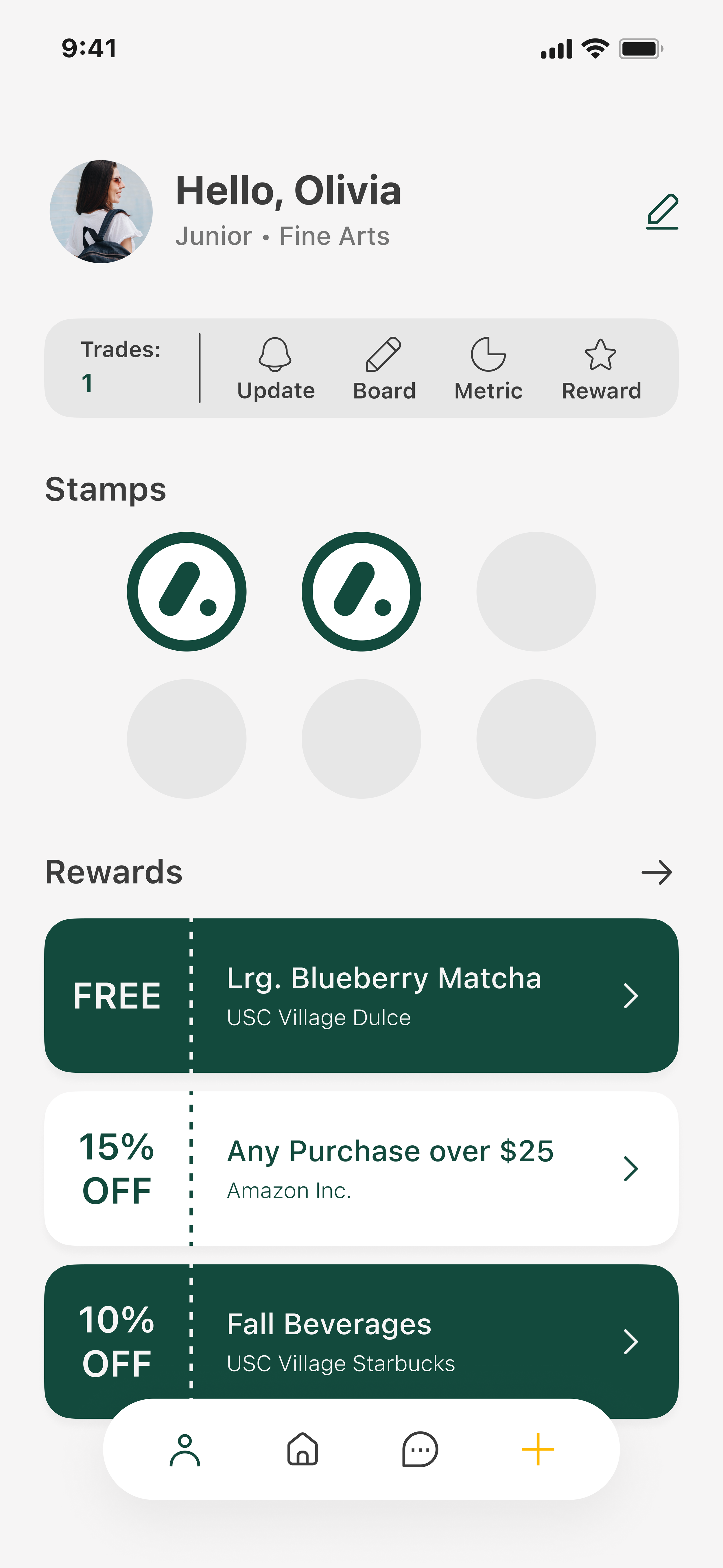
04
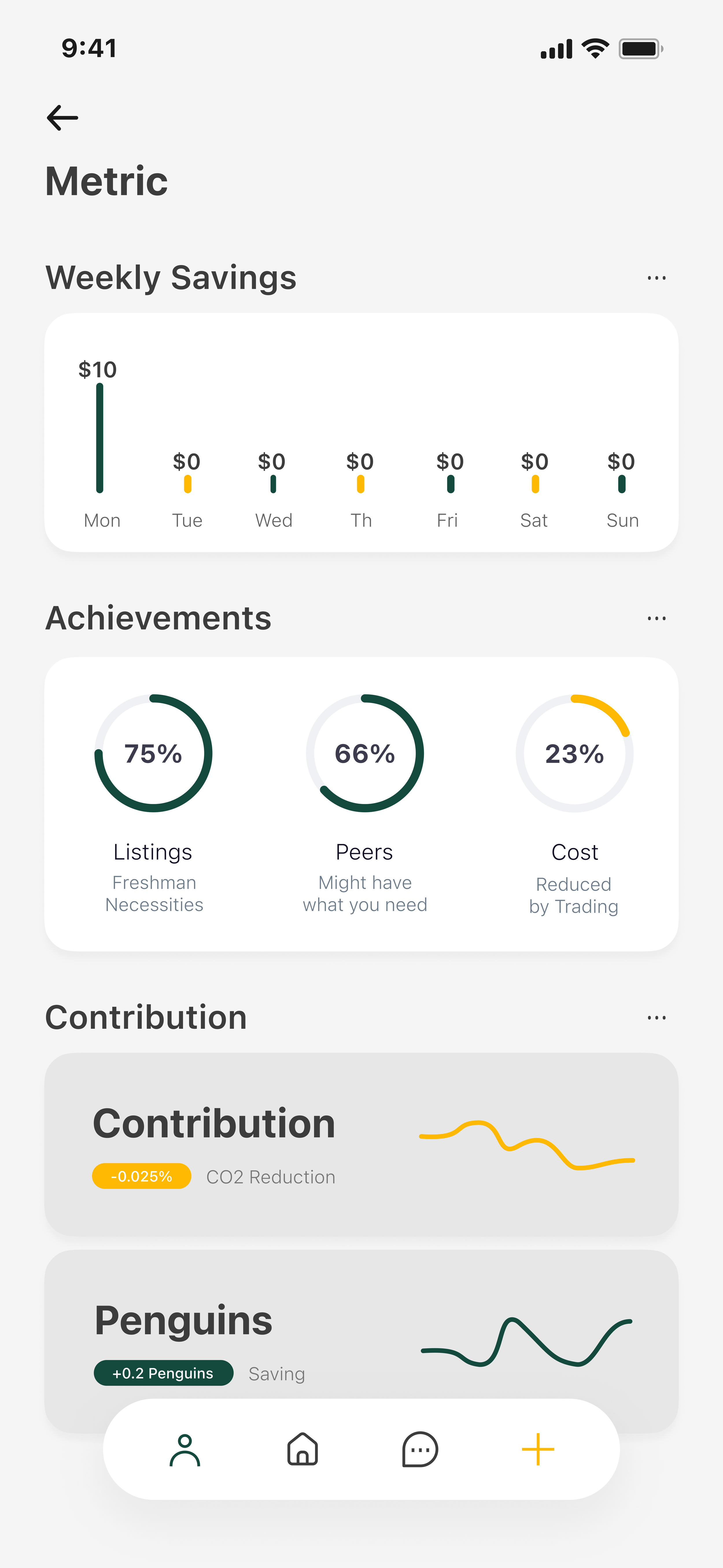
Impactful Rewards and Insightful Metrics
Artify provides dashboard that not only celebrates sustainable trading with tangible rewards but also provides users with a detailed view of their eco-friendly contributions. By participating in material exchanges, users earn perks and track their weekly savings and environmental achievements, empowering them to visualize and amplify their role in fostering a greener campus.
Design Showcase
Impact
Revolutionized the art material landscape at USC by creating a sustainable, collaborative ecosystem that enriches students’ creative endeavors and fosters a sense of community.
Design Application
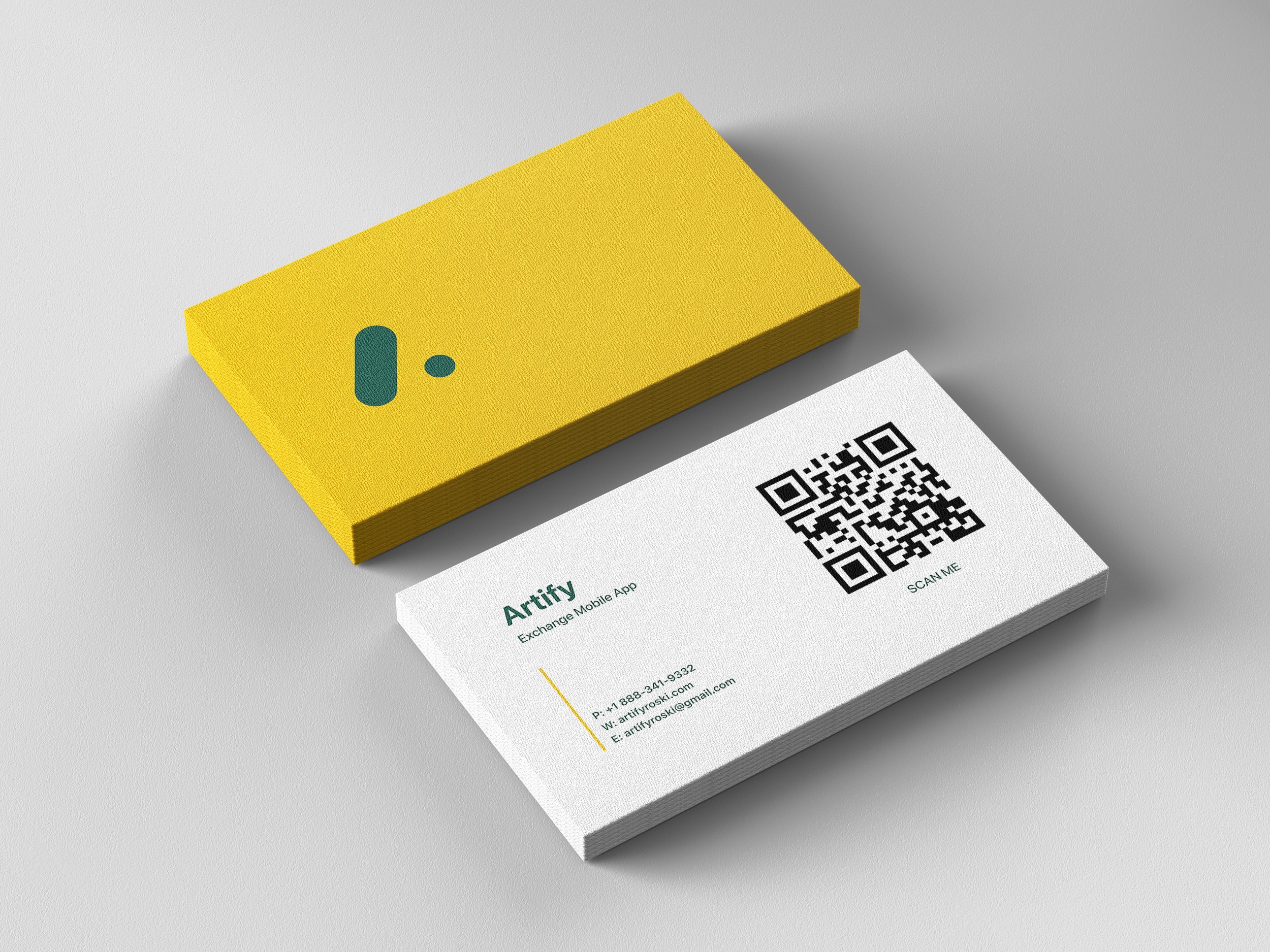
Mockups
Business Card

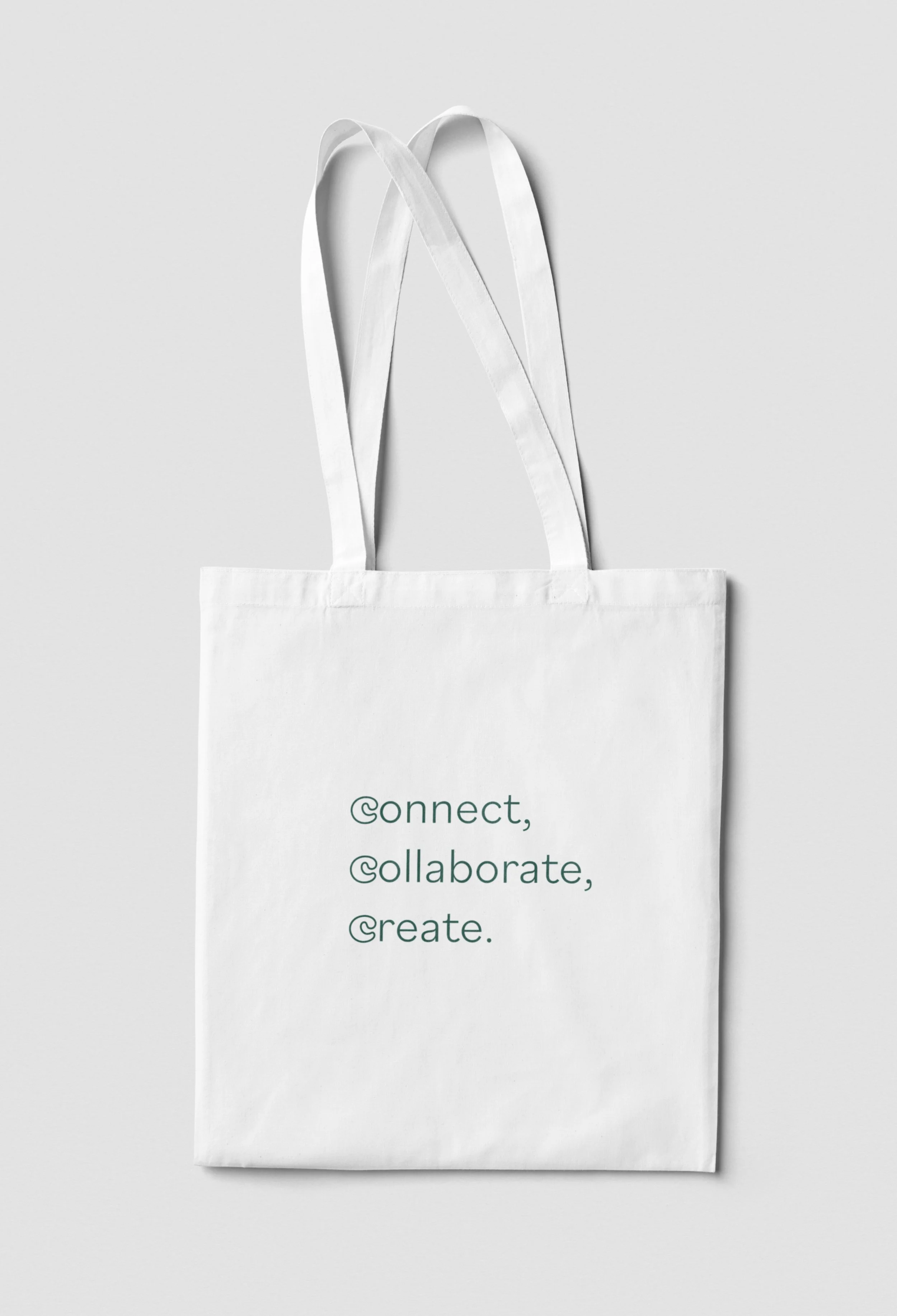
Tote Bag

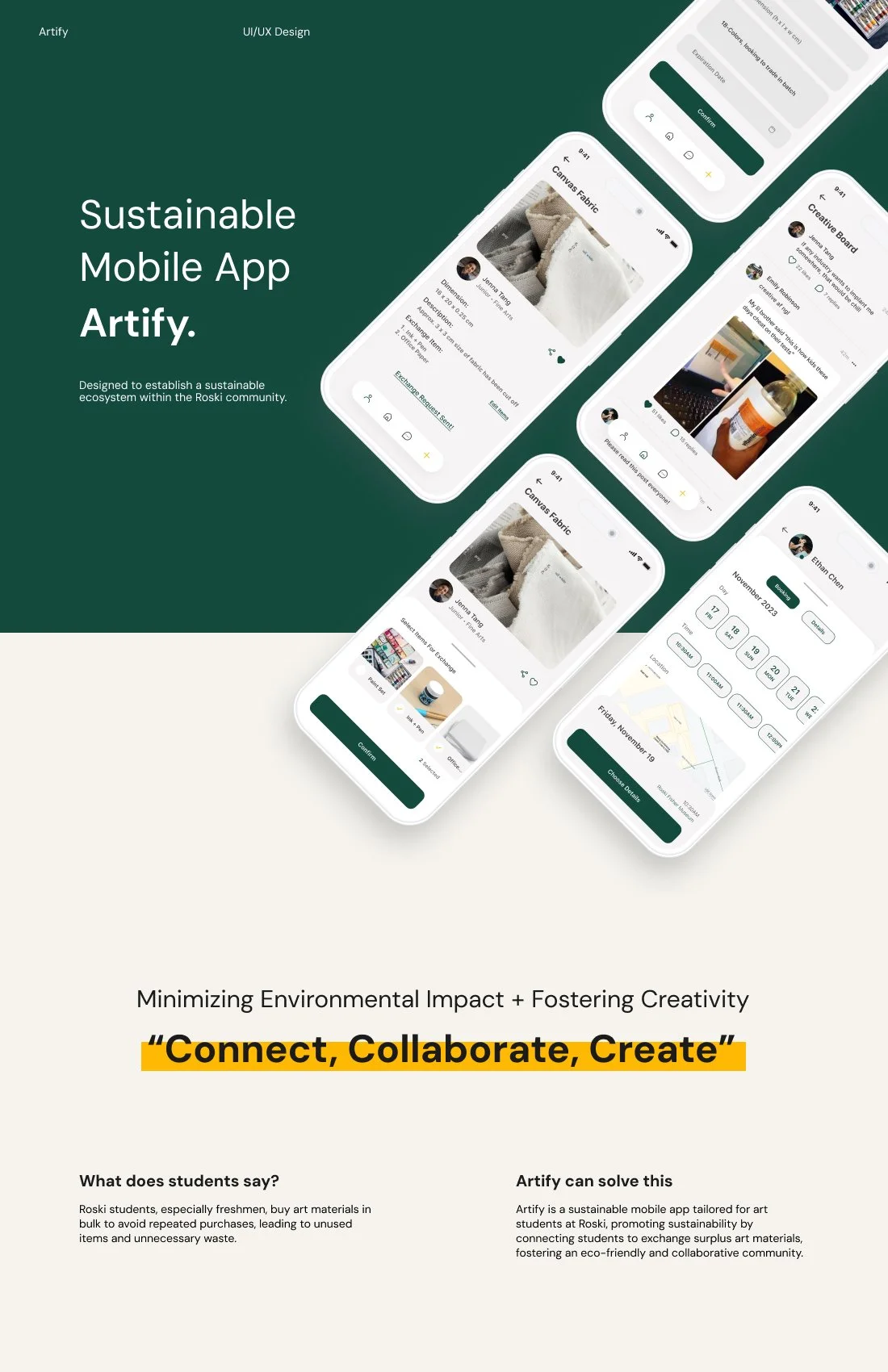
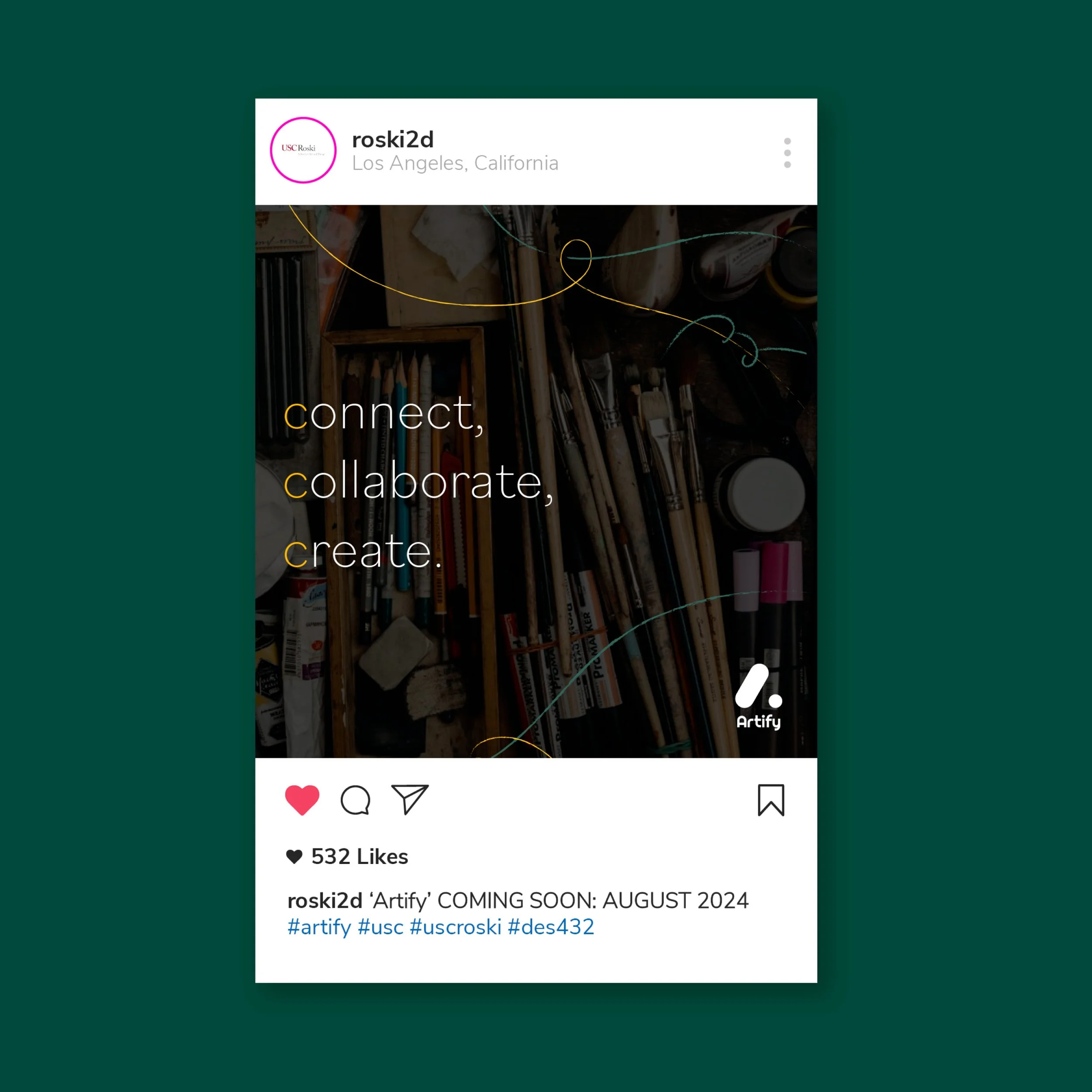
Advertisement Poster / Post
User Testing
Feedback - Student Testers
Having this platform is a game-changer. It offers a unique way to find art materials that are hard to come by in local stores. The fact that we don't need to venture off campus saves a ton of time and money.
The detailed descriptions of materials provided by the app offer invaluable context that's often missing from online sellers. This feature is incredibly helpful.
It feels secure knowing I’m dealing with fellow USC students. Arranging meet-ups on campus feels naturally safer.
The feature that tailors material lists to specific class needs? Absolutely brilliant. It's such a clever touch.
The Hub is going to be a hit. With Roski lacking a unified online space, this feature promises to knit the student community closer.
This app is a win for students at any stage of their academic journey. As someone about to graduate with a surplus of materials, the idea of trading them for useful prizes is incredibly appealing.
Presentation
Presentation to Executive Board & Students
Feedback on Advantages
The project strikes as a highly realistic solution to a problem that Roski has been grappling with for some time. Its efficiency in space utilization is particularly commendable, given our department's ongoing spatial constraints.
This solution stands out for its space efficiency, a crucial advantage for Roski, given the department's ongoing challenge with limited spatial capacity.
From a student's perspective, this initiative feels incredibly user-friendly. It seems designed not just as a service but as a catalyst for building a vibrant, interconnected community both within and beyond campus borders.
The inclusion of USC verification adds a layer of safety and trustworthiness to the platform, ensuring that exchanges can happen securely on school grounds among verified students.
There's a lot of potential here to not only start up but also to expand and sustain the service with manageable costs. It’s impressive.
It’s not just about the surplus materials students might have; the service brilliantly taps into the unused 'dead materials' lying dormant in Roski's printing labs and the Architecture department. This could be a game-changer in how we view and use resources.
Suggestion
Aligning the service more closely with USC’s identity and branding could really cement its place as an official school-wide platform. It’s something worth considering for broader implementation.
Marketing-wise, it would be impactful to visually depict the exchange process right from the onboarding stage. Graphics showing students trading could significantly enhance the platform's credibility and showcase its purpose clearly.
Meet the Board
Haven Lin-Kirk
Dean, USC Roski School of Art and Design

China Adams
Assistant Professor of Teaching, Art and Design

Eric Junker
Lecturer in Roski School of Art and Design

Peter King Robbins
Lecturer in Roski School of Art and Design
Founder of Blue Egg Strategy & Design LLC Founder CCO at LSD Apparel LLC

Tom Gilmartin
Creative Leader at Verses and Valleys
Ex-Global Creative Director at Meta

Reflection
Takeaway
Reflecting on the journey of conceptualizing and developing Artify has been an enlightening experience. This project underscored the vast potential for a sustainable, community-driven platform within the art student community, compelling me to explore innovative solutions to pressing challenges.
The process of engaging with peers, conducting comprehensive research, and navigating the design and implementation phases provided a wealth of insights into the significance of user-centric design, as well as the role of technology in promoting sustainability and fostering community bonds.
Winning the class competition was not only a validation of Artify's concept and potential impact but also a testament to the power of blending creativity with purpose. This accolade has further fueled my passion for leveraging technology to drive meaningful social and environmental transformations, and it's with a sense of accomplishment and anticipation that I look forward to the future possibilities that lie ahead.
If granted more time, the focus would shift to deeper engagement with the user base through additional surveys, enhancing our understanding of their evolving needs. A/B testing would become a priority, meticulously comparing different versions of the platform to refine the user experience and functionality. And, with these insights, the possibility of moving beyond the prototype phase to full development beckons—a prospect filled with potential for significant impact on the art community at USC and beyond. These steps represent not just iterative progress, but exponential growth towards a platform that could redefine the landscape of art material sustainability.